




Surge Arrester vs Circuit Breaker: Functions and Applications
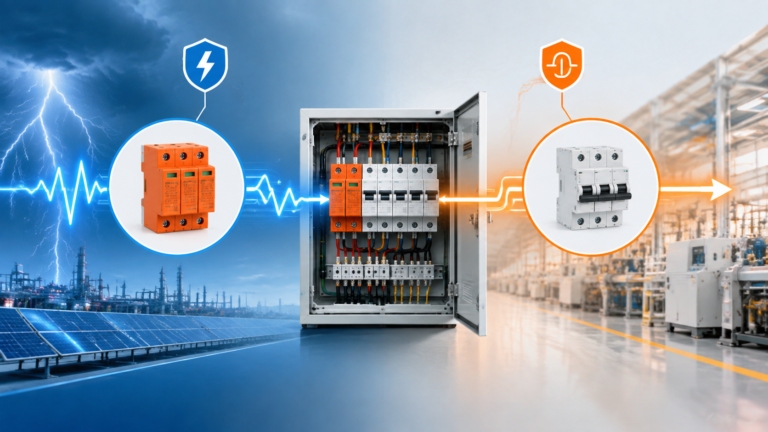
Surge arresters clamp transient overvoltage; circuit breakers clear overloads and short circuits. Compare functions, applications and coordination.
Read More English
A solar PV system operates under different electrical conditions from a standard AC power system. Solar panels generate direct current, and this DC power must be safely controlled, protected, and isolated before it reaches the inverter or battery system. This is where a solar circuit breaker becomes essential.
A solar circuit breaker is designed to protect photovoltaic systems from overcurrent, short circuits, and electrical faults. It helps prevent damage to solar panels, PV combiner boxes, inverters, batteries, and other DC equipment. Choosing the right breaker is not only important for system safety but also for long-term reliability and stable power generation.
In this guide, we will explain what a solar circuit breaker is, where it is used, the difference between AC and DC circuit breakers, and how to choose the right DC circuit breaker for solar PV systems.
A solar circuit breaker is a protective device used in photovoltaic power systems to interrupt abnormal current flow. When the current exceeds the safe operating range, the breaker trips and disconnects the circuit.
In a solar system, circuit breakers are commonly used on both the DC side and AC side.
On the DC side, the breaker is installed between solar panels, PV strings, combiner boxes, batteries, and inverters. On the AC side, the breaker is installed after the inverter to protect the AC distribution circuit.
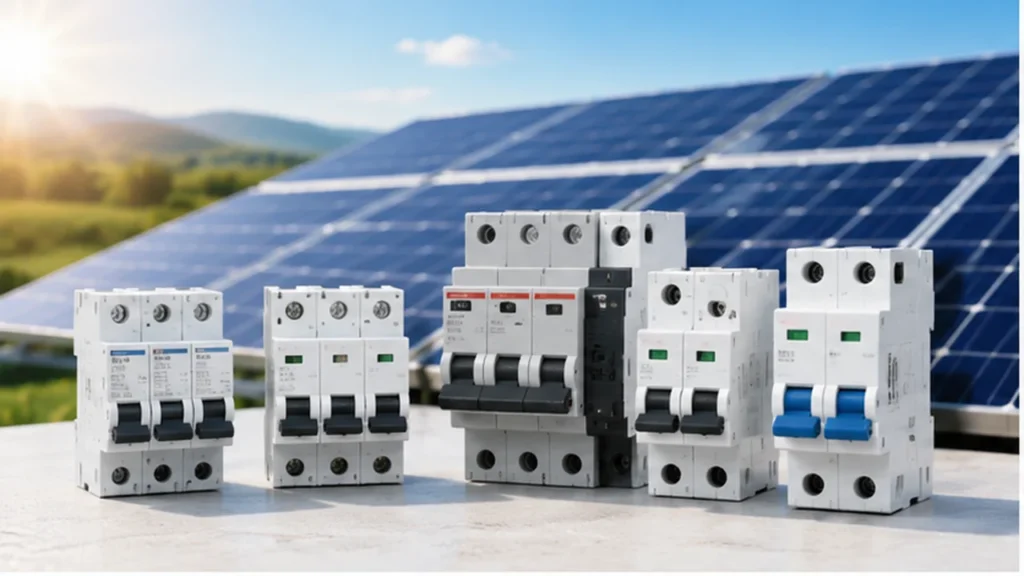
The most common solar circuit breakers include:
For most PV applications, the key product is the solar DC circuit breaker, because solar panels generate DC electricity before the inverter converts it into AC power.
Solar PV systems need circuit breakers because they involve continuous power generation, high DC voltage, and multiple electrical components connected in series or parallel.
A properly selected PV circuit breaker can provide the following protection:
When the current in a solar circuit exceeds the rated value, it may cause cable overheating, insulation damage, or equipment failure. A circuit breaker disconnects the faulty circuit before serious damage occurs.
Short circuits can happen due to wiring errors, damaged insulation, incorrect installation, or equipment failure. A solar circuit breaker can quickly interrupt the fault current and protect the system.
Solar panels, inverters, batteries, and combiner boxes are valuable components. Circuit breakers help reduce the risk of damage caused by abnormal electrical conditions.
Circuit breakers can also be used for manual isolation. During inspection, repair, or maintenance, the circuit can be disconnected safely.
In DC systems, arcs are more difficult to extinguish than in AC systems. A suitable DC circuit breaker helps reduce electrical fire risks by interrupting fault currents safely.
One of the most common questions is:
Can an AC circuit breaker be used in a solar DC system?
In most cases, the answer is no. A DC circuit breaker should be used for DC circuits.
The reason is that AC and DC electricity behave differently. In an AC circuit, the current naturally crosses zero many times per second, which helps extinguish the arc when the breaker opens. In a DC circuit, the current does not have a natural zero-crossing point, so the arc is more difficult to extinguish.
That means a DC circuit breaker for solar must have a stronger arc-extinguishing design than a standard AC breaker.
| Item | AC Circuit Breaker | DC Circuit Breaker |
|---|---|---|
| Current type | Alternating current | Direct current |
| Arc extinguishing | Easier due to zero crossing | More difficult |
| Application | AC distribution, inverter output | Solar panels, batteries, DC combiner boxes |
| Voltage marking | AC voltage rating | DC voltage rating |
| Solar use | AC side only | DC side of PV system |
For a solar PV system, use a solar DC circuit breaker on the DC side and an AC breaker only on the AC output side of the inverter.
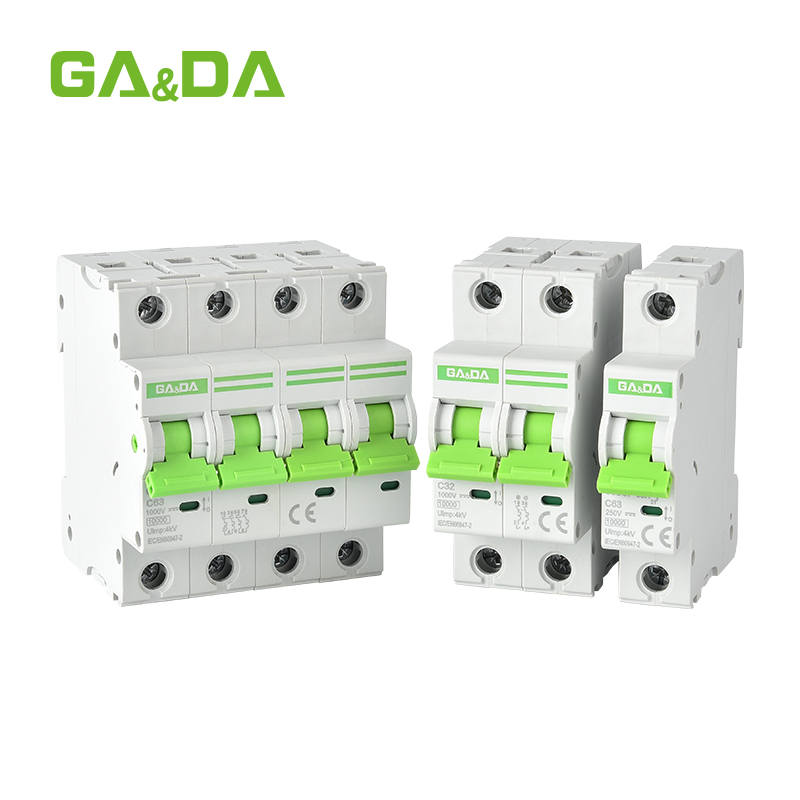
A DC MCB, or DC miniature circuit breaker, is commonly used in small and medium-sized solar PV systems. It is suitable for PV string protection, DC distribution boxes, combiner boxes, and inverter input circuits.
A DC MCB is usually used for lower current applications. It is compact, easy to install, and suitable for DIN rail mounting.
Common applications include:
For many solar applications, a DC MCB for solar PV is a cost-effective and reliable protection solution.
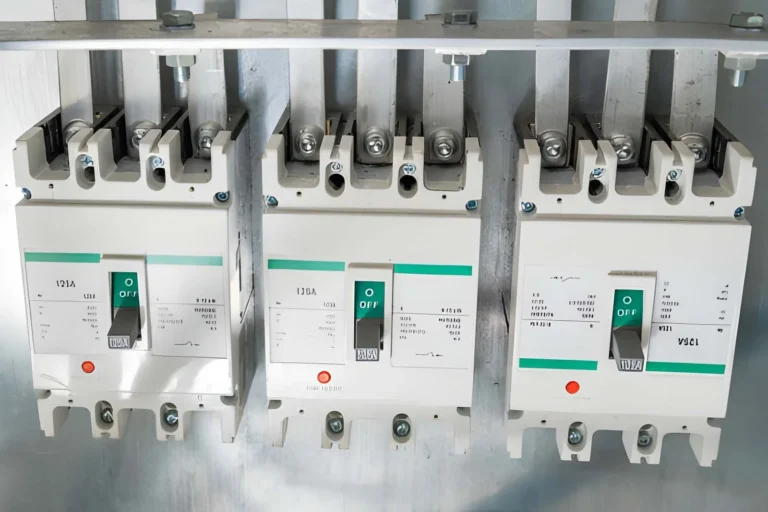
A DC MCCB, or DC molded case circuit breaker, is used for higher current and higher capacity solar systems. Compared with a DC MCB, a DC MCCB usually has higher breaking capacity, higher current rating, and stronger protection performance.
A DC MCCB is suitable for commercial and industrial PV systems where the system current is higher and fault protection requirements are more demanding.
Common applications include:
If the solar system has a higher current rating or requires stronger breaking capacity, a DC MCCB for solar is usually the better choice.
Although solar panels generate DC power, the inverter converts DC power into AC power. After conversion, the AC output side also needs protection.
An AC MCB or AC MCCB can be installed between the inverter output and the AC distribution panel. This helps protect the AC circuit from overload and short circuit faults.
Common applications include:
The key point is simple:
Use DC circuit breakers on the DC side and AC circuit breakers on the AC side.
A solar PV system may require circuit breakers in several positions depending on the system design.
In systems with multiple PV strings, each string may need protection before entering the combiner box. DC MCBs are often used in this position.
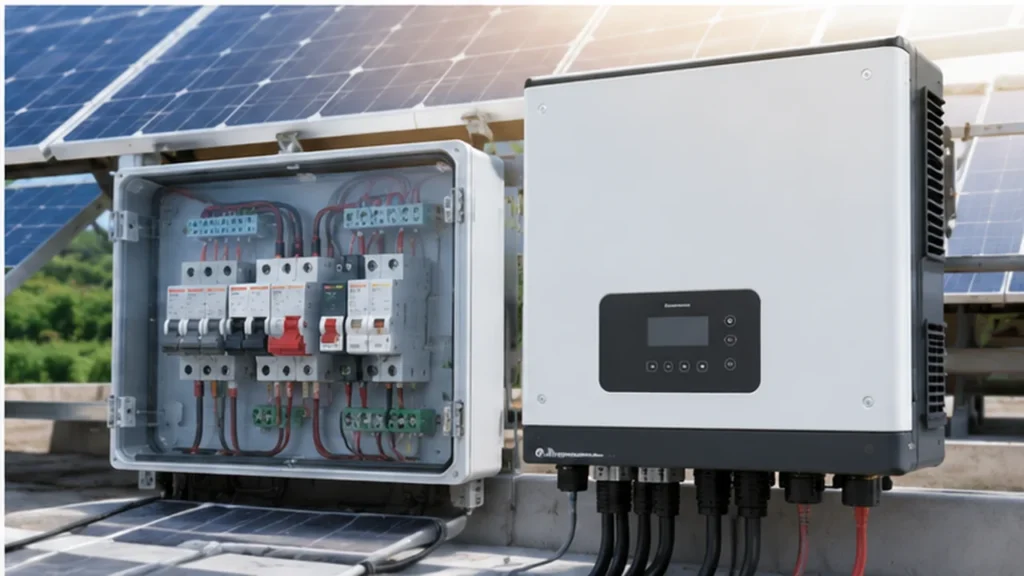
The PV combiner box usually integrates DC protection components such as DC circuit breakers, DC fuses, and DC surge protective devices. The breaker helps disconnect the circuit during faults or maintenance.
A DC breaker is often installed between the PV combiner box and the solar inverter. This allows the DC input circuit to be disconnected safely.
For solar systems with battery energy storage, a DC circuit breaker may be installed between the battery bank and the inverter or charge controller.
After the inverter converts DC into AC, an AC circuit breaker is installed to protect the AC output circuit.
Choosing the right solar circuit breaker requires more than simply matching the current rating. You need to consider voltage, current, poles, breaking capacity, installation location, and system type.
First, confirm whether the breaker will be used on the DC side or AC side.
For solar panel strings, combiner boxes, batteries, and inverter DC inputs, choose a DC circuit breaker.
For inverter AC output and AC distribution systems, choose an AC circuit breaker.
Never use a standard AC breaker in a DC circuit unless it is clearly rated for DC applications.
The rated voltage of the breaker must be equal to or higher than the maximum system voltage.
For example, if your PV system voltage is 600V DC, you should choose a DC breaker rated for at least 600V DC. Many solar PV systems use DC breakers rated for 500V, 600V, 800V, 1000V, or even higher depending on system design.
For PV systems, the voltage rating is especially important because solar string voltage can rise under cold weather conditions.
The rated current of the solar circuit breaker should be selected according to the operating current of the circuit.
If the breaker current rating is too low, it may trip frequently. If it is too high, it may not provide proper protection.
When selecting current rating, consider:
Common current ratings for solar DC MCBs include 16A, 20A, 25A, 32A, 40A, 50A, and 63A. For larger systems, DC MCCBs are available with higher current ratings.
Solar circuit breakers are available in different pole configurations, such as 1P, 2P, 3P, and 4P.
For DC solar applications, 2P and 4P breakers are commonly used because they can disconnect both positive and negative lines, depending on system requirements.
Typical configurations include:
| Breaker Poles | Common Application |
|---|---|
| 1P | Some low-voltage single-line circuits |
| 2P | DC solar string protection |
| 3P | Three-phase AC systems |
| 4P | Higher voltage DC systems or three-phase AC with neutral |
The correct pole selection depends on the wiring method and system voltage.
Breaking capacity refers to the maximum fault current that the circuit breaker can safely interrupt.
In solar PV systems, the breaker must be able to interrupt the possible short-circuit current of the system. If the breaking capacity is too low, the breaker may fail during a serious fault.
For commercial and industrial solar systems, breaking capacity is especially important. In many cases, a DC MCCB is preferred for higher fault current applications.
DC arc extinguishing is one of the most important features of a solar DC circuit breaker.
Because DC arcs are harder to extinguish than AC arcs, a solar DC breaker must be specifically designed for DC applications. Look for clear DC voltage markings and solar PV application suitability.
Solar PV systems are often installed outdoors, in harsh environments, or inside electrical cabinets exposed to heat and humidity.
When selecting a solar circuit breaker, consider:
A reliable breaker improves system stability and reduces maintenance risks.
Both DC MCB and DC MCCB can be used in solar PV systems, but they are suitable for different applications.
| Item | DC MCB | DC MCCB |
|---|---|---|
| Full name | DC Miniature Circuit Breaker | DC Molded Case Circuit Breaker |
| Current rating | Lower to medium | Medium to high |
| Breaking capacity | Lower than MCCB | Higher |
| Size | Compact | Larger |
| Installation | DIN rail | Panel or cabinet installation |
| Best for | Small and medium PV systems | Commercial and industrial PV systems |
| Common use | PV strings, combiner boxes | Main DC protection, large inverter systems |
For many solar projects, both DC MCBs and DC MCCBs may be used together in different parts of the system.
A complete solar protection system may include circuit breakers, fuses, and surge protective devices. These components have different functions and should not be confused.
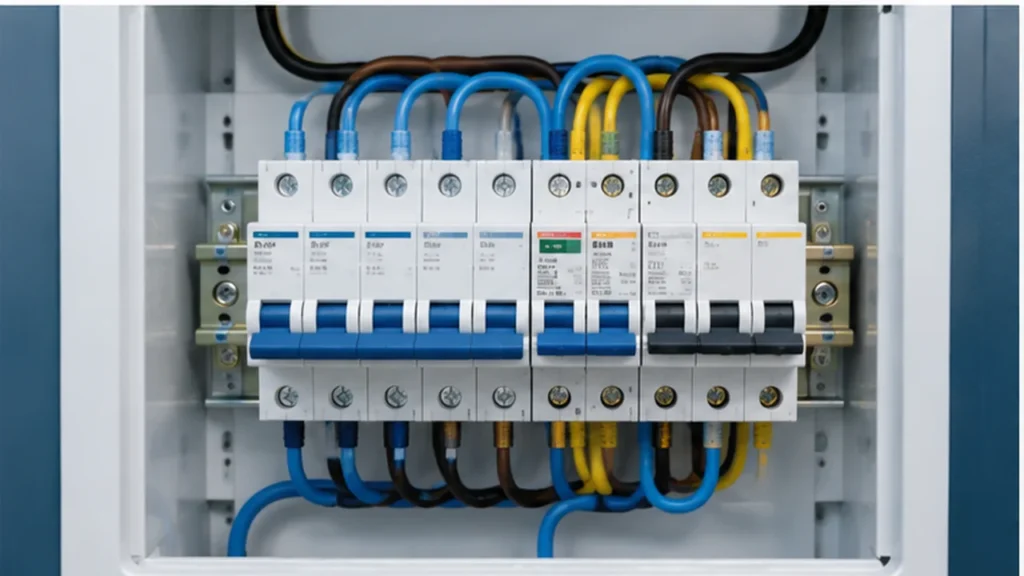
A solar circuit breaker protects against overload and short circuit faults. It can also be manually switched off for maintenance.
A fuse provides overcurrent protection by melting when current exceeds its rated value. It is commonly used for PV string protection. Unlike a breaker, a fuse must be replaced after operation.
A DC SPD protects the PV system from transient overvoltage caused by lightning or switching surges. It does not replace a circuit breaker.
| Device | Main Function | Resettable? |
|---|---|---|
| Circuit breaker | Overload and short circuit protection | Yes |
| Fuse | Overcurrent protection | No |
| SPD | Surge and lightning protection | No, module may need replacement |
For better solar PV system protection, circuit breakers, fuses, and SPDs are often used together.
For solar PV systems, the most common protection solutions include:
The final selection should be based on PV system voltage, current, inverter power, cable size, installation environment, and local electrical standards.
A solar circuit breaker is an essential protection device in a PV system. It helps protect solar panels, PV combiner boxes, inverters, batteries, cables, and distribution equipment from overload and short circuit faults.
For the DC side of a solar PV system, choose a properly rated DC circuit breaker for solar, such as a DC MCB or DC MCCB. For the AC output side of the inverter, use a suitable AC circuit breaker.
When selecting a solar circuit breaker, always consider voltage rating, current rating, breaking capacity, number of poles, DC arc extinguishing capability, and installation environment.
For residential, commercial, and industrial solar projects, GA&DA provides reliable circuit breaker solutions including DC MCB, DC MCCB, AC MCB, AC MCCB, RCCB, RCBO, PV combiner boxes, and surge protective devices for complete solar PV system protection.
Looking for reliable solar circuit breakers for your PV projects? GA&DA offers DC MCB, DC MCCB, AC circuit breakers, PV combiner boxes, and surge protective devices for residential, commercial, and industrial solar systems. Contact us to get the right protection solution for your project.
For the DC side of solar panels, a DC circuit breaker should be used. Common choices include DC MCBs for smaller systems and DC MCCBs for larger commercial or industrial solar systems.
In general, no. A standard AC circuit breaker should not be used in a DC solar circuit unless it is specifically rated for DC use. DC circuits require breakers designed to extinguish DC arcs safely.
A DC MCB is usually used for lower current solar circuits, such as PV strings and combiner boxes. A DC MCCB is used for higher current applications, such as large inverter systems, commercial PV projects, and main DC protection.
Solar circuit breakers can be installed between solar panels and the combiner box, inside the PV combiner box, between the combiner box and inverter, between battery and inverter, and on the AC output side of the inverter.
The breaker size depends on the inverter input or output current, voltage, cable size, and system design. Always follow the inverter manufacturer’s requirements and applicable electrical standards.