Solar PV systems are increasingly designed with higher DC voltages to improve efficiency and reduce cable losses. In commercial, industrial, and utility-scale solar projects, 1500V DC systems are now common. However, higher system voltage also means higher requirements for electrical protection, especially against lightning surges and transient overvoltage.
A 1500V DC SPD, also known as a 1500V DC surge protection device, is designed to protect PV strings, combiner boxes, inverters, and DC distribution circuits from transient surge events. Choosing the right SPD is not only about voltage. Buyers should also consider system configuration, SPD type, discharge current, protection level, pole structure, certification, and installation location.
This guide explains how to select a suitable 1500V DC SPD for solar PV systems and what buyers should check before placing an order.
What Is a 1500V DC SPD?
A 1500V DC SPD is a surge protective device designed for photovoltaic DC circuits with a maximum operating voltage up to 1500V DC. It is commonly installed on the DC side of a PV system, such as inside a PV combiner box, inverter input cabinet, or DC distribution board.
Its main function is to limit transient overvoltage and divert surge current to earth before the surge damages sensitive equipment.
In a solar PV system, surge events may be caused by:
Nearby lightning strikes
Direct lightning effects on external structures
Switching operations
Long outdoor DC cable runs
Ground potential differences
Grid-side disturbances transferred through the system
Because PV systems are often installed outdoors and connected with long cable routes, surge protection is essential for improving system reliability and reducing maintenance risk.
Why 1500V DC Systems Need Special Surge Protection
A 1500V DC PV system cannot simply use a standard AC SPD or a low-voltage DC SPD. The SPD must be designed for photovoltaic DC applications and must match the maximum system voltage.
Compared with lower-voltage systems, 1500V DC systems usually have:
Higher string voltage
Longer cable distances
Larger system capacity
Higher insulation requirements
More demanding arc-extinguishing requirements
Greater exposure to lightning-induced surges in outdoor installations
If the SPD voltage rating is too low, the device may age prematurely or fail under normal operating conditions. If the SPD protection level is too high, it may not provide sufficient protection for the inverter or other connected equipment.
That is why a proper 1500V DC SPD should be selected based on both system voltage and practical application conditions.
1000V DC SPD vs 1500V DC SPD: What Is the Difference?
The main difference between a 1000V DC SPD and a 1500V DC SPD is the maximum continuous operating voltage. Here is a quick comparison:
Feature
1000V DC SPD
1500V DC SPD
Max System Voltage (Ucpv)
≤ 1000V DC
≤ 1500V DC
Typical Application
Residential & small commercial PV systems
Large commercial, industrial & utility-scale PV systems
Insulation Requirement
Standard
Higher — requires reinforced insulation design
Arc-Extinguishing
Lower DC arc voltage
More demanding — higher DC voltage requires stronger arc suppression
String Configuration
Fewer panels per string
More panels per string — higher string voltage
Cable Run Length
Shorter typical distance
Longer typical distance — higher surge exposure
⚠️ Important: A 1500V DC SPD should not be replaced with a 1000V DC SPD, even if the product shape looks similar. Always check the maximum open-circuit voltage of the PV string under the lowest expected temperature.
Key Factors When Choosing a 1500V DC SPD
1. Maximum Continuous Operating Voltage
The maximum continuous operating voltage, often marked as Ucpv, is one of the most important parameters for a PV surge protection device.
For a 1500V DC PV system, the SPD should be rated for photovoltaic DC applications and should match the maximum system voltage. The selected SPD must be able to withstand the normal DC operating voltage without continuous leakage, overheating, or premature failure.
When reviewing a product datasheet, check whether the device clearly states:
Ucpv rating
DC photovoltaic application
1500V DC system compatibility
Applicable wiring mode
Pole configuration
Avoid using a general-purpose SPD if the datasheet does not clearly confirm PV DC suitability.
2. SPD Type: Type 1, Type 2, or Type 1+2
For solar PV systems, the SPD type should be selected according to lightning risk, installation position, and system design.
A Type 2 DC SPD is commonly used for protection against induced surge currents. It is widely applied in PV combiner boxes, inverter DC inputs, and general PV DC distribution circuits.
A Type 1 DC SPD is used when the system may be exposed to partial lightning current, especially where an external lightning protection system is installed or where the risk of direct lightning influence is higher.
A Type 1+2 DC SPD combines lightning current discharge capability and surge voltage limitation in one device. It is often used in PV systems requiring stronger protection at key positions.
For many solar projects, buyers may need different SPD types in different locations. For example, Type 1+2 protection may be used at a main DC input point, while Type 2 protection may be used in downstream PV combiner boxes.
3. Nominal Discharge Current and Maximum Discharge Current
Two common parameters in a DC SPD datasheet are nominal discharge current and maximum discharge current.
Nominal discharge current indicates the surge current level that the SPD can handle repeatedly under standardized test conditions. Maximum discharge current indicates the maximum surge current capacity under specified conditions.
For solar PV projects, the required discharge current depends on:
Lightning risk level
Installation environment
Cable length
Grounding system quality
Whether an external lightning protection system is installed
Whether the SPD is installed near the PV array, combiner box, or inverter
A higher current rating does not always mean the best choice. The right SPD should match the protection design of the whole system.
4. Voltage Protection Level
The voltage protection level shows the residual voltage after the SPD limits the surge. In simple terms, it indicates how much voltage may still pass through to downstream equipment during a surge event.
A lower protection level generally provides better protection for sensitive devices such as inverters, monitoring units, and control systems. However, the SPD must still be properly matched with the system voltage and installation conditions.
When choosing a 1500V DC SPD, buyers should compare the protection level with the withstand voltage of the equipment being protected.
5. Pole Configuration and Wiring Method
1500V DC SPDs may be available in different pole configurations depending on the PV system design.
Common configurations include:
2P DC SPD
3P DC SPD
Y-type connection
Positive-to-ground and negative-to-ground protection
Positive-to-negative protection
The correct wiring method depends on the system grounding method and inverter design. Before placing an order, buyers should confirm the wiring diagram and installation position with the supplier.
For PV combiner boxes, the SPD should also match the internal busbar layout, fuse configuration, DC breaker, and enclosure design.
6. Failure Indicator and Remote Signal Contact
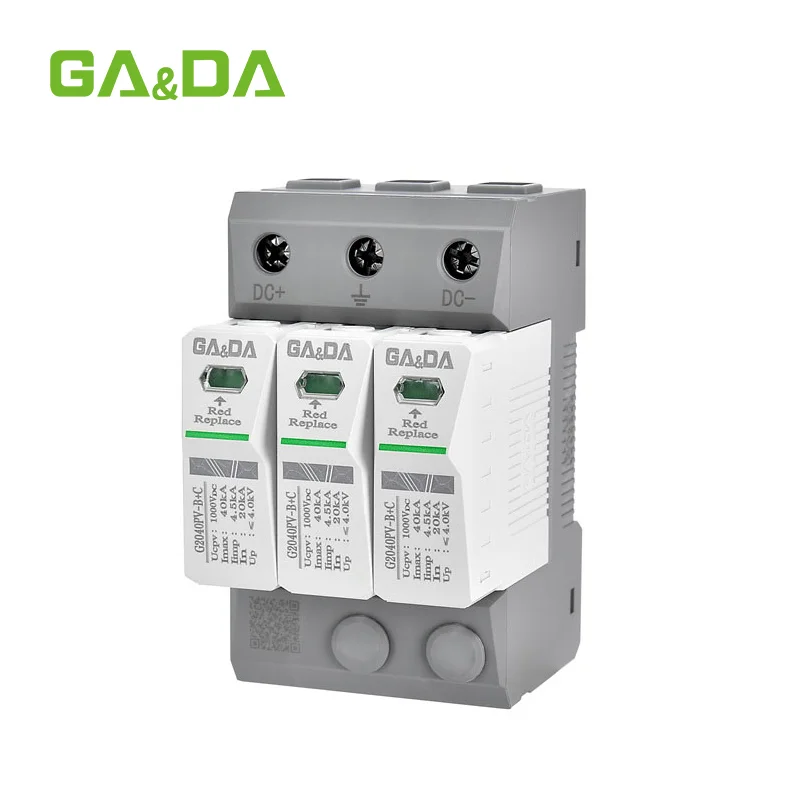
A visual failure indicator is very important for maintenance. Many PV DC SPDs use a red and green indication window to show operating status.
Typically:
Green means the SPD is working normally.
Red means the protection module should be replaced.
For commercial and utility-scale PV systems, remote signal contact is also useful. It allows the SPD status to be monitored through a control system or monitoring platform.
If the solar project requires remote maintenance or centralized monitoring, buyers should ask for a 1500V DC SPD with remote signaling function.
7. Replaceable Module Design
A plug-in or replaceable module design can reduce maintenance cost. When the SPD module reaches end of life, the maintenance team can replace the module without changing the entire base.
For large PV plants, this design is practical because there may be hundreds of SPDs installed across combiner boxes and inverter stations.
Before choosing a model, check whether the SPD has:
Plug-in module structure
Clear replacement indicator
Stable locking design
Easy maintenance access
Spare module availability
8. Certification and Standard Compliance
For B2B buyers, certification and test compliance are important selection factors. A reliable 1500V DC SPD supplier should provide clear product documentation, test reports, and datasheets.
Depending on your target market, you may need to check:
IEC-related compliance for PV DC SPD
CE declaration
RoHS compliance
TUV or third-party test reports if required
UL-related requirements for North American projects
Buyers should avoid vague certification claims. Always ask the supplier to provide certificates or test documents matching the exact product model.
Where Should a 1500V DC SPD Be Installed?
A 1500V DC SPD can be installed at several key points in a PV system.
PV Combiner Box
The PV combiner box is one of the most common installation positions for DC SPDs. Since the combiner box connects multiple PV strings, surge protection at this point helps protect downstream DC cables and inverter input circuits.
Inverter DC Input
Installing a DC SPD near the inverter input helps reduce the risk of surge damage to the inverter. This is especially important because the inverter is one of the most valuable components in a PV system.
DC Distribution Cabinet
In larger solar systems, DC distribution cabinets may require additional surge protection depending on cable routing and system design.
PV Array Area
In some projects, surge protection may be required near the PV array, especially when the array is far away from the inverter or located in an area with high lightning exposure.
The final installation plan should consider cable length, grounding design, lightning protection system, and equipment layout.
Common Mistakes When Selecting a 1500V DC SPD
Mistake 1: Using an AC SPD on the DC Side
AC SPDs and DC SPDs are not the same. DC circuits have different arc characteristics and require suitable device design. A general AC SPD should not be used on the DC side of a solar PV system.
Mistake 2: Choosing the Wrong Voltage Rating
Using a 1000V DC SPD in a 1500V DC system is a serious selection mistake. The SPD must match the maximum PV system voltage.
Mistake 3: Ignoring the Installation Environment
PV systems are often exposed to heat, humidity, dust, and outdoor operating conditions. The SPD should be installed in a suitable enclosure, and the protection system should be designed for real field conditions.
Mistake 4: Not Checking the Grounding System
An SPD needs a proper grounding path to discharge surge current effectively. Poor grounding can reduce the performance of the whole surge protection system.
Mistake 5: Choosing by Price Only
A low-cost SPD may look attractive, but poor design, unclear test data, or unstable quality can increase long-term risk. For solar PV projects, buyers should compare technical parameters, certification, supplier experience, and quality control.
What Should Buyers Ask Before Ordering?
Before ordering a 1500V DC SPD, buyers should ask the supplier these questions:
Is this SPD designed specifically for photovoltaic DC systems?
What is the Ucpv rating?
Is it suitable for 1500V DC PV systems?
Is it Type 1, Type 2, or Type 1+2?
What are the discharge current ratings?
What is the voltage protection level?
Does it have a visual failure indicator?
Is remote signal contact available?
Can the module be replaced?
What certificates or test reports can be provided?
Can it be used in a PV combiner box?
Can OEM or customized specifications be supported?
These questions help buyers avoid mismatched products and confirm whether the supplier can support real project requirements.
Need Help Selecting the Right 1500V DC SPD?
Choosing the correct SPD depends on your specific system voltage, wiring configuration, and installation environment. If you are unsure which model fits your solar PV project, our technical team can help.
GA&DA offers a range of DC SPDs designed for photovoltaic systems, including Type 2 and Type 1+2 options with replaceable modules, visual indicators, and optional remote signaling.
👉 Contact GA&DA for technical recommendations and product datasheets
Conclusion
Choosing the right 1500V DC SPD for a solar PV system requires more than checking the voltage rating. Buyers should evaluate the SPD type, discharge current, voltage protection level, wiring configuration, failure indication, remote signal function, certification, and installation position.
For commercial and utility-scale solar projects, a correctly selected DC surge protection device can help protect PV strings, combiner boxes, inverters, and DC distribution circuits from surge damage.
GA&DA provides AC and DC surge protection devices for solar PV and electrical distribution applications. Contact us to get a suitable 1500V DC SPD recommendation, product datasheet, and quotation for your project.
FAQ About 1500V DC SPD
What is a 1500V DC SPD used for?
A 1500V DC SPD is used to protect photovoltaic DC circuits from transient overvoltage caused by lightning or switching events. It is commonly installed in PV combiner boxes, inverter DC inputs, and DC distribution cabinets.
Can I use a 1000V DC SPD in a 1500V solar system?
No. A 1000V DC SPD should not be used in a 1500V DC system. The SPD voltage rating must match the maximum operating voltage of the PV system.
What is the difference between Type 2 and Type 1+2 DC SPD?
A Type 2 DC SPD is mainly used for protection against induced surge currents. A Type 1+2 DC SPD provides higher protection capability and is suitable for positions where lightning current discharge capacity is required.
Where should I install a DC SPD in a solar PV system?
Common installation positions include the PV combiner box, inverter DC input, DC distribution cabinet, and sometimes near the PV array. The exact position depends on cable routing, grounding design, and project requirements.
Does a 1500V DC SPD need a backup fuse or breaker?
In many installations, backup protection may be required depending on the SPD design and system short-circuit conditions. Buyers should follow the manufacturer’s datasheet and project design requirements.
Is remote signal contact necessary for a PV SPD?
Remote signal contact is useful for commercial and utility-scale PV systems where maintenance teams need centralized monitoring. It is not always required, but it is recommended for large solar projects.
How do I choose a reliable 1500V DC SPD supplier?
Choose a supplier that can provide clear datasheets, stable production quality, certification documents, technical support, and suitable models for PV applications. For B2B projects, OEM support, delivery capability, and after-sales support are also important.
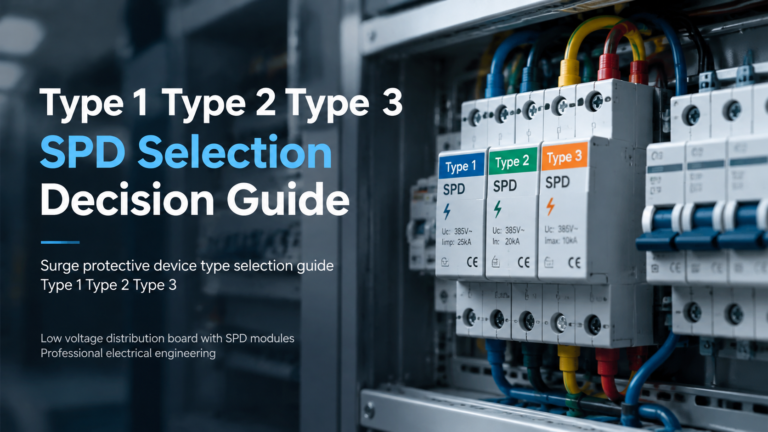
Selecting the wrong surge protective device type is one of the more common and more expensive specification errors in low-voltage installations. The device may work, the installation may pass inspection, and the system will still be under-protected for the actual risk it faces — because Type 1, Type 2, and Type 3 devices are not […]
An SPD that has failed is not automatically a bad device. Most surge protection devices are sacrificial by design: they absorb surge energy, give up a little of their capacity each time, and eventually reach a condition in which they can no longer clamp anything useful and must come out of service. Ask why does […]
Ask when should an SPD be replaced and most answers stop at the status window. That is one input, and on its own a weak one: it shows that a device has reached end of life, never that a device is still fit for service. An SPD can be electrically exhausted while the window still […]