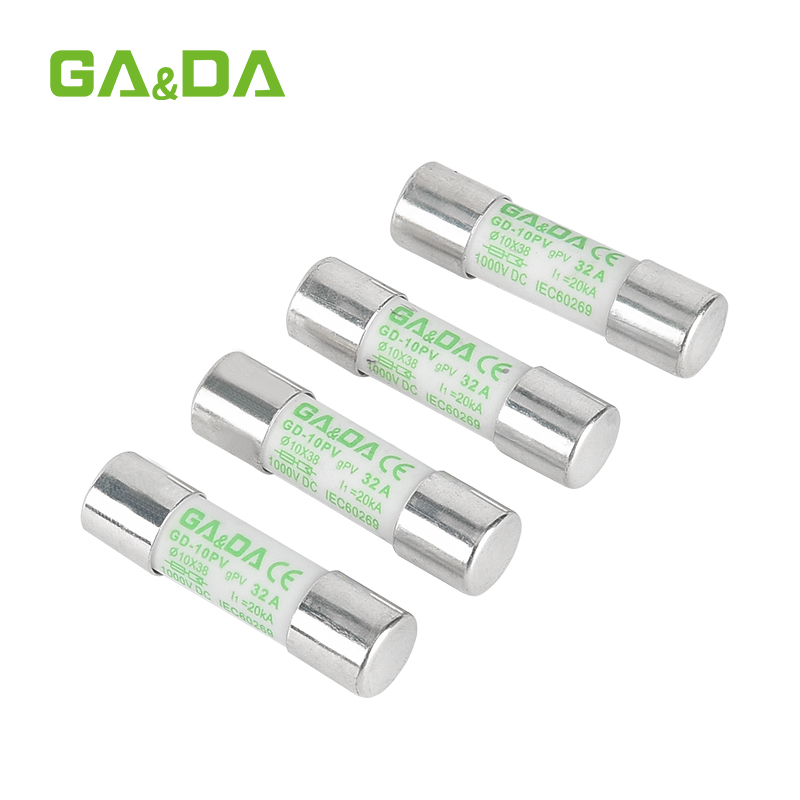
Have you ever looked at a fuse label and wondered what all those numbers actually mean? Fuse ratings tell you how a fuse behaves under electrical load, when it should open the circuit, and whether it can safely protect your equipment during a fault.
Choosing the correct fuse is not just about matching amperage. You also need to consider voltage, breaking capacity, response time, AC or DC use, operating temperature, and applicable standards. For industrial equipment, power systems, and electronic devices, the wrong fuse rating can lead to nuisance blowing, equipment damage, overheating, or serious safety risks.
What Are Fuse Ratings?
Fuse ratings are the technical values that define how a fuse performs in an electrical circuit. They help engineers, buyers, and maintenance teams determine whether a fuse is suitable for a specific application.
A typical fuse rating may include:
Current rating
Voltage rating
Breaking capacity
Time-current characteristic
AC or DC rating
Fuse size
Applicable standard
In simple terms, the rating of a fuse tells you how much current and voltage the fuse can safely handle, and how it reacts when an overcurrent condition occurs.
Key Fuse Rating Parameters
Different electrical fuse ratings describe different performance limits. You should not evaluate a fuse by current rating alone.
Fuse Rating Parameter
What It Means
Why It Matters
Current rating
Maximum continuous current the fuse can carry
Prevents nuisance operation or overheating
Voltage rating
Maximum circuit voltage the fuse can safely interrupt
Ensures safe arc suppression
Breaking capacity
Maximum fault current the fuse can interrupt
Critical for short-circuit protection
Time-current curve
How quickly the fuse opens under overload
Helps match load behavior
AC/DC rating
Whether the fuse is suitable for AC, DC, or both
DC interruption is usually more demanding
Temperature derating
Adjustment based on ambient temperature
Prevents incorrect selection in hot environments
Current Rating
The fuse current rating is usually the first value people check. It indicates the amount of current the fuse can carry continuously under specified conditions.
For example, a 10A fuse is designed to carry 10 amps under normal operating conditions. However, that does not mean it opens immediately at 10.1A. Most fuses tolerate small overloads for a limited time.
When choosing a fuse current rating, consider:
Normal operating current
Startup or inrush current
Load variation
Ambient temperature
Continuous operating conditions
For motors, transformers, and power supplies, inrush current can be much higher than the normal working current. In these cases, a slow-blow fuse may be more suitable than a fast-acting fuse.
Voltage Rating
Fuse voltage rating tells you the maximum voltage at which the fuse can safely interrupt a circuit.
This is especially important because when a fuse opens, an arc can form inside the fuse body. If the voltage is too high for the fuse design, the arc may not extinguish safely.
Common voltage ratings include:
125V
250V
500V
690V
1000V or higher for specialized applications
Never use a fuse with a voltage rating lower than the circuit voltage. For DC circuits, be even more careful because DC arcs are harder to extinguish than AC arcs.
Breaking Capacity or Interrupting Rating
Breaking capacity, also called interrupting rating, refers to the maximum fault current a fuse can safely interrupt.
This is one of the most important fuse ratings for industrial and power distribution systems.
For example, if a circuit can produce a short-circuit current of 10kA, the fuse must have a breaking capacity equal to or higher than that fault current.
Low breaking capacity may be acceptable for small electronic circuits, but industrial control systems, distribution panels, and power equipment usually require higher interrupting ratings.
Time-Current Characteristics
Not all fuses react at the same speed. Time-current characteristics describe how quickly a fuse opens under different overload levels.
Common types include:
Fast-Acting Fuses
Fast-acting fuses open quickly when current exceeds the rated value. They are often used for sensitive electronic circuits.
Typical applications:
Electronic devices
Control circuits
Sensors
Low-current protection
Time-Delay or Slow-Blow Fuses
Slow-blow fuses tolerate short inrush currents without opening immediately. They are useful for equipment that has startup surges.
Typical applications:
Motors
Transformers
Power supplies
Industrial machinery
Choosing the wrong speed can cause problems. A fast fuse may blow during normal startup, while a slow fuse may not protect sensitive components quickly enough.
AC and DC Fuse Ratings
AC and DC fuse ratings are not always interchangeable.
In AC circuits, the current naturally crosses zero many times per second, which helps extinguish arcs. In DC circuits, there is no natural zero-crossing point, so arc interruption is more difficult.
This means a fuse rated for AC may not be suitable for DC unless the manufacturer clearly states it.
When selecting a fuse, always check:
AC voltage rating
DC voltage rating
Application environment
Manufacturer datasheet
This is particularly important for battery systems, solar energy systems, EV equipment, and DC power supplies.
Standard Fuse Ratings
Standard fuse ratings vary depending on fuse type, region, and applicable standards. Common current ratings may include values such as:
1A
2A
5A
10A
16A
20A
25A
32A
63A
100A
However, standard values alone are not enough. The correct fuse also depends on voltage, breaking capacity, physical size, response curve, and certification requirements.
Common standards may involve IEC, UL, or other regional requirements depending on the market and application.
Fuse Ratings in B2B Applications
Fuse selection is especially important in B2B electrical systems because equipment failure can lead to downtime, repair costs, and safety hazards.
Industrial Control Systems
In control cabinets, fuses protect control circuits, PLC modules, sensors, relays, and auxiliary power supplies. The fuse rating must match both the circuit load and fault level.
Power Equipment
Power supplies, transformers, and inverters may require fuses with suitable voltage rating, current rating, and time-delay characteristics.
Distribution Systems
In low-voltage distribution systems, breaking capacity is critical. The fuse must be able to interrupt available fault current safely.
Motor Protection
Motors often create high inrush current during startup. A time-delay fuse is often required to avoid unnecessary fuse operation.
Renewable Energy Systems
Solar and battery systems often use DC circuits. In these cases, DC-rated fuses with appropriate voltage and breaking capacity are essential.
For industrial or high-power systems, fuse selection should be reviewed by a qualified engineer. Incorrect selection can affect both protection performance and system safety.
If you need fuse options for industrial equipment, power distribution, or circuit protection, you can review available products from a professional fuse manufacturer and request technical support based on your application requirements.
Common Mistakes When Selecting Fuse Ratings
Many fuse problems come from incorrect selection rather than poor fuse quality.
Common mistakes include:
Selecting only by current rating
Ignoring voltage rating
Using AC-rated fuses in DC circuits
Choosing insufficient breaking capacity
Forgetting temperature derating
Using fast-acting fuses for high inrush loads
Ignoring physical size and mounting requirements
Replacing a fuse with a higher rating without analysis
A fuse should never be upgraded to a higher current rating simply to stop it from blowing. Frequent fuse operation usually indicates overload, inrush issues, short circuits, or incorrect fuse type.
Why Fuse Ratings Matter
Fuse ratings directly affect electrical protection, equipment reliability, and user safety.
The right fuse can:
Disconnect fault current safely
Protect cables and components
Reduce fire risk
Prevent equipment damage
Improve maintenance reliability
Support compliance requirements
The wrong fuse can fail to protect the circuit or interrupt power when it should not. Both outcomes can be costly.
Kesimpulan
Fuse ratings are essential for safe and reliable circuit protection. Current rating, voltage rating, breaking capacity, time-current behavior, AC/DC suitability, temperature conditions, and standards all affect whether a fuse is suitable for a specific application.
For industrial systems, electrical equipment, power distribution, and electronic protection, choosing the right fuse rating is not just a purchasing decision. It is a safety and reliability decision. By understanding the key rating parameters and matching them to real operating conditions, you can select fuses that protect equipment more effectively and support long-term system performance.
Pertanyaan yang Sering Diajukan
What are fuse ratings?
Fuse ratings are the technical values that define a fuse’s current capacity, voltage limit, breaking capacity, response time, and application suitability.
What does the rating of a fuse mean?
The rating of a fuse shows how much current and voltage it can handle and how it behaves during overload or short-circuit conditions.
How do I choose the correct fuse rating?
Choose the correct fuse rating by checking circuit current, voltage, AC/DC type, breaking capacity, inrush current, temperature, fuse size, and applicable standards.
What are standard fuse ratings?
Standard fuse ratings commonly include values such as 1A, 2A, 5A, 10A, 16A, 20A, 32A, 63A, and higher, depending on fuse type and application.
What is the difference between current rating and voltage rating in a fuse?
Current rating defines how much current the fuse can carry. Voltage rating defines the maximum voltage the fuse can safely interrupt.
Why are electrical fuse ratings important?
Electrical fuse ratings are important because they determine whether a fuse can safely protect equipment, interrupt faults, and reduce fire or damage risks.
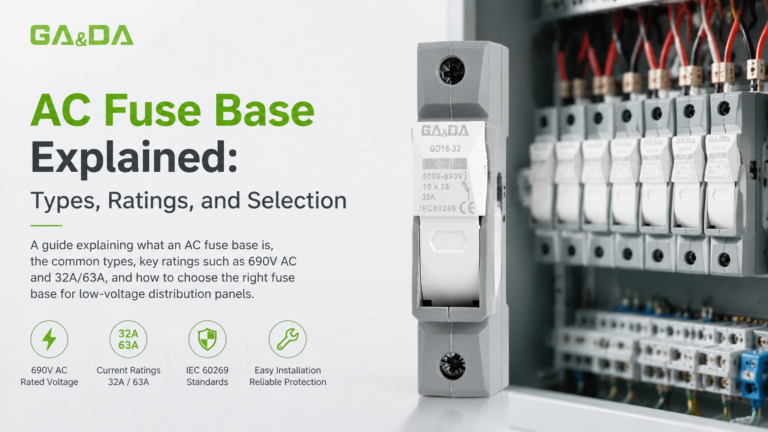
Panduan praktis tentang soket sekring AC: fungsi, jenis-jenis yang umum, nilai-nilai yang perlu diperhatikan, serta cara memilih yang tepat untuk panel listrik Anda.
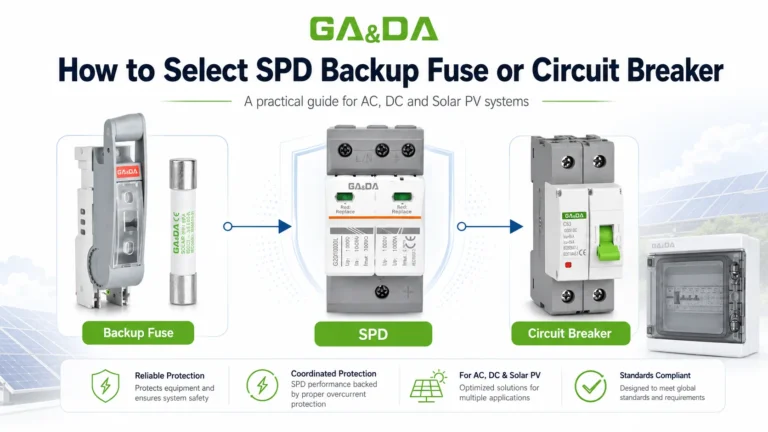
Pelajari cara memilih sekring cadangan SPD atau pemutus arus untuk sistem perlindungan lonjakan arus AC, DC, dan PV surya. Hindari kesalahan umum dalam penentuan ukuran dan pemasangan.