Automatic vs Manual Transfer Switch: Which One Should You Choose?
Published: Author: info@cngdfl.com
Have you ever wondered what really happens when the power suddenly goes out?More importantly, how does your backup generator safely take over without damaging your electrical system—or putting people at risk? The answer almost always comes down to one critical component: the transfer switch.
In this article, we will compare an automatic transfer switch and a manual transfer switch in detail. By the end, you will clearly understand how each option works, where it is best used, and how to choose the right solution for your specific power system.
What Is a Transfer Switch and Why Does It Matter?
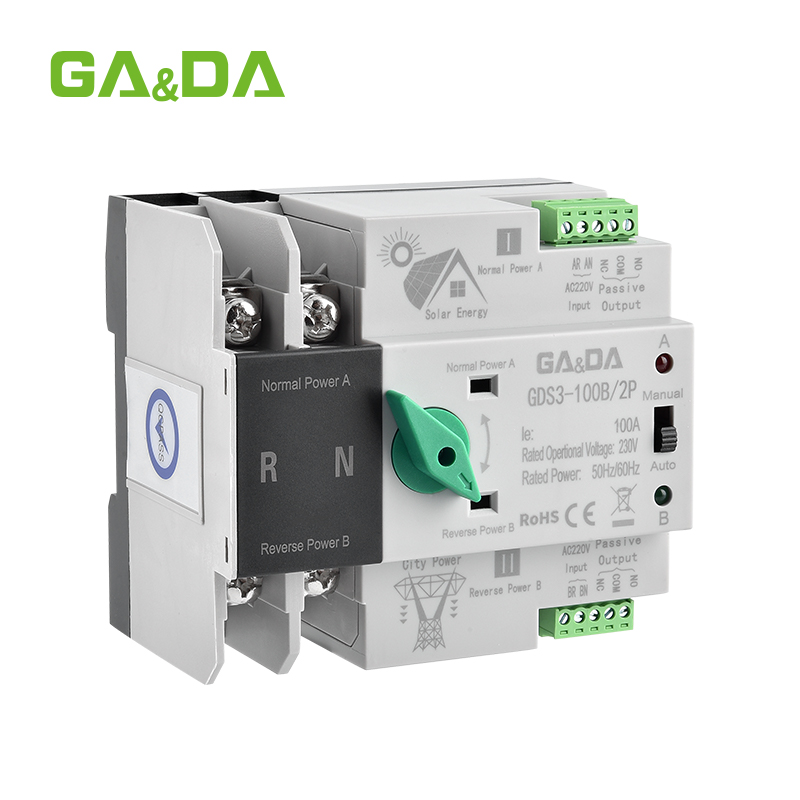
A transfer switch is an electrical device that connects your load to one power source at a time. In most systems, this means switching between utility power and a backup generator.
Without a transfer switch, power can flow in unsafe directions. This can cause:
Backfeeding into the utility grid
Severe equipment damage
Serious safety risks for utility workers
In short, a transfer switch is not just convenient—it is essential for safety, reliability, and code compliance.
What Is an Automatic Transfer Switch?
An automatic transfer switch, often called an ATS, monitors the utility power continuously. When it detects a voltage loss or abnormal condition, it reacts immediately.
Here is how an automatic transfer switch typically works:
Utility power fails
The ATS sends a signal to start the generator
Once generator power is stable, the ATS transfers the load
When utility power returns, the system switches back automatically
You do not need to be present. The entire process happens in seconds.
Key Advantages of an Automatic Transfer Switch
An automatic transfer switch is designed for reliability and speed. Its main advantages include:
Fast response time
No manual operation required
Reduced downtime
Higher safety level for critical loads
Because of these benefits, ATS solutions are widely used in:
Hospitals and medical facilities
Data centers
Industrial plants
Commercial buildings
Residential standby generator systems
What Is a Manual Transfer Switch?
A manual transfer switch requires human action. When utility power fails, you must start the generator and physically move the switch to transfer the load.
This approach is simpler, but it still provides safe isolation between power sources.
Key Characteristics of a Manual Transfer Switch
Manual systems are often chosen for their simplicity. Typical features include:
Lower initial cost
Straightforward design
Minimal electronics
High mechanical reliability
Manual transfer switches are commonly used with:
Portable generators
Small commercial installations
Temporary or seasonal backup power systems
However, the system only works when someone is available to operate it correctly.
Automatic vs Manual Transfer Switch: Core Differences
At first glance, both devices serve the same purpose. In practice, their performance and use cases are very different.
Feature
Automatic Transfer Switch
Manual Transfer Switch
Operation
Fully automatic
Operator-controlled
Response time
Seconds
Minutes
Human involvement
None
Required
Cost
Higher
Lower
Best for
Critical loads
Non-critical loads
This comparison helps clarify why the choice depends more on application than on preference.
Performance and Reliability Considerations
When evaluating a transfer switch, reliability is often the deciding factor.
An automatic transfer switch provides consistent performance because it does not rely on human judgment. It responds the same way every time.
A manual transfer switch can be very reliable as well, but only if:
The operator is trained
Procedures are followed correctly
Someone is present during outages
For industrial and commercial environments, consistency usually outweighs simplicity.
Installation and Maintenance Differences
Installation complexity also varies between the two options.
Automatic Transfer Switch Installation
Requires control wiring
Often integrated with generator controllers
Must be carefully programmed and tested
Manual Transfer Switch Installation
Simpler wiring
Fewer control components
Faster commissioning
In terms of maintenance, automatic systems require periodic testing of sensors and controls, while manual systems focus mainly on mechanical inspection.
Cost Comparison: Initial vs Long-Term Value
It is tempting to choose a manual transfer switch based on price alone. However, total cost should include operational impact.
An automatic transfer switch:
Costs more upfront
Reduces downtime losses
Minimizes human error
A manual transfer switch:
Has a lower purchase price
May increase downtime
Depends on operator availability
For businesses, even a short power interruption can cost more than the price difference between the two systems.
Choosing the Right Transfer Switch for Your Application
So, which option is right for you?
You should consider an automatic transfer switch if:
Your loads are critical
Power interruptions are unacceptable
The system must operate unattended
A manual transfer switch may be sufficient if:
Power outages are infrequent
Budget is limited
Operators are always available
If you are unsure, evaluating your load priority and operational risk usually leads to a clear answer.
When to Seek Professional Guidance
Every power system is different. Factors like voltage, phase, amperage, and application environment all matter.
If you are planning a new installation or upgrading an existing system, it is often helpful to consult with a qualified supplier or engineer. A short discussion can prevent costly mistakes and ensure long-term reliability.
Conclusion
Choosing between an automatic and a manual transfer switch is ultimately about risk, reliability, and responsibility. Both options are proven solutions, but they serve very different needs.
If your application demands speed, safety, and consistency, an automatic transfer switch is often the better investment. If simplicity and cost control are your priorities, a manual transfer switch can still deliver dependable performance.
Understanding these differences allows you to make a confident, informed decision—and build a safer, more reliable power system.
FAQ
What is the main difference between automatic and manual transfer switches?
The main difference is operation. An automatic transfer switch works without human intervention, while a manual transfer switch requires an operator.
Is an automatic transfer switch required by code?
In many critical applications, electrical codes strongly recommend or require automatic transfer switching. Requirements vary by region and use case.
Can a manual transfer switch be used for a home generator?
Yes. Manual transfer switches are commonly used for residential backup systems with portable generators.
Which transfer switch is better for industrial use?
Most industrial facilities choose an automatic transfer switch due to higher reliability and reduced downtime.
Does a transfer switch protect my generator?
Yes. A properly selected transfer switch prevents improper connections and electrical conflicts that can damage generators and loads.
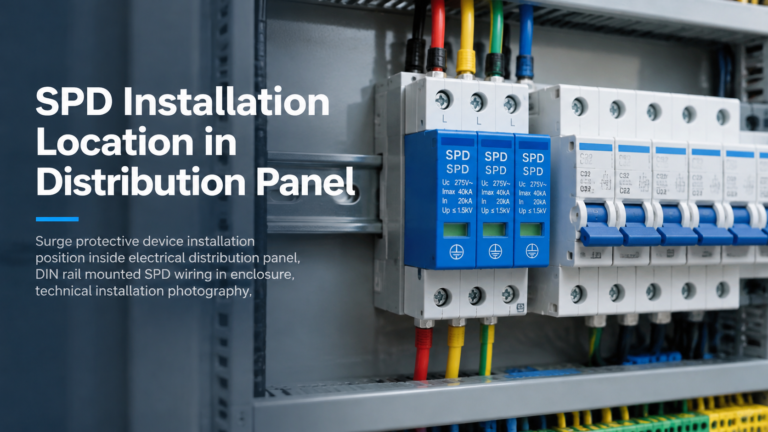
Where a surge protective device is installed determines how much of the surge it actually intercepts. A correctly specified device placed in the wrong position provides far less protection than its datasheet suggests — and because the installation still looks compliant, the shortfall is rarely detected until equipment fails. This guide covers surge protective device […]
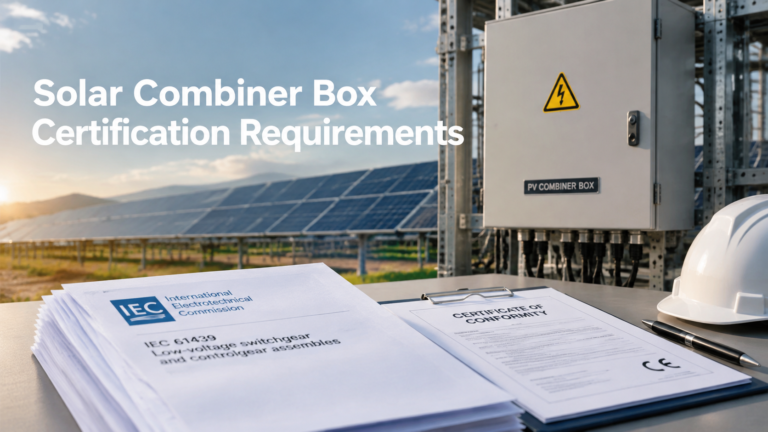
Certification requirements sit between a solar combiner box being technically suitable and being accepted. In practice, a box that meets every functional requirement can still be rejected at tender stage or on site because the documentation supporting its conformity does not match what the market expects. This is a documentation and compliance topic rather than […]
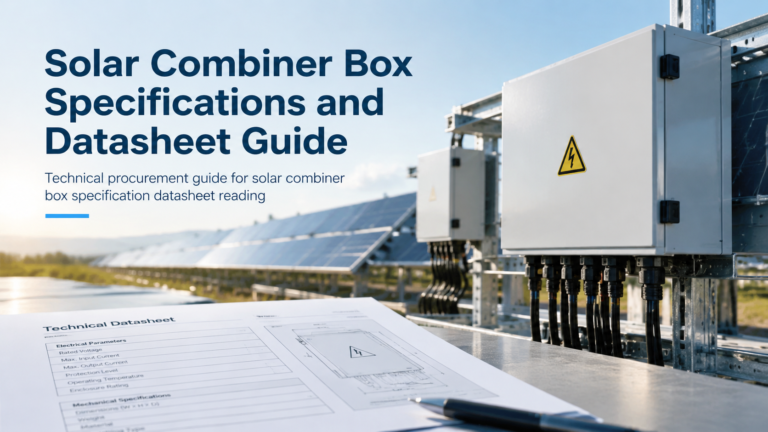
Most solar combiner box datasheets open with a table of ratings, and most buyers skim past it. That table is where the decision actually gets made. A combiner box is a passive enclosure — it does not protect anything by itself — so every number on its datasheet is either a limit you must stay […]