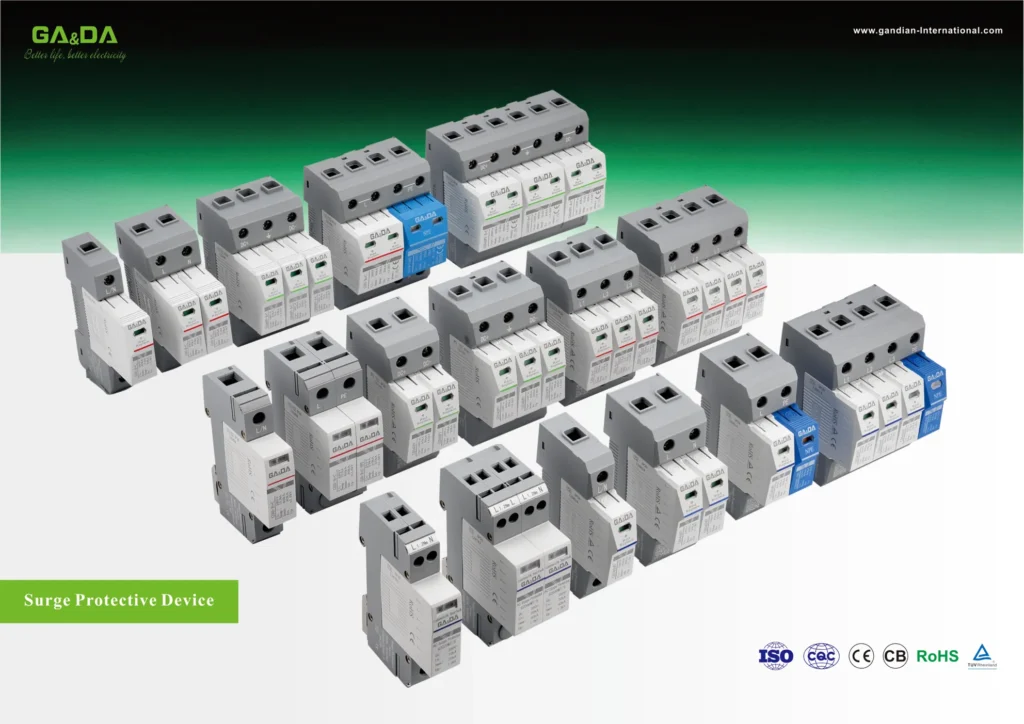
Surge Protective Device
Iimp, In, Imax and Up Explained: How to Read SPD Specifications
This guide explains SPD specifications including Iimp, In, Imax, Up and Uc, helping buyers compare AC, DC and PV SPDs more accurately.
Read More
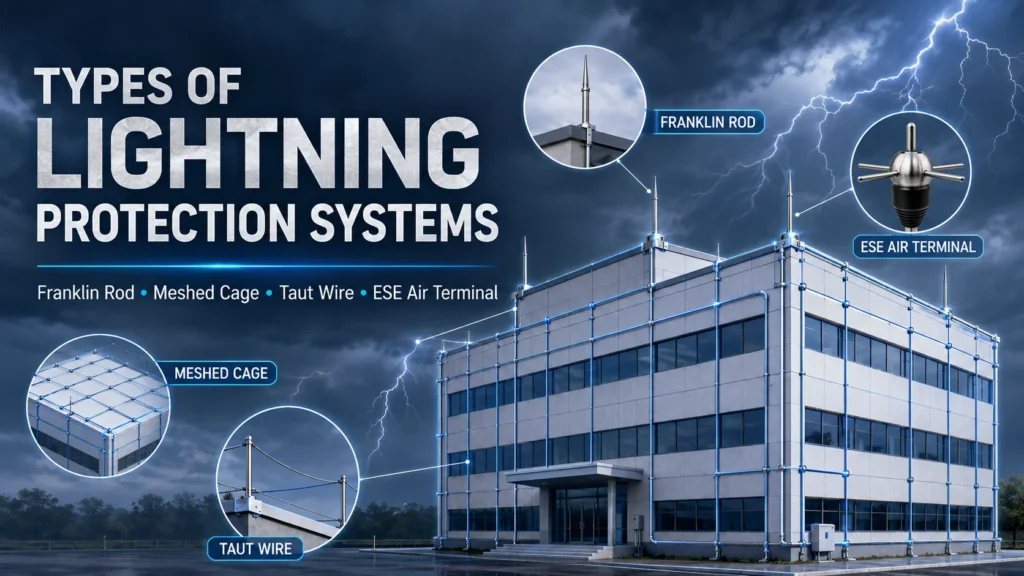
Lightning is a natural phenomenon that can pose serious risks to buildings and people. A lightning conductor is a device designed to capture lightning strikes in a designated area and safely redirect the electrical current into the ground. The currents can be extremely powerful, sometimes exceeding 350 kA, so effective protection is crucial to prevent fires, structural damage, and other hazards.
Lightning protection systems are essential for both safety and preservation of structures. There are several types, each suited to different applications and environments.
1. Franklin Rod
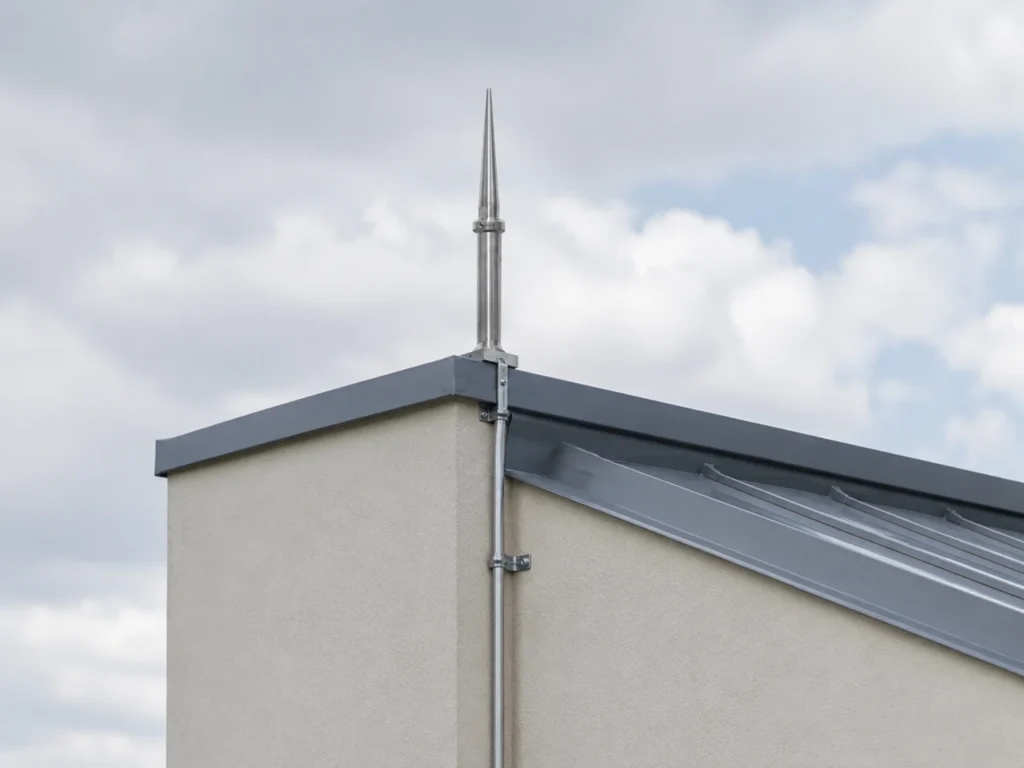
Developed by Jacques de Romas and Benjamin Franklin, the Franklin rod is a traditional lightning protection method. It consists of a metal rod installed at the highest point of a building and connected to the ground via down conductors. Under ideal conditions, it protects an area with a radius of up to 30 meters.
Advantages:
Disadvantages:
Best for: Antennas, small houses, small churches, chimneys
Standards: IEC EN 62561 (components), IEC EN 62305-3 (installation)
2. Meshed Cage
Based on the Faraday cage principle, this system surrounds the building with a conductive mesh on the roof and walls. It is connected to grounding loops, and lightning rods may be placed at strategic points. Smaller mesh sizes provide higher levels of protection.
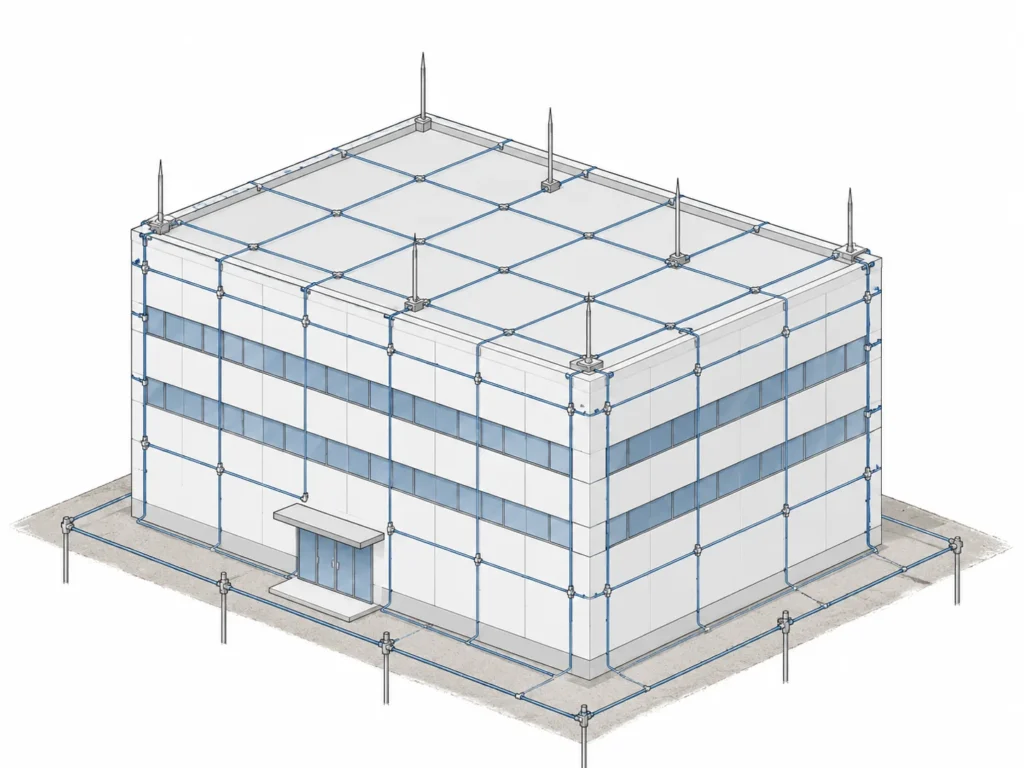
Advantages:
Disadvantages:
Best for: Data centers, sensitive electrical installations
Standards: IEC EN 62561, IEC EN 62305-3
3. Taut Wire Lightning Conductors
These systems function similarly to meshed cages but are installed above the building, at a distance. Conductive wires are held under tension and connected to grounding points, capturing lightning before it reaches the structure.
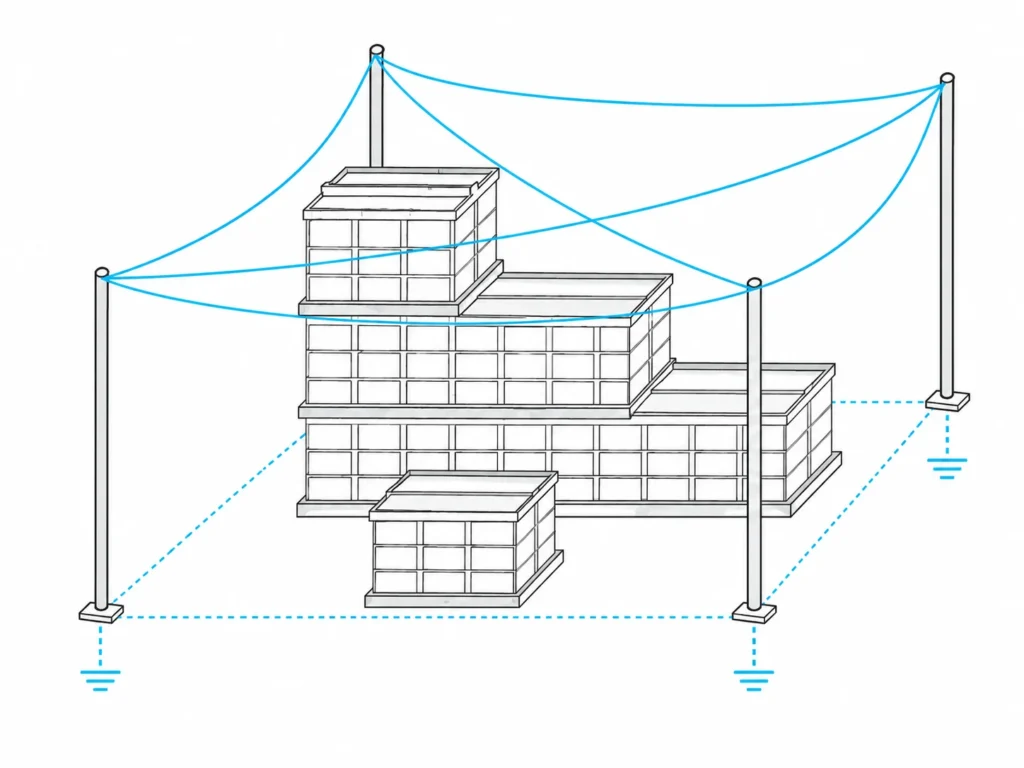
Advantages:
Disadvantages:
Best for: Outdoor storage, industrial areas, launch pads
Standards: IEC EN 62561, IEC EN 62305-3
Early Streamer Emission (ESE) Air Terminal
Originating in France in the 1980s, the ESE system generates an ascending electrical streamer that triggers a lightning strike earlier. This allows the terminal to capture lightning at a higher point and protect a larger area.
There are two types: electronically triggered, which ionizes the air to attract lightning, and geometrically triggered, which relies on the terminal’s shape to guide strikes.
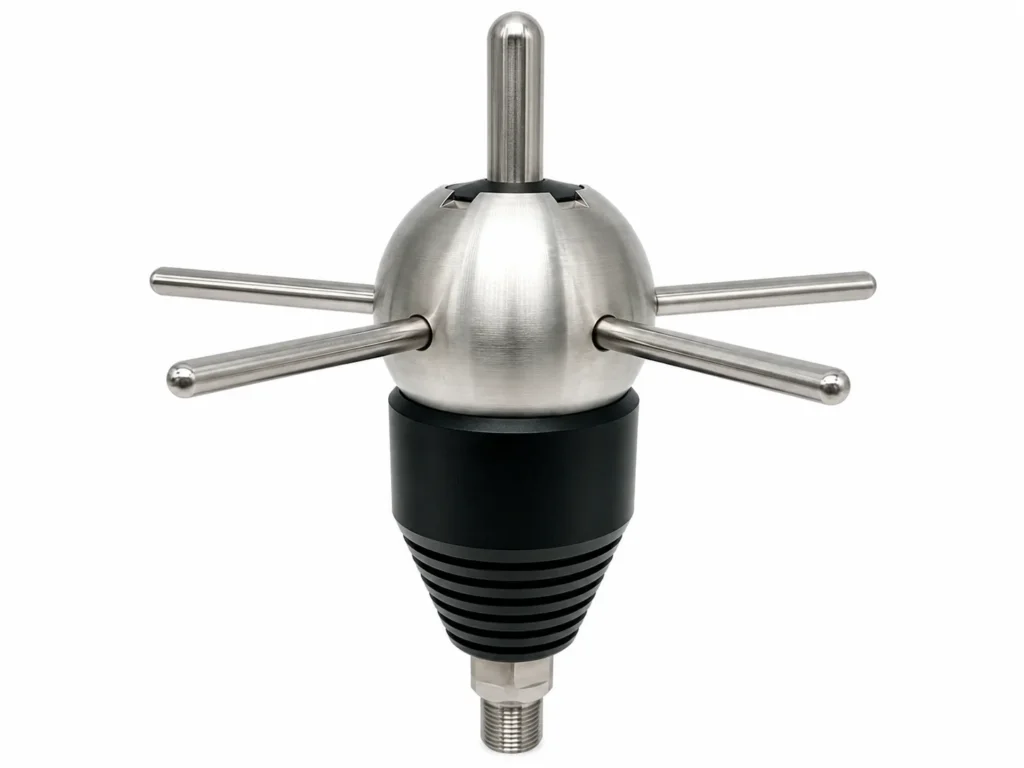
Advantages:
Disadvantages:
Standards: NF C 17-102
| System Type | Working Principle | Advantages | Disadvantages | Best Use | Standards |
|---|---|---|---|---|---|
| Franklin Rod | Metal rod captures strikes at building apex | Simple, cost-effective, discreet | Limited coverage, less suitable for large buildings | Small houses, antennas, chimneys | IEC EN 62561, IEC EN 62305-3 |
| Meshed Cage | Conductive mesh surrounds roof/walls | Reduces electromagnetic effects, maintains equipotentiality | Complex, high cost | Data centers, sensitive equipment | IEC EN 62561, IEC EN 62305-3 |
| Taut Wire | Elevated wires above building | Protects open areas, maintains equipotentiality | Complex, costly, visually prominent | Outdoor storage, industrial areas | IEC EN 62561, IEC EN 62305-3 |
| ESE Air Terminal | Creates early ascending streamer | Captures lightning earlier, covers large area | Requires correct installation, certification needed | Tall or complex structures | NF C 17-102 |
Lightning may not only strike directly; induced surges can damage electrical systems. Combining physical conductors with surge protection devices (SPDs) ensures equipment and circuits remain safe. SPDs divert dangerous voltage spikes to ground, protecting electronics, automation systems, and communication equipment.
At GA&DA Electric, we provide high-quality surge protection devices suitable for residential, commercial, and industrial applications. Our products are certified to IEC/EN standards, offering reliable protection when integrated into a complete lightning protection plan.
Protect your building and electrical systems today! Explore our complete range of lightning protection solutions and surge protection devices at GA&DA Electric. Our certified products and expert guidance ensure safety and reliability for homes, commercial buildings, and industrial facilities.
For most residential buildings, a Franklin rod combined with a surge protection device provides sufficient protection.
ESE terminals capture lightning earlier and cover a larger area, making them suitable for taller or complex structures. Franklin rods remain effective for smaller buildings.
Systems should be checked annually, ensuring conductors, grounding, and air terminals are intact and compliant with standards.
Yes. Lightning rods prevent direct strikes but SPDs protect electrical circuits from induced surges. Both work together for full protection.
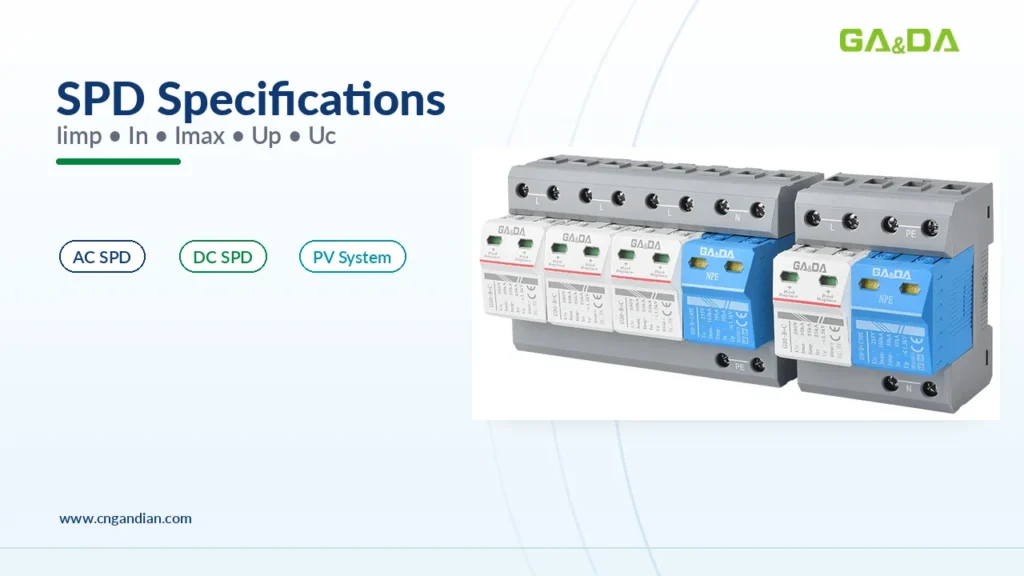
This guide explains SPD specifications including Iimp, In, Imax, Up and Uc, helping buyers compare AC, DC and PV SPDs more accurately.
Read More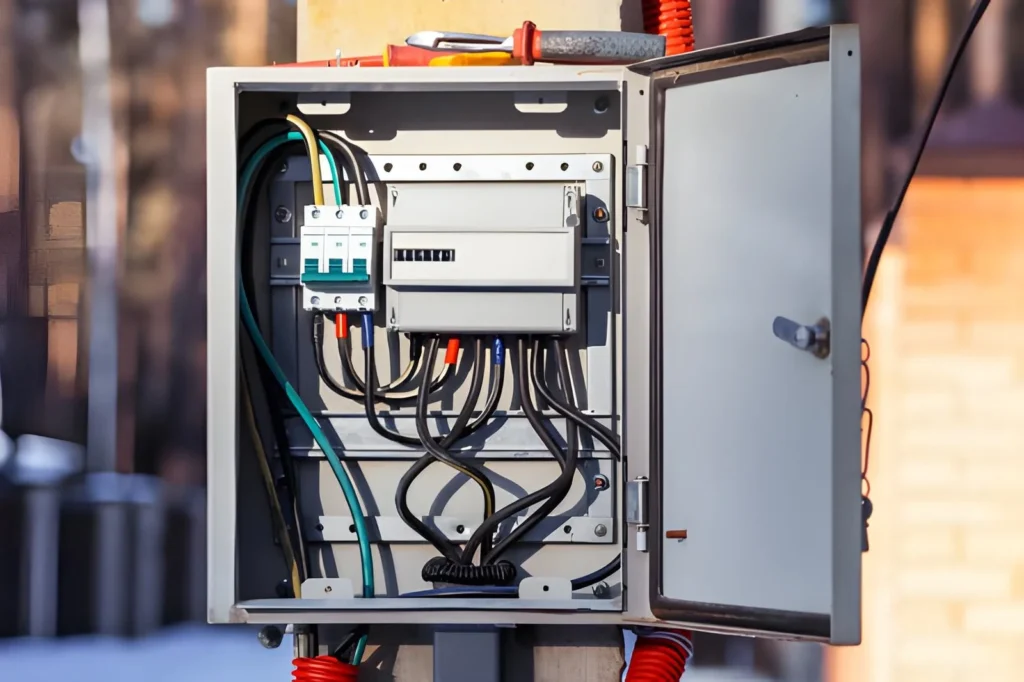
When you’re sitting in front of yet another RFQ about AC surge protective device for industrial applications, the real question is: “Which SPD will survive a real factory floor, keep PLCs alive, and not blow my budget?” After years working with AC surge protection device for 3‑phase systems, Type 2 AC surge protective device for distribution boards, and lightning surge […]
Read More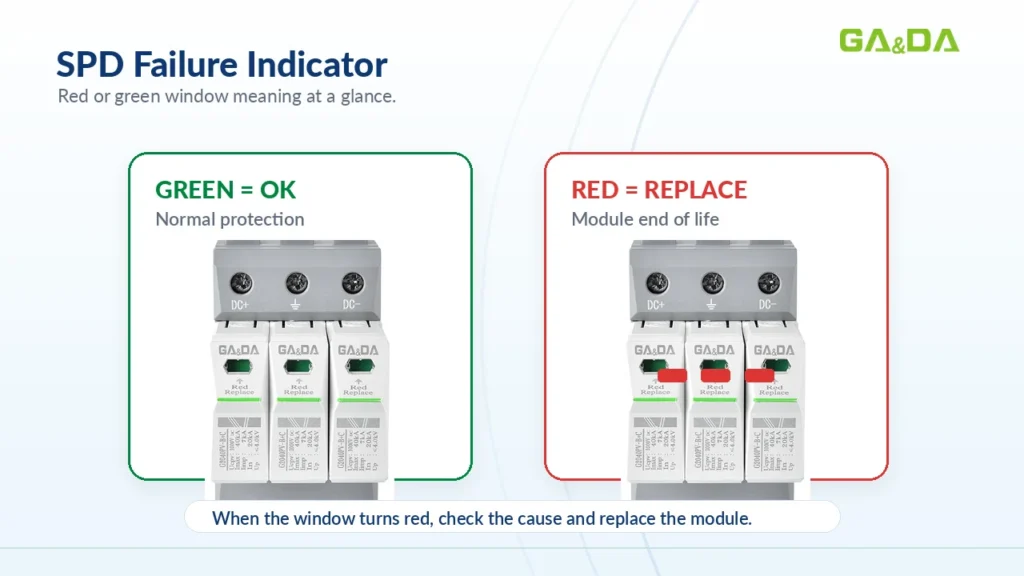
This article explains the SPD Failure Indicator, red and green window meanings, common failure causes, replacement steps and remote signaling contacts.
Read More