Reliable Fuse Disconnectors for Industrial Safety and High Performance
Uncategorized
Reading time:
7 minutes
Share:
Share on Twitter
Share on Facebook
Share on LinkedIn
Table of Contents
What is a Fuse Disconnector? Beyond the Basics
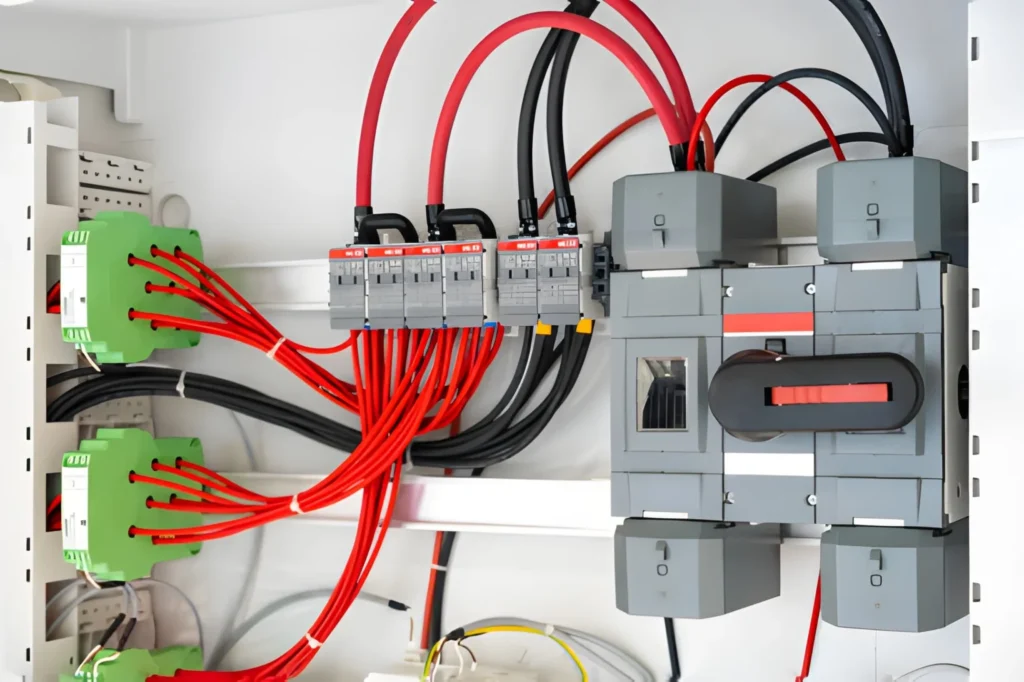
A fuse disconnector is a hybrid electrical device that combines two essential functions: reliable overcurrent protection and manual electrical isolation. Unlike a simple fuse holder, it integrates a switch disconnector fuse mechanism that allows safe interruption of power for maintenance or emergency purposes.
Defining the Dual Function: Fuse Plus Manual Isolation
Fuse: Provides short circuit protection by melting the fuse link during overload or fault conditions.
Manual Isolation: Enables users to physically disconnect the circuit, creating a safe working environment by breaking the circuit manually.
This dual role ensures electrical isolation beyond just breaking the load, making fuse disconnectors a trusted choice in low voltage switchgear applications.
The Mechanics of Safety: Physical Air Gap for Maintenance
One key safety feature is the creation of a visible physical air gap when the fuse disconnector is in the open position. This gap confirms that the circuit is fully isolated, offering verification for maintenance personnel before they begin work. It also facilitates lockout/tagout (LOTO) procedures, enhancing workplace electrical safety.
Housing: Made of flame-retardant, high-temperature resistant materials to withstand fault conditions.
Contact System: Often features silver-plated contacts for low resistance and efficient current flow.
Arc Chute: Designed to suppress and safely extinguish arcs generated when the circuit is opened under load or fault conditions.
Together, these components ensure that the fuse disconnector not only protects equipment but also safeguards personnel while complying with international standards such as IEC 60947-3.
Fuse Disconnector vs. Circuit Breaker vs. Isolator Switch
Choosing between a fuse disconnector, circuit breaker, and isolator switch depends on your specific needs like cost, breaking capacity, and maintenance. Here’s a quick comparison:
Feature
Fuse Disconnector
Circuit Breaker
Isolator Switch
Cost
Low to medium
Higher
Low
Breaking Capacity
Very high (especially short-circuit)
Medium to high
None (no load breaking)
Maintenance
Simple (replace fuse link)
Requires inspection & testing
Minimal
Visible Isolation
Yes (physical air gap)
No
Yes
Load Breaking
Usually no, some designs yes
Yes
No
Use Case
Overcurrent + isolation
Overcurrent + load protection
Isolation only
Why Choose a Fuse Disconnector?
Higher short-circuit breaking capacity: Fuse disconnectors, especially those using HRC (high rupturing capacity) fuse links, excel at safely interrupting heavy short circuits.
Visible isolation for safety: The clear physical air gap confirms electrical isolation during maintenance, reducing risk of accidents.
Cost-effectiveness for industrial loads: They’re generally cheaper than circuit breakers, making them popular for industrial control panels and power distribution.
Load Breaking vs. No-Load Breaking: Typically, fuse disconnectors are designed for no-load breaking — they isolate circuits safely but are not intended to interrupt current under load. Some advanced versions support load breaking but this is less common.
In short, fuse disconnectors combine reliable overcurrent protection with manual disconnection and visible isolation, striking a balance between safety, cost, and performance for many industrial applications.
Types of Fuse Disconnectors and Their Applications
Fuse disconnectors come in different types to suit various electrical setups, each designed for specific roles and environments.
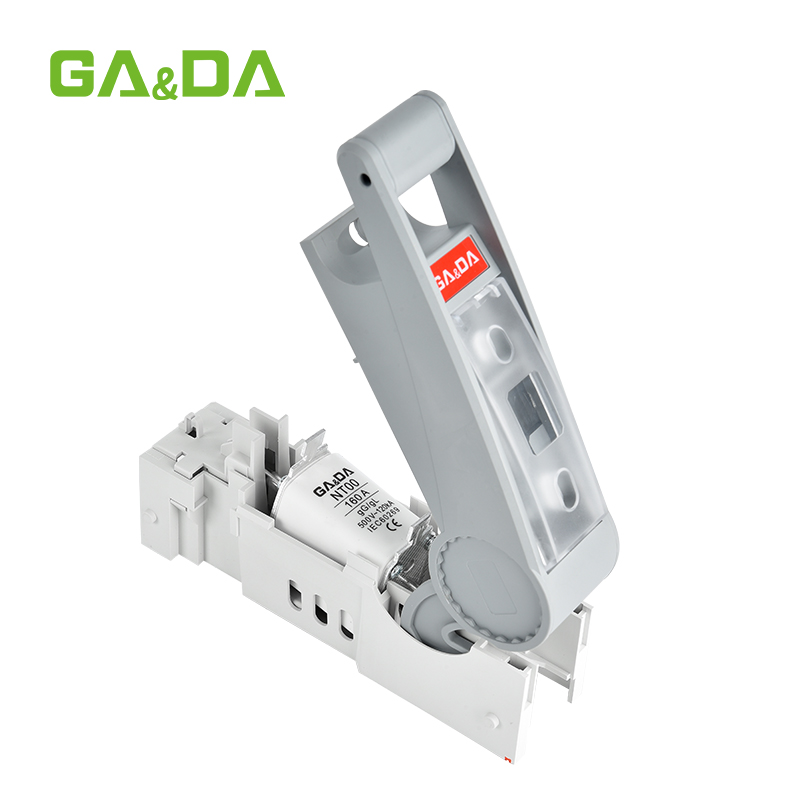
NH (Blade) Fuse Switch Disconnectors Commonly used in power distribution and industrial control panels, NH fuse disconnectors are known for their durability and high breaking capacity. Their robust design makes them ideal for heavy-duty applications where reliable short circuit protection and manual electrical isolation are essential.
Cylindrical Fuse Disconnectors (DIN Rail Mounted) These are compact units mainly used in smaller control circuits and industrial control panel components. Designed to fit standard DIN rails, cylindrical fuse disconnectors offer convenient installation and easy fuse replacement, making them perfect for secondary protection in smaller boards.
DC Fuse Disconnectors for Solar (PV) Systems Specialized for photovoltaic (PV) systems, these fuse disconnectors handle high DC voltages and include arc suppression chambers crucial for safe load break switching in PV arrays. They meet strict PV requirements for electrical isolation switches to ensure safe maintenance and fault handling in solar installations.
Each type provides tailored benefits depending on your specific application, whether it’s a low voltage switchgear in an industrial environment or a photovoltaic DC disconnect in renewable energy systems. Choosing the right fuse disconnector means matching the device’s features to the electrical demands and safety standards of your project. For more details on low-voltage electrical safety devices, check out our range of GDDC7-63 DC miniature circuit breakers.
Technical Specifications: How to Select the Right Fuse Disconnector
Choosing the right fuse disconnector means matching technical specs with your system’s needs. Here’s what to focus on:
Voltage & Current Ratings
AC vs. DC: Make sure the unit fits your supply type. DC fuse disconnectors, especially for photovoltaic (PV) DC disconnect systems, handle higher, more persistent arcs than AC versions.
Utilization Categories: Check if it suits load breaking or no-load breaking duties to ensure proper operation.
Specification
Common Options
Notes
Voltage
230V, 400V AC, 600V DC
Confirm max system voltage
Current
From 10A up to 125A or more
Based on load and fuse rating
Number of Poles
1P: Single phase circuits or control signals
3P: Three-phase systems for power distribution
3P+N: Three-phase plus neutral, common for balanced loads
Thermal Management
Use materials with low power dissipation to avoid overheating
Quality fuse disconnectors often feature thermally resistant plastics and smart design to keep temps down
Compliance & Standards
Look for products certified to IEC 60947-3 — it’s the key international standard for switch disconnector fuses
Also consider regional marks like UL or CE marking for safety and quality assurance
Compliant devices ensure reliable short circuit protection and electrical isolation
For more details on fuse ratings and current interrupting capacity, check out this comprehensive fuse ratings explained guide.
This quick specs check helps you pick the right switch disconnector fuse that fits your industrial control panel or low voltage switchgear smoothly and safely.
Installation and Maintenance Best Practices
Proper installation and regular maintenance are key to getting the most out of your fuse disconnector.
Mounting Guidelines: Busbar vs. Baseplate
Fuse disconnectors can be mounted on busbar systems or baseplates depending on your setup.
Busbar mounting is common in industrial control panels where compact, modular assembly is needed. It offers easy connection to power distribution.
Baseplate mounting suits heavier-duty applications, providing a sturdy platform and simplifying routine checks.
Choosing the right mounting method ensures secure electrical isolation and reliable operation.
Safety Protocols: Lockout/Tagout (LOTO) Use
Safety is non-negotiable during installation and maintenance. Employ Lockout/Tagout (LOTO) procedures to prevent accidental energizing of circuits. This means:
Disconnect power using the fuse disconnector’s visible isolation feature
Lock the handle in the OFF position and tag it clearly
Only qualified personnel should handle fuse replacement or servicing
LOTO practices align with electrical safety standards, minimizing risks during maintenance.
Fuse Replacement: Safe Extraction without Special Tools
Replacing the fuse link is straightforward and safe with most fuse disconnectors:
The design allows manual extraction without needing special tools
The physical air gap created by the disconnector ensures no live contact during replacement
Always verify the device is isolated and the fuse is fully blown before handling
Following these steps cuts downtime and keeps your system protected without hassle.
For more on safe power switching, check out our resources on power transfer switches designed for industrial safety.
Why GA&DA Fuse Disconnectors Stand Out
GA&DA fuse disconnectors are built with quality and reliability in mind, making them a trusted choice in industrial control panel components. Here’s why they stand out:
Material Quality: GA&DA uses flame-retardant and high-temperature resistant plastics for the housing. This ensures excellent durability and safety even under tough working conditions, reducing fire risks and enhancing overall equipment life.
Contact Efficiency: The contact system features silver-plated contacts that provide low resistance and improved conductivity. This design minimizes energy loss and heat buildup, optimizing performance and extending the life of the fuse disconnector.
Testing & Reliability: Every GA&DA fuse disconnector undergoes rigorous quality control and testing to meet international standards like IEC 60947-3. Certifications and consistent factory inspections guarantee dependable short circuit protection and electrical isolation switch operation, so you get safe and reliable load break switching every time.
Choosing GA&DA means investing in a fuse disconnector that combines excellent material integrity, superior contact efficiency, proven reliability — all critical factors for dependable low voltage switchgear in demanding industrial environments. For detailed information on compatible protective devices, explore our range of molded case circuit breakers designed to work alongside fuse disconnectors.
Frequently Asked Questions (FAQ)
Question
Answer
Can a fuse disconnector be used as a main switch?
Yes, a fuse disconnector can serve as a main switch since it combines overcurrent protection with manual isolation, providing visible electrical isolation for safety during maintenance. It meets safety standards like IEC 60947-3 for such use.
What’s the difference between a fuse holder and a fuse disconnector?
A fuse holder simply holds the fuse for overcurrent protection, without manual isolation. A fuse disconnector offers both fuse protection and a mechanical switch to isolate the circuit, creating a physical air gap for safe maintenance.
How do you size a fuse link for a disconnector?
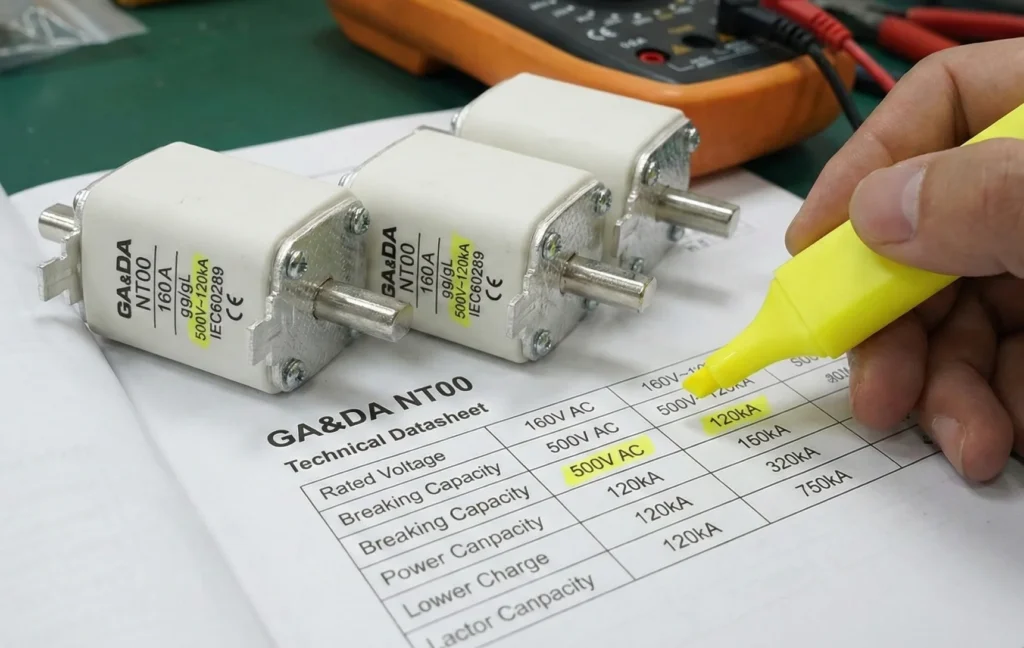
Fuse links should match the voltage, current rating, and breaking capacity of the fuse disconnector. Consider the load type, short-circuit current, and application (AC or DC). It’s best to refer to specific fuse link specs like those in NH or DC fuse disconnectors for solar systems, such as our GDHR18-160 Fuse Switch Disconnector series and compatible NT00 fuse links.
If you need to customize the fuse disconnector to your application, always check the manufacturer’s guidelines and local electrical codes for the safest and most effective protection.
TABLE OF CONTENTS Engineers who understand fuse breaking capacity and voltage ratings can design safer, more reliable low‑voltage and PV systems. In any power distribution or PV combiner box, the fuse breaking capacity defines the maximum fault current the fuse can safely interrupt at its rated voltage without exploding or failing dangerously. In practical panel […]
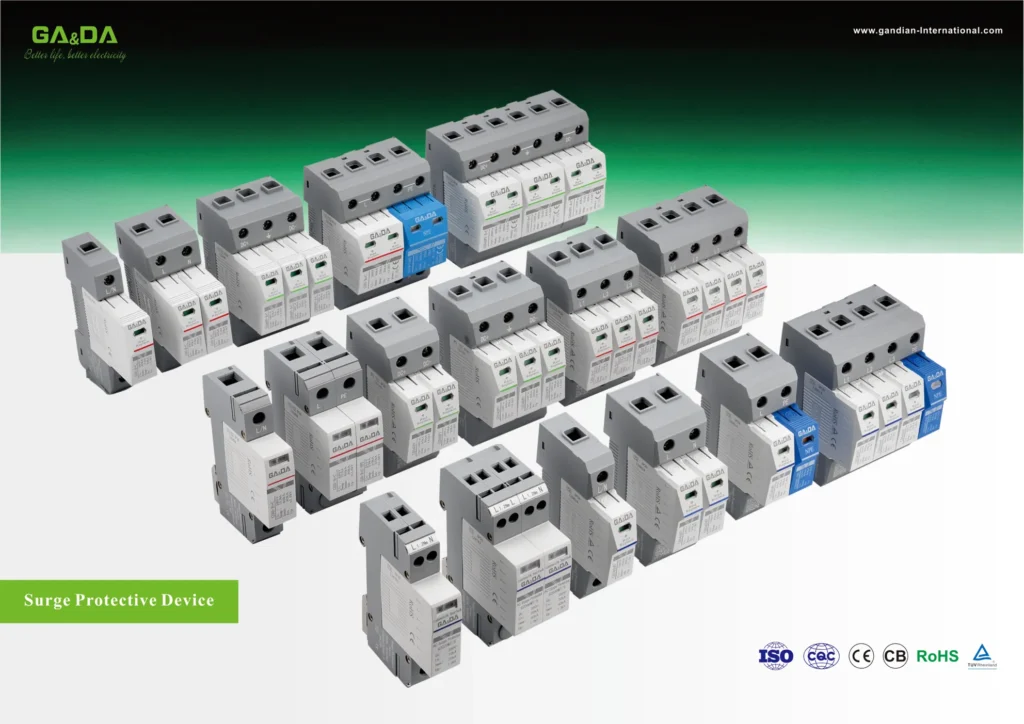
In today’s highly electrified world, protecting electrical systems from transient overvoltage is no longer optional—it is essential. Whether in industrial automation, photovoltaic systems, data centers, or commercial infrastructure, surge protection plays a critical role in ensuring operational continuity and equipment longevity. If you are sourcing from overseas, choosing the right SPD manufacturer (Surge Protection Devices […]
GANDIAN Circuit Breakers – Reliable Overload and Short-Circuit Protection Experience unmatched safety and performance with GANDIAN Circuit Breakers, expertly designed to protect your electrical systems from overloads and short circuits. Whether for residential, commercial, or industrial use, our miniature circuit breakers (MCB) and specialized breakers deliver dependable trip responses to safeguard your circuits and equipment. […]
We use cookies to enhance your browsing experience, serve personalised ads or content, and analyse our traffic. By clicking "Accept All", you consent to our use of cookies.