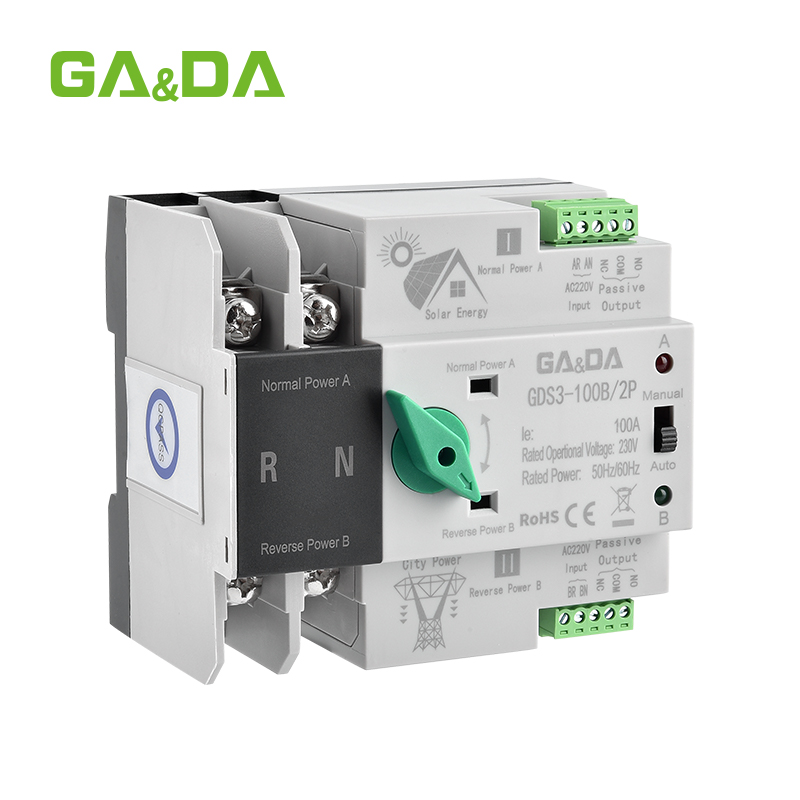
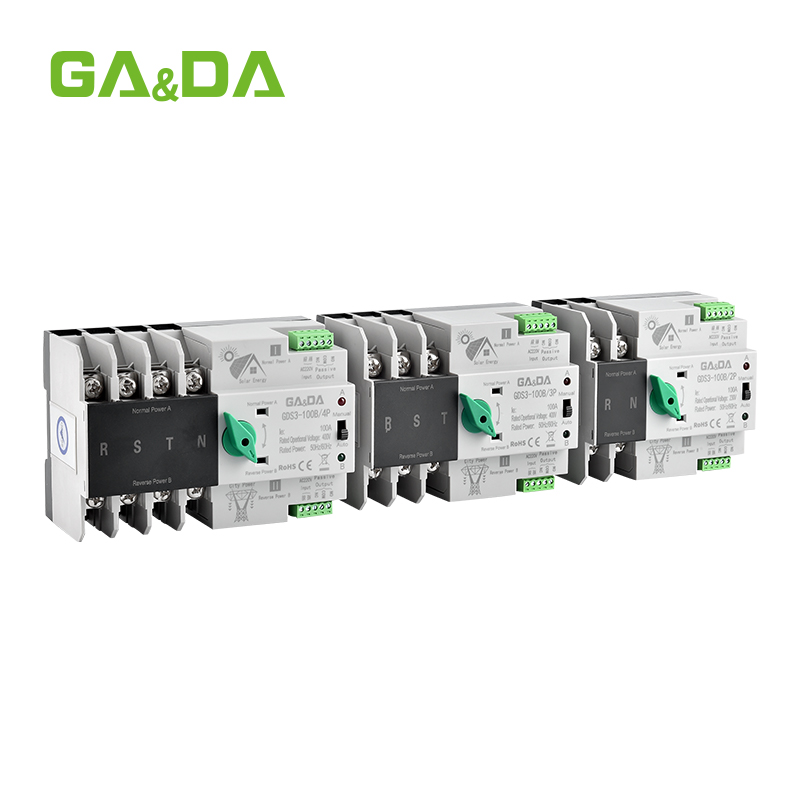
How to Choose the Right Transfer Switch for Your Power System
Published: Author: info@cngdfl.com
Table of Contents
Choosing a transfer switch may seem straightforward at first, but once you start comparing options, things can quickly become confusing. Automatic or manual? What size do you need? Does voltage or phase really matter? If you choose the wrong transfer switch, the result may be poor performance, safety risks, or unnecessary costs.
In this guide, we will walk you through how to choose the right transfer switch step by step. By the end, you will understand what factors truly matter and how to match a transfer switch to your specific power system with confidence.
Understand Your Power Source and Load Requirements
Before looking at any specifications, you need a clear picture of your power system. A transfer switch is not selected in isolation. It must work seamlessly with both your power source and your electrical loads.
Start by identifying:
The type of generator you are using
The loads that must remain powered during an outage
Whether the system is residential, commercial, or industrial
This basic understanding will guide every decision that follows.
Choose Between Automatic and Manual Transfer Switches
An automatic transfer switch monitors utility power continuously. When a failure occurs, it automatically starts the generator and transfers the load without user intervention.
Automatic transfer switches are ideal if:
Power interruptions are unacceptable
The site is unattended
Loads are critical or sensitive
They are widely used in industrial facilities, data centers, hospitals, and residential standby generator systems.
Manual Transfer Switch
A manual transfer switch requires an operator to start the generator and move the switch manually.
Manual transfer switches are suitable when:
Budget is limited
Power outages are infrequent
Operators are always available
For many small systems, manual switching remains a practical and reliable solution.
Automatic Transfer Switch
Manual Transfer Switch
Determine the Correct Transfer Switch Size
Sizing is one of the most common challenges when selecting a transfer switch. Choosing the wrong size can lead to overheating, voltage drops, or premature failure.
Rated Current (Amperage)
The transfer switch must be rated to handle the maximum current of the connected load. Common ratings include:
100A
200A
400A
Higher ratings for industrial applications
Always size the transfer switch based on the load, not just the generator capacity.
Avoid Oversizing and Undersizing
Oversizing increases cost without benefit, while undersizing creates safety risks. Accurate load calculation is essential for long-term reliability.
Consider Voltage and Phase Configuration
Voltage and phase are critical technical factors that cannot be overlooked.
Voltage Levels
Transfer switches are designed for specific voltage ranges, such as:
120/240V
208V
400V
480V
Selecting the wrong voltage rating can damage both the switch and connected equipment.
Residential systems typically use single-phase power, while commercial and industrial facilities often require three-phase transfer switches.
Always ensure the transfer switch matches your system’s electrical configuration.
Evaluate Application Environment and Use Case
Where and how the transfer switch is installed matters just as much as its electrical rating.
Residential Applications
In homes, transfer switches are commonly used to power essential circuits or the entire house during outages. Compact design and ease of operation are key considerations.
Commercial Applications
Commercial buildings require transfer switches that balance reliability and cost. Automatic transfer switches are often preferred to minimize downtime and protect business operations.
Industrial Applications
Industrial transfer switch applications demand robust construction, high endurance, and precise control logic. Environmental conditions such as temperature, dust, and humidity must also be considered.
Understand Transition Types
Transfer switches are also classified by how they transition between power sources.
Transition Type
Description
Best For
Open Transition
Break-before-make
General use
Closed Transition
Make-before-break
Sensitive loads
Soft Load Transfer
Gradual load transfer
Industrial systems
Selecting the correct transition type helps protect sensitive equipment and maintain system stability.
Review Installation and Compliance Requirements
Installation requirements vary by region and application. Electrical codes often dictate how transfer switches must be installed and operated.
Important considerations include:
Mounting location
Clearance and accessibility
Grounding and bonding
Compliance with local electrical standards
Failing to meet these requirements can result in unsafe operation or inspection failures.
Assess Maintenance and Long-Term Reliability
A transfer switch is a long-term investment. Maintenance requirements should be part of your decision-making process.
Automatic transfer switches may require:
Periodic functional testing
Control system inspection
Sensor calibration
Manual transfer switches generally require:
Mechanical inspection
Contact cleaning
Basic operational checks
Choosing a reliable design reduces downtime and extends service life.
Balance Cost Against Operational Risk
While price is always a factor, it should not be the only one. The true cost of a transfer switch includes its impact on operations.
An automatic transfer switch may cost more upfront, but it can:
Reduce downtime
Prevent human error
Protect critical loads
A manual transfer switch offers cost savings but requires operational discipline.
Understanding this balance helps you make a rational, long-term decision.
When to Seek Expert Support
If your system involves high power ratings, complex control logic, or industrial loads, professional guidance is highly recommended.
Working with an experienced supplier can help you:
Select the correct transfer switch specifications
Ensure compliance with applicable standards
Optimize system reliability
If you are planning a project or upgrading an existing system, requesting technical advice or a quotation early can prevent costly mistakes later.
Conclusion
Choosing the right transfer switch is a strategic decision that affects safety, reliability, and long-term performance. By understanding your power source, load requirements, electrical specifications, and application environment, you can select a transfer switch that truly fits your system.
A well-chosen transfer switch does more than move power. It protects your equipment, reduces risk, and ensures your power system performs exactly as expected when it matters most.
How do I know what size transfer switch I need?
You should size the transfer switch based on the total connected load, not just the generator rating.
Is an automatic transfer switch always better?
Not always. Automatic transfer switches are ideal for critical or unattended systems, but manual transfer switches work well in simpler applications.
Can one transfer switch power all loads?
Yes, if it is properly sized. In some cases, only essential loads are connected to reduce system cost.
Do transfer switches require regular maintenance?
Yes. Periodic inspection and testing help ensure reliable operation over time.
Can a transfer switch be used with renewable energy systems?
Some transfer switches are designed to integrate with hybrid or renewable power systems, depending on configuration.
Where a surge protective device is installed determines how much of the surge it actually intercepts. A correctly specified device placed in the wrong position provides far less protection than its datasheet suggests — and because the installation still looks compliant, the shortfall is rarely detected until equipment fails. This guide covers surge protective device […]
Certification requirements sit between a solar combiner box being technically suitable and being accepted. In practice, a box that meets every functional requirement can still be rejected at tender stage or on site because the documentation supporting its conformity does not match what the market expects. This is a documentation and compliance topic rather than […]
Most solar combiner box datasheets open with a table of ratings, and most buyers skim past it. That table is where the decision actually gets made. A combiner box is a passive enclosure — it does not protect anything by itself — so every number on its datasheet is either a limit you must stay […]