SPD
Power Transfer Switch Guide Manual and Automatic Options Explained
Explore reliable power transfer switches for home generators featuring manual and automatic options ensuring safe seamless backup power.
Read More
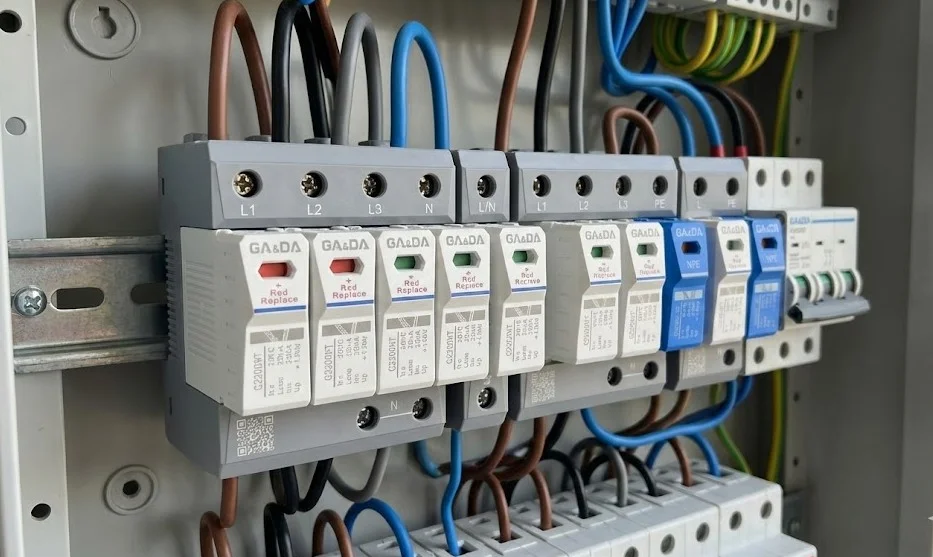
Selecting the right type 2 surge protective device is critical for keeping low-voltage power distribution boards, feeders, and final circuits safe from damaging transient overvoltages. A correctly chosen type 2 surge protective device will clamp common switching and induced lightning surges while coordinating with upstream breakers and downstream equipment. When the type 2 surge protective device is matched to the system voltage, earthing arrangement, and expected surge environment, it becomes a cost-effective way to reduce downtime, preserve power quality, and comply with modern standards such as IEC/EN 61643.
This guide explains how a type 2 surge protective device fits into low-voltage power distribution, which technical parameters really matter, and how to size and install it correctly so that protection performance in real projects matches the datasheet promises.
In a coordinated surge protection concept, a type 2 surge protective device is installed on the load side of the main service disconnect, typically in main or sub-distribution boards. While Type 1 SPDs deal with high-energy lightning currents at the service entrance, the type 2 surge protective device handles the majority of everyday surges that propagate through the network or are generated by internal switching operations.
A type 2 surge protective device works as a voltage-limiting element connected in parallel to the protected circuits, remaining high-impedance during normal operation but switching to a low-impedance state when the voltage rises above its threshold. It then diverts surge current to earth and limits the let-through voltage to a level compatible with the insulation of cables, breakers, and connected loads. In practical terms, this means fewer unexplained trips, less damage to power supplies and control gear, and longer equipment lifetime in low-voltage power distribution systems.
Product spotlight – general purpose type 2 surge protective device
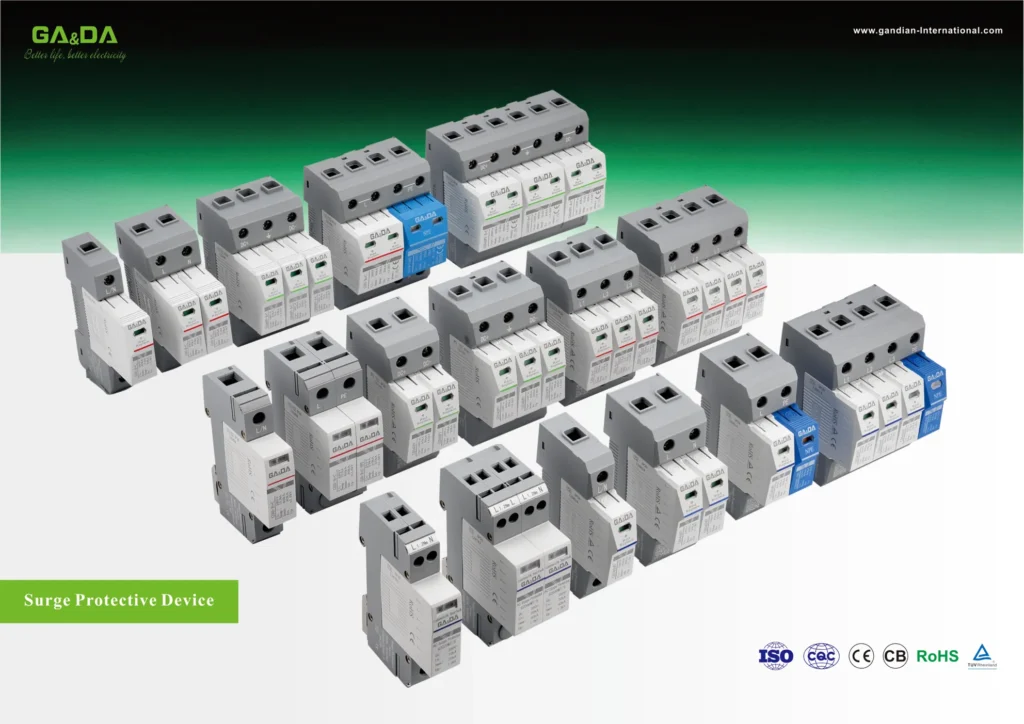
For typical AC distribution boards, the G2040DZ Type 2 AC surge protective device 40kA offers a 40 kA rating and DIN-rail mounting, making it a versatile choice for small commercial and residential panels.
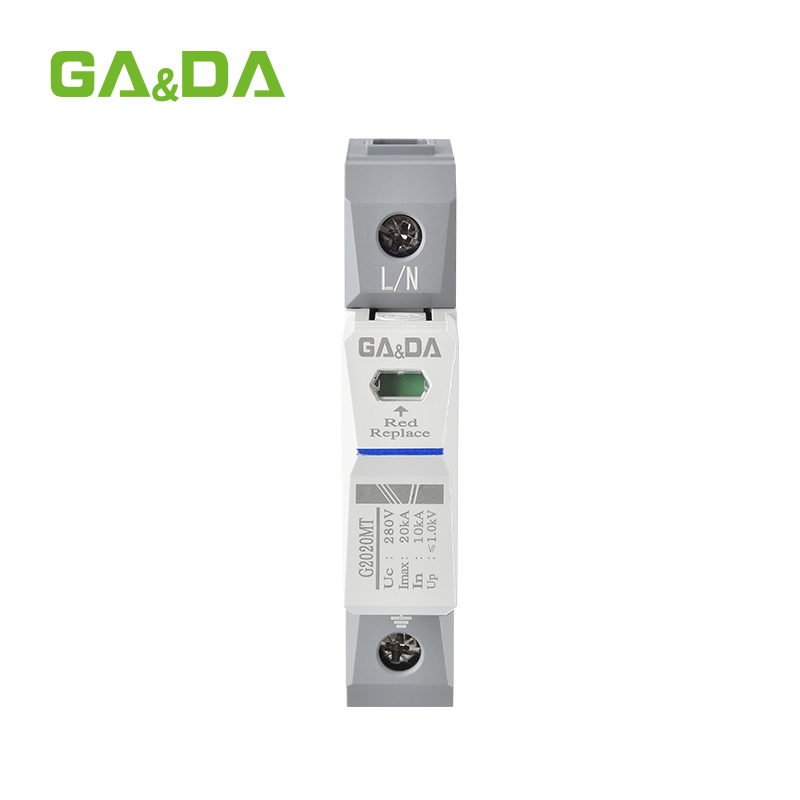
When comparing catalog pages, it is easy to focus only on price and kA rating, but choosing the right type 2 surge protective device requires understanding several key technical parameters. Standards such as IEC 61643-11 and application guide IEC 61643-12 define how these parameters are measured and how they should be used during selection.
The first step is to ensure the type 2 surge protective device is compatible with the system voltage and earthing arrangement. The maximum continuous operating voltage (Uc) must be greater than or equal to the highest RMS voltage that can appear at the SPD terminals under normal and abnormal but sustained conditions, including supply tolerances and neutral faults. For a 230/400 V TN-S or TN-C-S system, this typically means choosing phase-to-neutral and phase-to-earth modes with Uc values around or above 275 V, while three-phase-to-earth modes in some configurations may use higher Uc options.
The connection scheme of the type 2 surge protective device must also match the network earthing system (TN, TT, or IT), which affects how many poles are required and whether a dedicated N-PE module is needed. Selecting the wrong Uc or earthing configuration can either leave the SPD overstressed, causing premature ageing, or result in a protection level that is too high for the insulation and surge withstand capability of downstream equipment.
For a type 2 surge protective device, the nominal discharge current (In) and maximum discharge current (Imax) are expressed in kiloamperes using an 8/20 µs current waveform and describe the surge stress the device can handle during its lifetime. Selection guides highlight that location in the distribution system and the upstream breaker size are strong indicators of the kA rating required: smaller feeders may be well served by 20–40 kA SPDs, while large incoming panels and heavily exposed installations often justify 60–80 kA or more.
Another crucial parameter is the voltage protection level (Up), which is the maximum voltage measured across the SPD during standardized surge tests. A lower Up gives better protection to sensitive loads but usually requires care in coordination and may increase SPD cost. The goal is to choose a type 2 surge protective device with Up safely below the impulse withstand level of the equipment insulation but high enough to avoid unnecessary follow currents or nuisance operations.
Product spotlight – modular high-kA type 2 surge protective device
Where higher surge duty is expected on main distribution boards, the G2040MT modular Type 2 surge protective device 40kA and the broader G20XXMT modular range provide scalable kA ratings and pole counts for different low-voltage architectures.
(Insert G2040MT product image here and link it to the product URL above.)
Properly sizing a type 2 surge protective device means aligning its surge current rating and short-circuit withstand with the available fault current and with the protective device that backs it up. Type 2 SPDs are usually installed in parallel and therefore require either an internal or external overcurrent protective device (OCPD) to clear short-circuit faults without destroying the SPD housing.
Selection guidance from manufacturers and industry articles emphasizes two main factors for sizing: the location of the type 2 surge protective device in the distribution tree and the rating of the upstream breaker or fuse feeding that node. For example, for branch circuits protected by breakers up to around 80 A, many guides indicate that a 20–40 kA type 2 surge protective device is adequate in typical environments, while feeders and main panels with larger breakers often require 50–80 kA or higher ratings to provide a safety margin for repeated surge events.
To finalize sizing, the short-circuit current rating of the SPD and any required back-up OCPD must be checked against the available fault current at the installation point, as defined by system studies or utility data. Some SPDs specify maximum back-up fuse sizes or compatible breaker curves; following these recommendations ensures that, in the rare event of an internal SPD fault, the protective device will operate selectively and safely without compromising the rest of the installation.
Product spotlight – type 2 surge protective device series for different feeder sizes
The G20XXMT-S/SN Type 2 modular surge protective device series covers multiple kA levels and pole options, making it easier to apply the same family of type 2 surge protective devices at different points in the low-voltage power distribution system.
(Insert G20XXMT series product image here and link it to the product URL above.)
Even a perfectly specified type 2 surge protective device can underperform if installation rules are ignored. One of the most important best practices is minimizing the total length of connection leads (phase plus earth plus neutral, where applicable), since the inductive voltage drop during a surge adds directly to the protection level. Manufacturers and standards often recommend keeping each conductor as short and straight as possible and using “V” or “bridged” connections from the busbars to reduce loop area.
Coordination between Type 1 and Type 2 devices is another key aspect. In installations where lightning risk is high and a Type 1 SPD is installed at the service entrance, the downstream type 2 surge protective device must have compatible Uc, Up, and energy ratings so that it does not operate prematurely or experience excessive stress from the residual current passed on by the Type 1 SPD. Similarly, any Type 3 or point-of-use protectors on sensitive equipment should have equal or lower Up values than the type 2 surge protective device that feeds them, maintaining a proper cascading of protection levels from the main board to the final loads.
Routine inspection and maintenance help ensure type 2 surge protective devices keep working as intended. Many modular SPDs include visual windows or remote contacts that indicate end-of-life status after heavy surge events, and replacing these cartridges promptly is critical for preserving the protective function of the low-voltage power distribution system.
Q1. When is a type 2 surge protective device enough on its own?
In many residential and light commercial installations with low external lightning exposure, a correctly sized type 2 surge protective device in the main or sub-distribution board is considered sufficient to handle common switching surges and indirect lightning-induced transients. However, in regions with frequent storms or where the risk assessment indicates higher exposure, combining Type 1 and Type 2 SPDs gives a more robust protection scheme.
Q2. Can one type 2 surge protective device protect the whole building?
A single type 2 surge protective device at the main board offers a basic level of protection for the overall installation, but long cable runs, sensitive downstream equipment, and separate distribution boards often justify additional SPDs installed closer to critical loads. Using several coordinated type 2 surge protective devices, or a mix of Type 2 and Type 3 devices, reduces the risk that residual surges will damage equipment far from the main panel.
Q3. How often should type 2 surge protective devices be replaced?
There is no fixed calendar interval, because lifetime depends on the number and intensity of surge events; instead, manufacturers recommend inspecting status indicators and event counters where provided, and replacing modules when they show end-of-life or after known severe surge incidents. In high-risk environments, adding scheduled checks of each type 2 surge protective device to preventive maintenance routines helps ensure that degraded SPDs do not remain unnoticed in service.
Q4. Do type 2 surge protective devices waste energy during normal operation?
Modern SPDs based on metal oxide varistors or hybrid components draw only very small leakage currents at nominal voltage, so their energy losses are typically negligible compared with the overall load of a low-voltage power distribution system. However, if an SPD is selected with a Uc value that is too close to the actual operating voltage, leakage current and thermal stress can increase, which is another reason to follow voltage selection rules carefully.
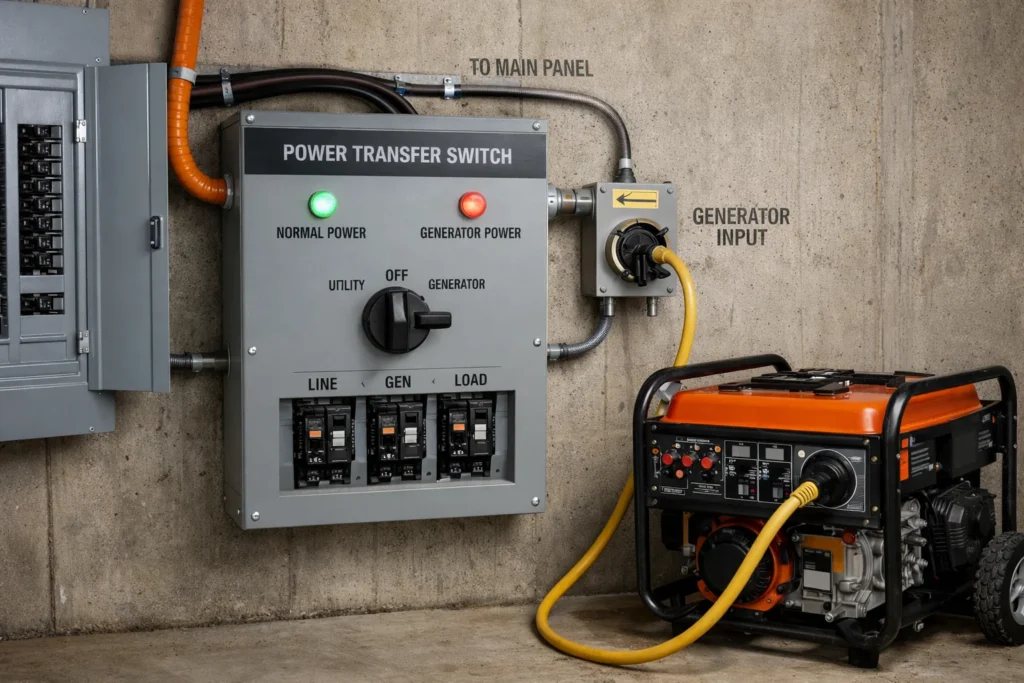
Explore reliable power transfer switches for home generators featuring manual and automatic options ensuring safe seamless backup power.
Read More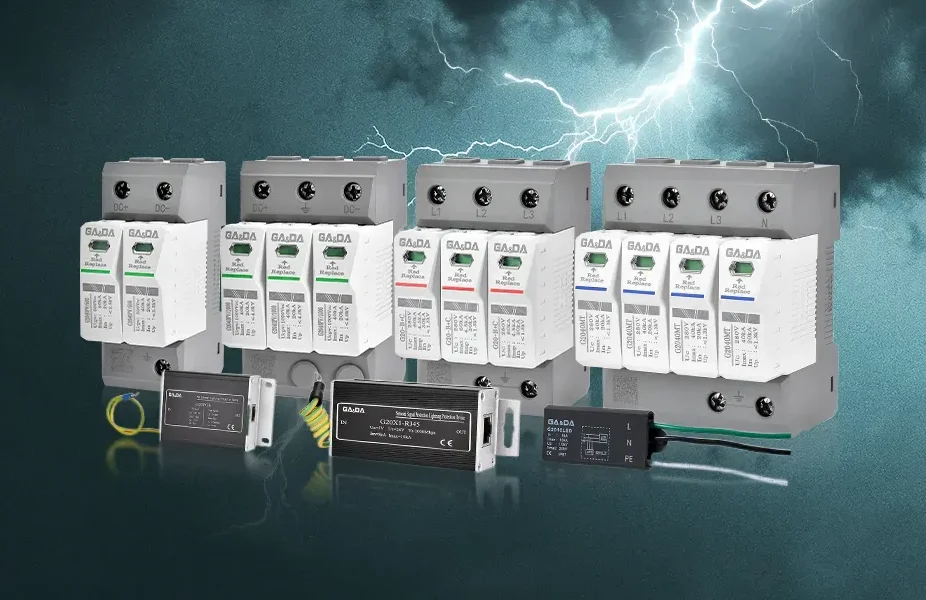
TABLE OF CONTENTS Choosing correctly between type 1 vs type 2 surge protective devices is one of the most important decisions when designing a robust low-voltage power distribution system. In practice, the right combination of type 1 vs type 2 surge protective devices determines whether lightning currents and switching surges are safely diverted to earth […]
Read More
Learn all about fuse ratings including current, voltage, interrupting capacity, and how to choose the right fuse for safe circuit protection.
Read More