FUSE BASICS
How Are Fuses Rated Explained by Amperage Voltage and Breaking Capacity
Learn how fuses are rated by amperage voltage interrupting capacity and speed for safe circuit protection with GA&DA expert guidance.
Read More
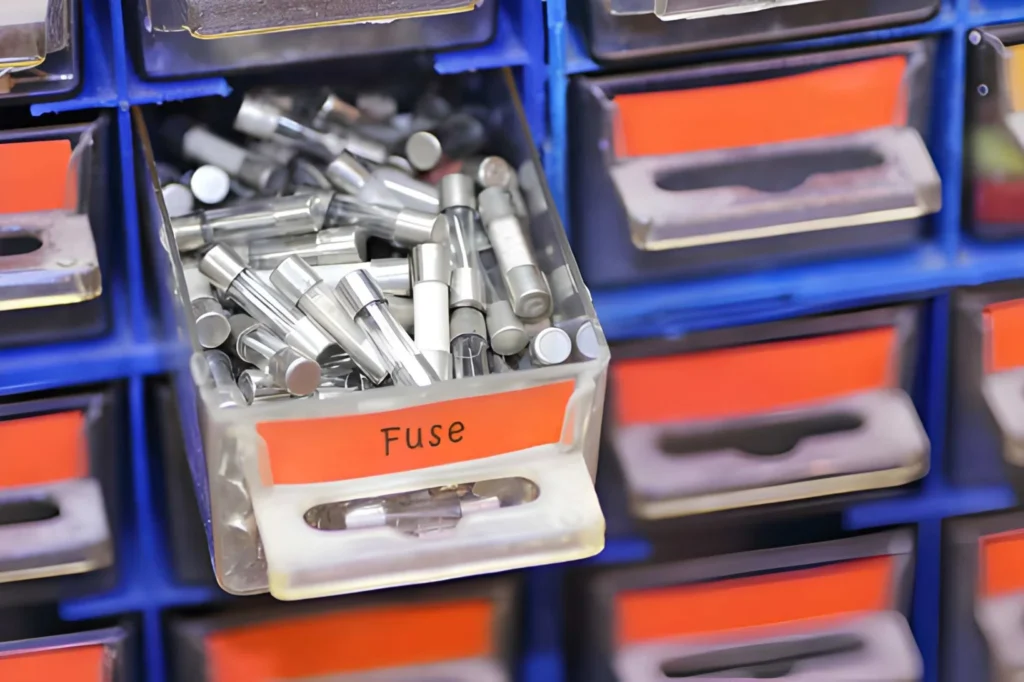
Learn how fuses are rated by amperage voltage interrupting capacity and speed for safe circuit protection with GA&DA expert guidance.
Read More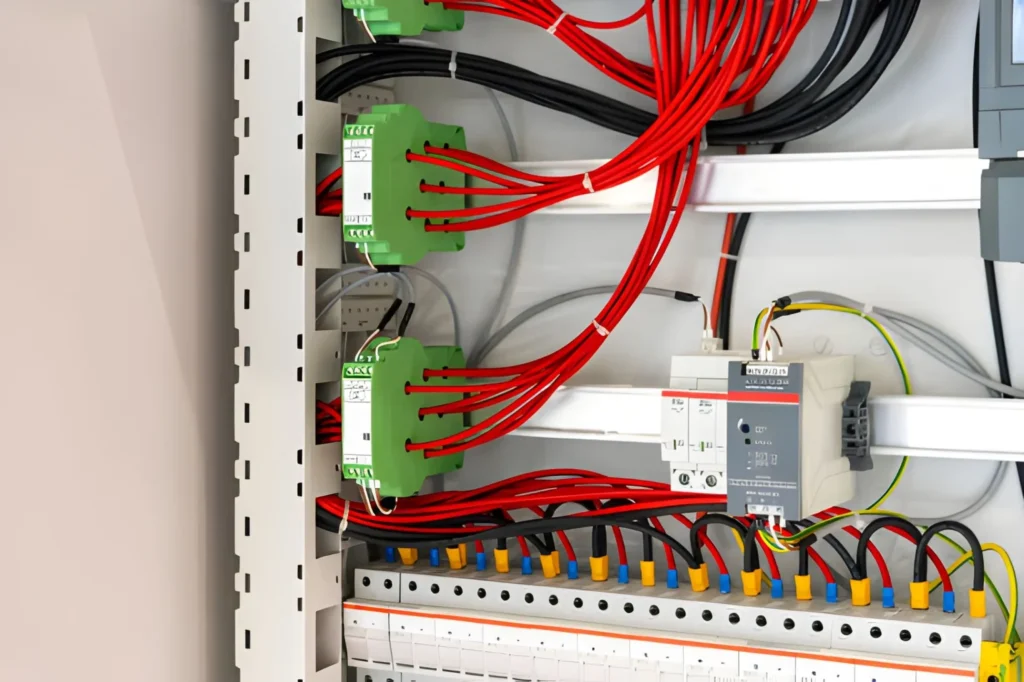
Learn how to select the right fuse rating with GA&DA for safe overcurrent protection including amperage voltage and interrupting capacity.
Read More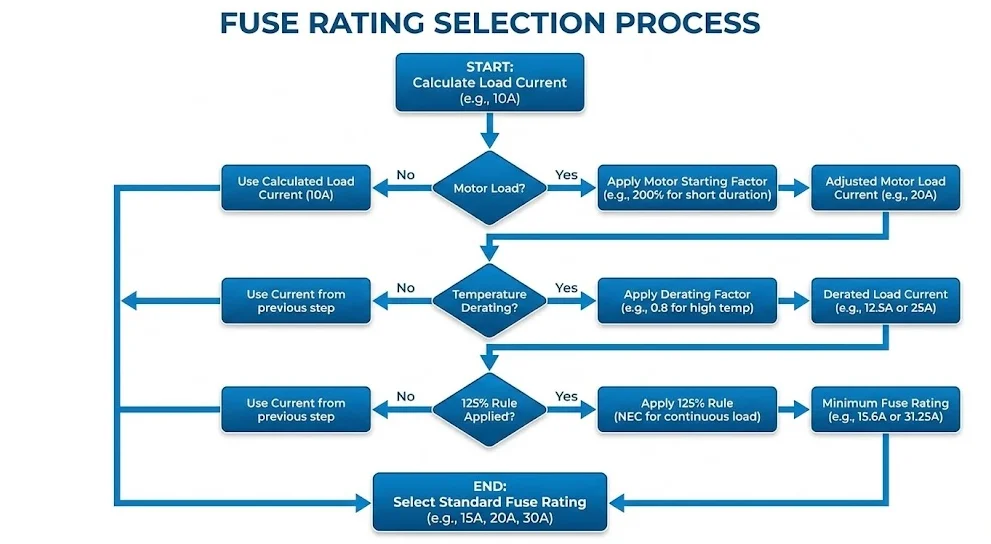
TABLE OF CONTENTS Introduction to Fuse Rating Selection Selecting the right fuse rating for electrical circuits is one of the most critical decisions in electrical system design and installation. The fuse rating determines how much current can flow safely through a circuit before the fuse operates to protect against overcurrent conditions. Choosing the correct fuse […]
Read More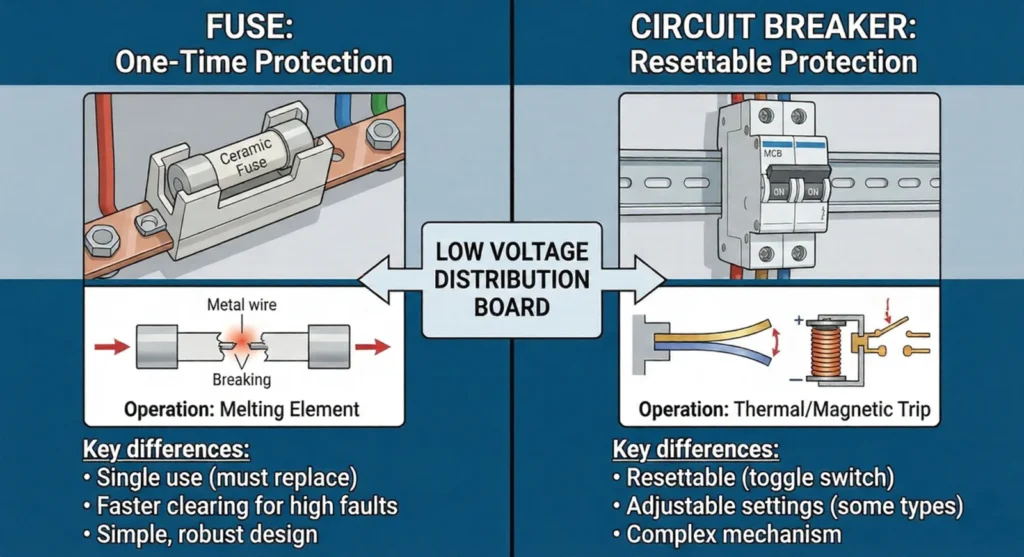
TABLE OF CONTENTS Fuse vs circuit breaker choices are at the heart of every low‑voltage protection design, from small consumer units to industrial switchboards and PV systems. Making the right fuse vs circuit breaker decision means understanding how each device behaves under overload and short‑circuit conditions, how it interacts with cables and loads, and what […]
Read More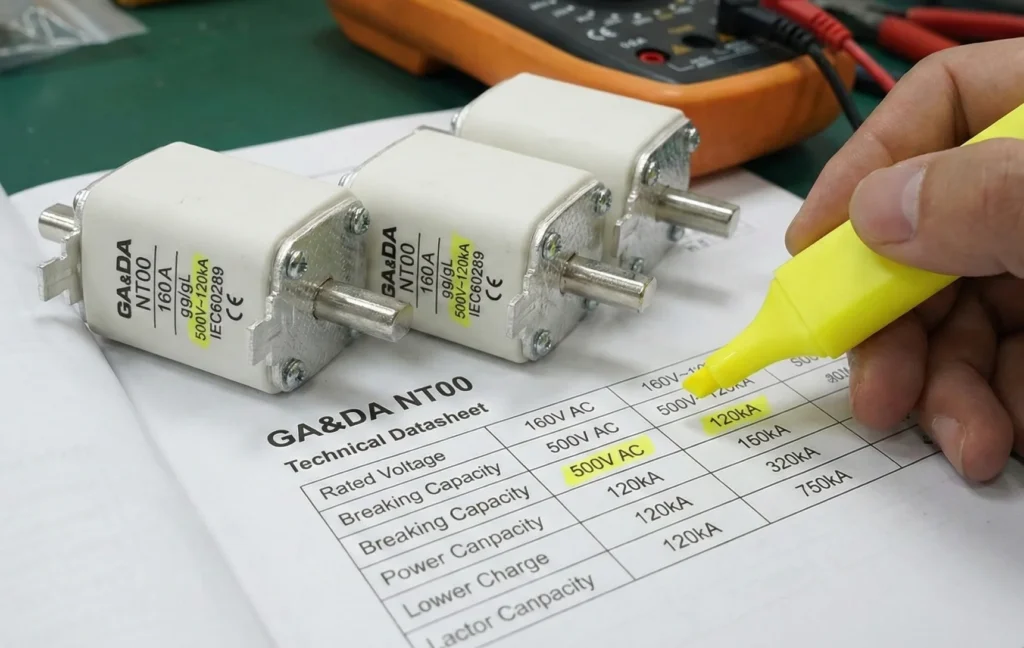
TABLE OF CONTENTS Engineers who understand fuse breaking capacity and voltage ratings can design safer, more reliable low‑voltage and PV systems. In any power distribution or PV combiner box, the fuse breaking capacity defines the maximum fault current the fuse can safely interrupt at its rated voltage without exploding or failing dangerously. In practical panel […]
Read More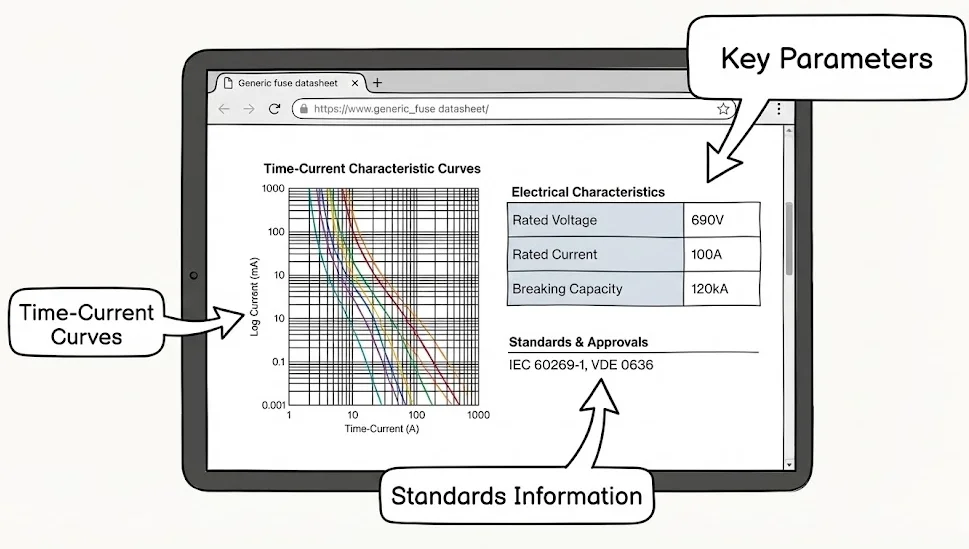
TABLE OF CONTENTS How to read fuse datasheet information correctly is essential if you want to choose protection devices that are truly matched to your system. When you understand how to read fuse datasheet fields such as rated current, voltage, breaking capacity, i²t and time‑current curves, the risk of under‑ or over‑sizing protection drops dramatically. […]
Read More