Best PoE Surge Protector for CCTV & Industrial Networks (2026 Guide)
Uncategorized
Reading time:
4 minutes
Share:
Share on Twitter
Share on Facebook
Share on LinkedIn
Table of Contents
Introduction
Power over Ethernet (PoE) has become the backbone of modern security and network systems—from IP cameras and wireless access points to industrial control networks. However, PoE systems are highly vulnerable to lightning strikes and transient voltage surges.
A PoE surge protector is essential to protect both data and power lines transmitted through Ethernet cables. Without proper protection, a single surge can damage expensive equipment, cause system downtime, and lead to costly repairs.
In this guide, you’ll learn:
What a PoE surge protector is
How it works
How to choose the right model
Where and how to install it
Best practices for CCTV and industrial applications
What Is a PoE Surge Protector?
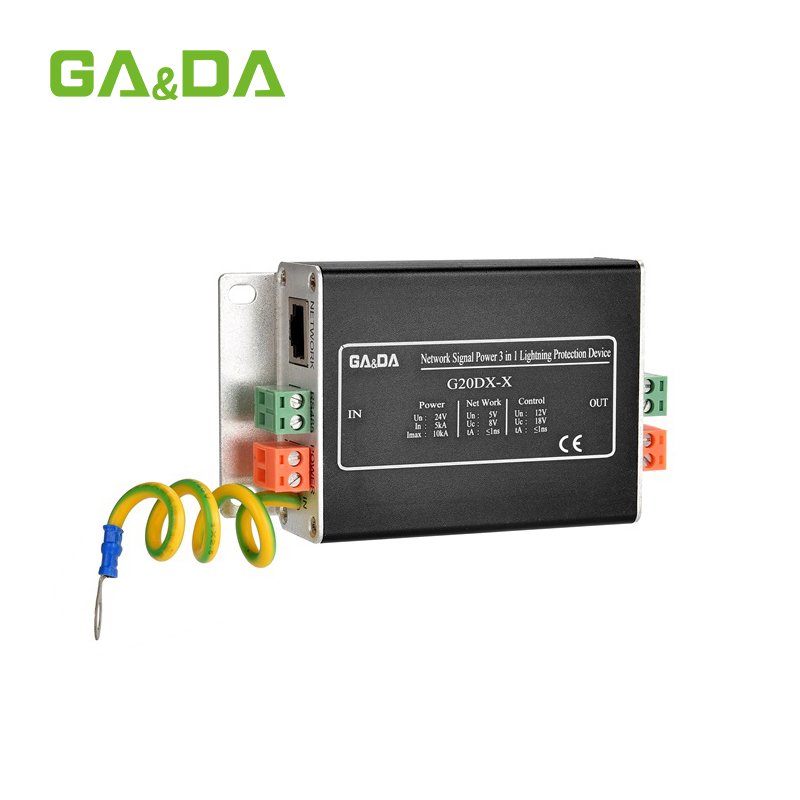
A PoE surge protector is a device designed to protect Ethernet lines that carry both data and electrical power.
Unlike standard RJ45 surge protectors, PoE surge protectors are specifically built to:
Support IEEE 802.3af / 802.3at / 802.3bt standards
Handle 48V power transmission
Maintain network performance (10/100/1000 Mbps or higher)
👉 In simple terms: It protects both your network signal and power supply at the same time.
Why Do You Need a PoE Surge Protector?
1. Lightning and Surge Risks
Outdoor installations (like CCTV cameras) are especially exposed to lightning-induced surges.
2. Long Cable Runs
Ethernet cables act like antennas, picking up electrical interference.
3. Expensive Equipment Protection
Devices at risk include:
IP cameras
PoE switches
Wireless access points
Industrial controllers
👉 Without surge protection, even a small spike can damage ports or entire systems.
How Does a PoE Surge Protector Work?
A PoE surge protector uses components like:
Gas Discharge Tubes (GDT) – absorb high-energy surges
TVS Diodes – clamp voltage spikes instantly
MOVs – stabilize transient voltages
When a surge occurs:
Excess voltage is diverted to ground
Safe voltage continues to the device
Network performance remains unaffected
Key Specifications to Consider
When selecting a PoE surge protector, focus on these parameters:
1. Voltage Rating
Typical PoE: 48V
Must match your system
2. Maximum Discharge Current (Imax)
Indicates surge handling capacity
Higher = better protection
3. Protection Level (Up)
Lower values mean better protection
4. Data Speed Compatibility
10/100/1000 Mbps (Gigabit) minimum
5. Interface Type
RJ45 standard
PoE Surge Protector vs RJ45 Surge Protector
Feature
PoE Surge Protector
RJ45 Surge Protector
Power Support
✅ Yes
❌ Not always
Use Case
PoE cameras, APs
General network
Complexity
Higher
Lower
Protection Scope
Data + Power
Data only
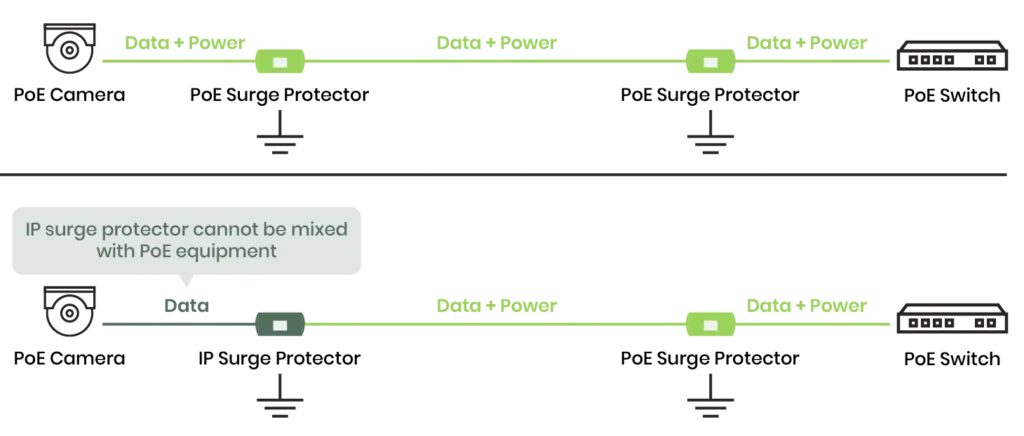
👉 Important: Using a non-PoE surge protector in a PoE system can cause malfunction or damage.
Where Should You Install a PoE Surge Protector?
Best Practice: Two-Point Protection
Install surge protectors at:
Near the device (e.g., IP camera)
Near the switch or control panel
Typical Setup
Camera → PoE SPD → Cable → PoE SPD → Switch
👉 This ensures full-line protection.
Applications
📷 CCTV & Security Systems
Outdoor IP cameras
Surveillance networks
📡 Wireless Networks
Access points
Outdoor WiFi
🏭 Industrial Automation
PLC systems
Factory networks
🏢 Smart Buildings
IoT systems
Security infrastructure
How to Choose the Right PoE Surge Protector
Here’s a quick checklist:
✅ Supports IEEE 802.3af/at/bt
✅ Compatible with Gigabit Ethernet
✅ Suitable for indoor/outdoor use
✅ Has proper grounding design
✅ Certified (CE, RoHS, etc.)
Common Mistakes to Avoid
❌ Using a standard RJ45 surge protector in PoE systems ❌ Ignoring grounding requirements ❌ Installing protection only on one side ❌ Choosing low discharge capacity devices
Advanced Tip: Outdoor vs Indoor Selection
Scenario
Recommendation
Outdoor CCTV
IP-rated, high Imax
Indoor network
Standard DIN rail SPD
Industrial
High durability + shielding
Solar / BESS
DC + PoE hybrid protection
FAQ
Do PoE cameras need surge protection?
Yes. Especially for outdoor installations, surge protection is critical.
Can a PoE surge protector affect network speed?
No, if it supports Gigabit Ethernet, performance will remain stable.
How many surge protectors do I need?
At least two—one at each end of the cable.
What is the best surge protector for CCTV?
A Gigabit PoE surge protector with high discharge capacity and proper grounding.
Conclusion
A PoE surge protector is essential for protecting modern network systems. Whether you’re deploying CCTV, industrial automation, or wireless infrastructure, proper surge protection ensures long-term reliability and system stability.
Looking for a Reliable PoE Surge Protector?
We provide:
Industrial-grade PoE surge protection devices
OEM & ODM solutions
Fast delivery and competitive factory pricing
👉 Contact us now to get the best solution for your project.
TABLE OF CONTENT In modern homes, commercial buildings, and industrial facilities, sensitive electronics and control systems are constantly exposed to short, high‑energy spikes in voltage known as surges. A surge protective device (SPD) is a dedicated protective component that limits these transient overvoltages and diverts the associated surge current away from equipment and safely to […]
Introduction to Surge Protection Devices Surge Protection Devices (SPDs) play a crucial role in safeguarding modern electrical systems from unexpected voltage spikes. These devices protect sensitive electronics, appliances, and infrastructure by diverting transient voltage surges caused by lightning strikes, utility switching, and other electrical disturbances. As the reliance on electronic devices grows—especially with the rise […]
When a buyer asks me for an industrial AC surge suppressor, they almost never say, “Please quote Type 1, Type 2 and Type 3 SPDs with coordinated protection per IEC 61643-11.”They say: “Boss, factory keeps tripping, PLC sometimes dies, give me a surge protector that works.” So in this article, I’ll break down the difference between Type […]
We use cookies to enhance your browsing experience, serve personalised ads or content, and analyse our traffic. By clicking "Accept All", you consent to our use of cookies.