When you’re the guy buying protection for a whole building, not just a lamp, AC surge suppressor choices can feel like a maze. You want to stop lightning‑like surges, keep production lines up and avoid downtime—but you also have to meet your boss’s budget and procurement checklist.
On the shop floor, in a control cabinet, or on a three‑phase panel, the wrong AC surge suppressor can either be a useless token or a ticking fire‑risk. The right one quietly does its job for years.
So let’s cut through the noise and talk like two engineers at a project meeting: no brochures, no fluff. Just: how to choose, how to wire, and which model type fits your B2B project.
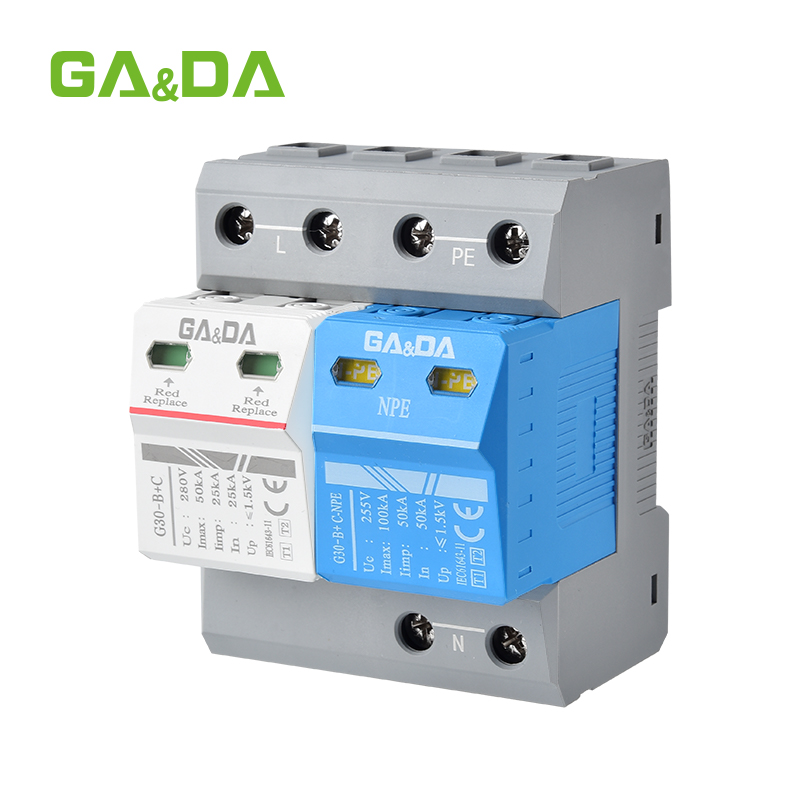
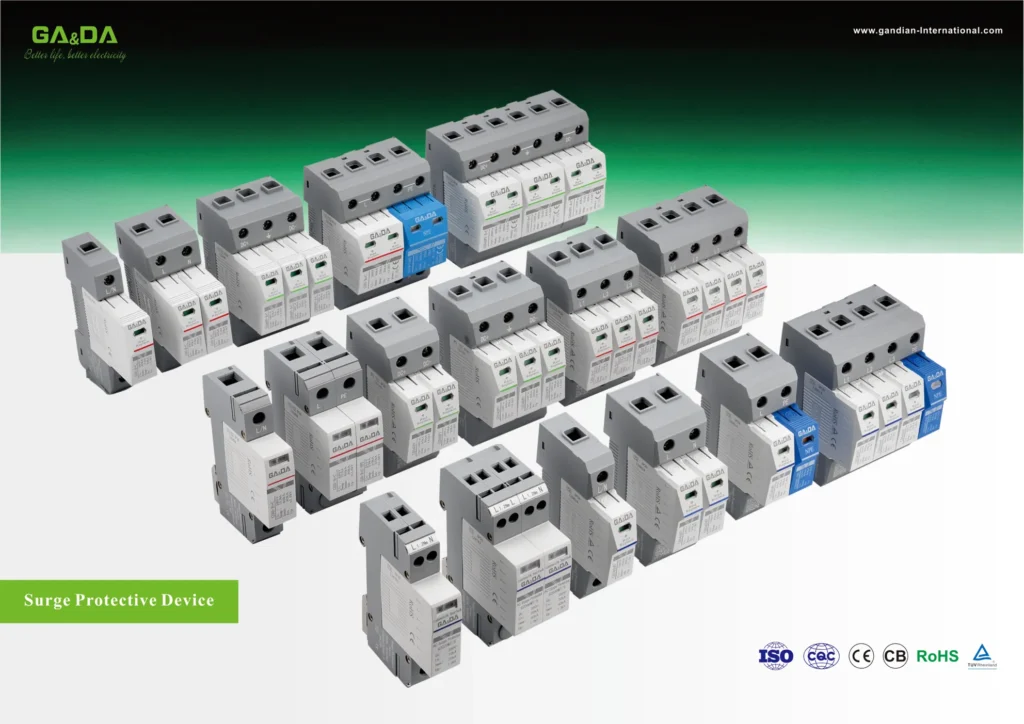
An AC surge suppressor, also known as an AC surge protective device (SPD), is not a fancy socket strip. It sits in your panel and waits for short, high‑voltage transients—like lightning‑induced surges or heavy‑duty motor switching—then sends that energy safely to ground before it hits your PLCs, drives, HMIs, or meters.
In practice, that means:
Microsecond spikes get clamped or shunted.
Peak voltage at the protected equipment stays below its insulation limit.
Production downtime, burnt I/O cards, and blown control boards drop dramatically.
For B2B buyers, that directly translates into reduced maintenance cost and fewer unplanned outages in industrial automation, HVAC, solar inverters, and data‑center infrastructure.
How to choose the right AC surge suppressor (not just “find the cheapest”)
Choosing an AC Surge Protection is not about “more kA = better.” It’s about matching the protection level, installation location, and technical specs to your project type.
Let’s start with a few questions you should ask your design team or panel builder:
Is this a main‑inlet Type 1, distribution Type 2, or equipment‑level Type 3 application?
What’s the system voltage (e.g., 230 VAC, 240/400 VAC, 120 VAC)?
What’s the breaker rating upstream?
Do you need IEC 61643‑11 / UL 1449 certification for your target market?
Once you know that, you can start comparing real specs. Here’s a quick reference table that procurement and project managers love to see:
Point of installation
Typical AC surge suppressor type
Typical In / Imax (kA)
Use case
Main incoming panel
Type 1 SPD
40–100 kA
Lightning‑heavy regions, main metering cabinets
Sub‑distribution panel
Type 2 AC Surge Protective
20–40 kA
Machine rooms, control cabinets, lighting panels
Local equipment / PLC cabinet
Type 3 AC Surge Protective
5–10 kA
Individual VFDs, PLCs, sensors, low‑power devices
This table helps you avoid a classic mistake: buying a 40 kA AC surge suppressor for the main panel just because it “looks big,” while leaving your building exposed to lightning‑level energy. B2B buyers who care about risk‑based protection usually split the job: Type 1 at main, Type 2 at sub‑panels, and Type 3 at sensitive loads.
Learn how to pick, wire, and spec the right AC surge suppressor for industrial and commercial projects.
Now let’s talk wiring. You’re not the electrician, but procurement and project managers still need to know what a “good” installation looks like so you can spot weak designs.
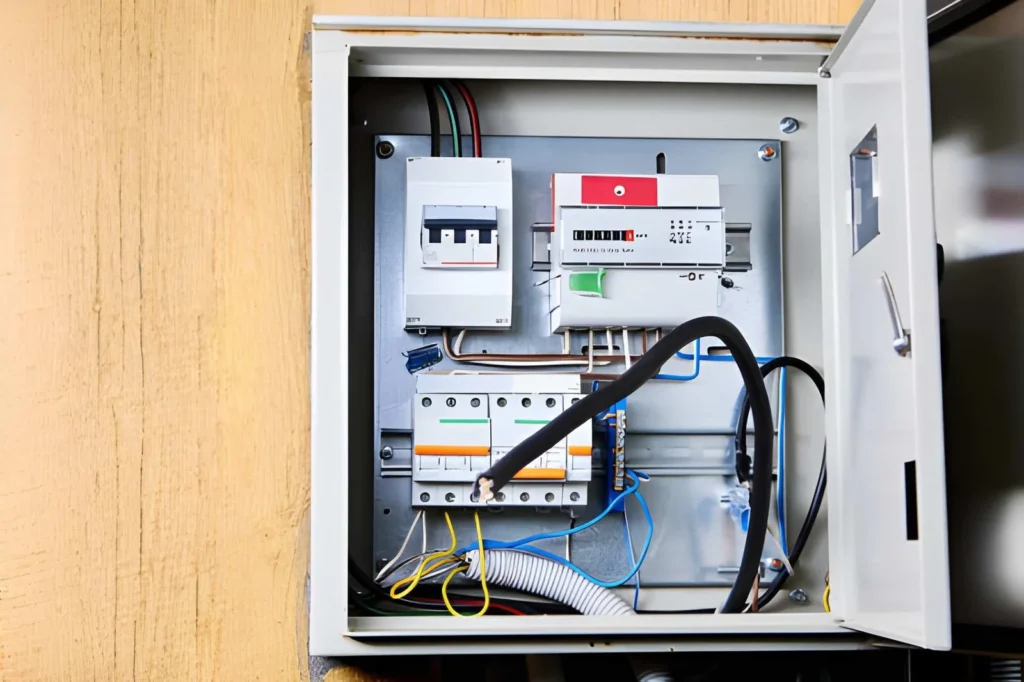
Assume a standard three‑phase 400 VAC industrial panel with breaker and busbars:
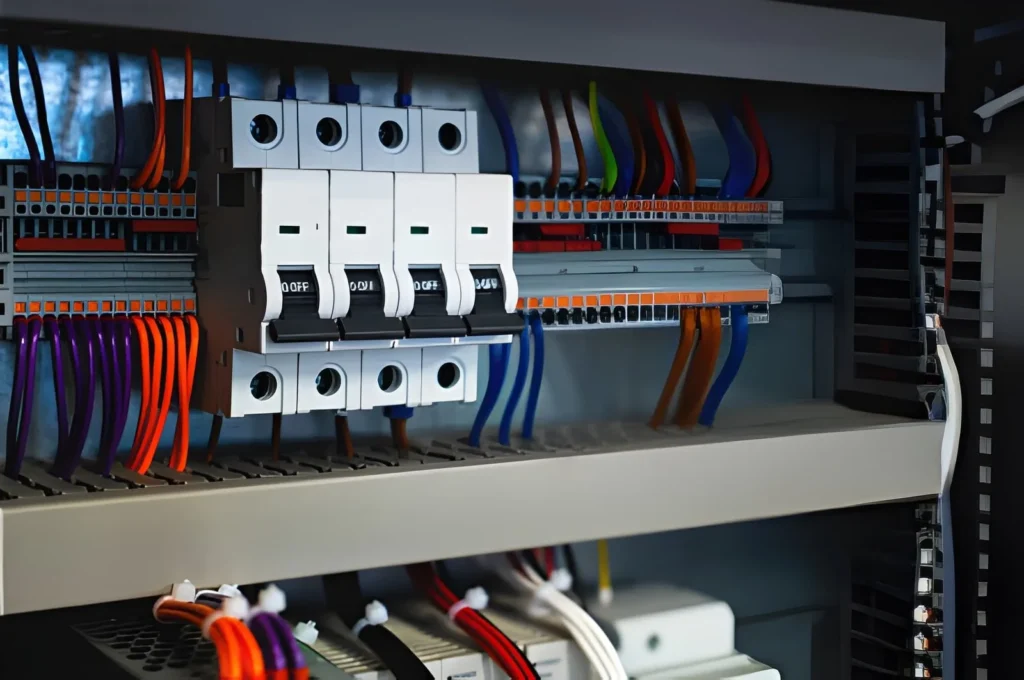
Pick the mounting point Mount the AC surge suppressor module as close as possible to the protected equipment or panel. Long jumper wires increase let‑through voltage. Many DIN‑rail AC surge suppressor designs make this easy on control‑cabinet panels.
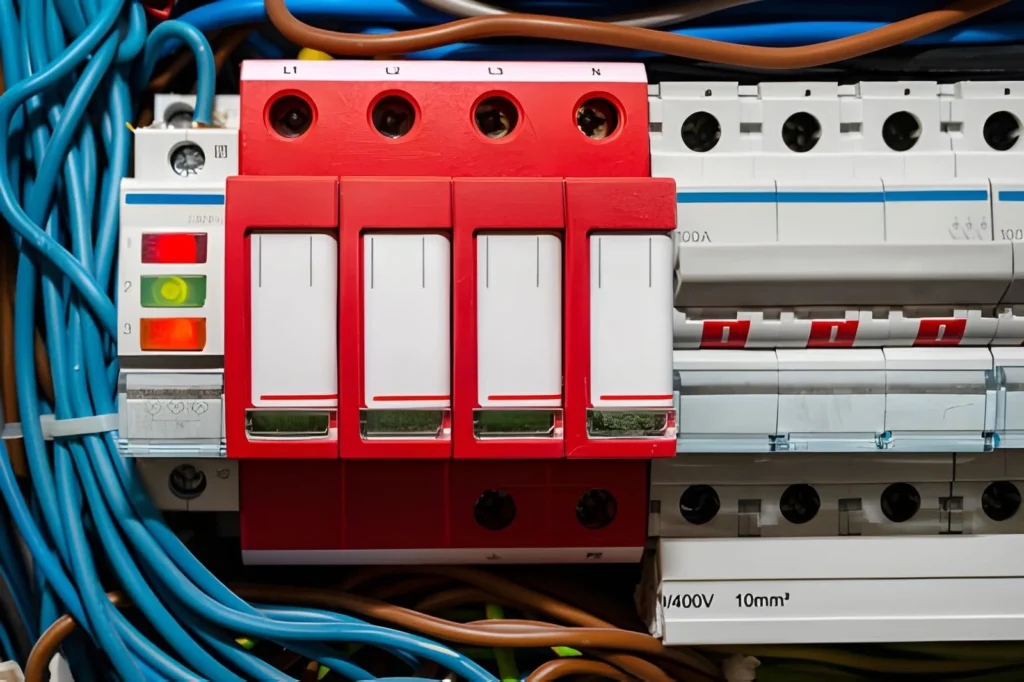
Connect phase conductors Each phase line (L1, L2, L3) connects to the SPD’s phase terminals. On many plug‑in AC surge suppressor module designs, this is done with screw or spring terminals; the module then snaps into the DIN rail.
Connect neutral If your 3P+N AC surge suppressor supports neutral, the N terminal goes to the neutral bus. For 3P modules, the neutral connection is often integrated into the design.
Earth connection Connect the earth terminal to the main earthing bus with as short a link as possible. A copper wire no longer than 0.5 m is ideal. Longer lines reduce surge‑handling performance, especially for 40 kA AC surge suppressor models handling heavy transients.
Backup protection Install a miniature circuit breaker (MCB) or fuse upstream of the suppressor, sized according to the manufacturer’s datasheet. This prevents a failed SPD from becoming a short‑circuit hazard.
Status indication (if available) Some AC surge suppressor with status indication models have LED or mechanical flags that show whether the module is still functional. Smart teams run status signals to the HMI or PLC for remote monitoring.
For B2B buyers, this kind of clear wiring logic is exactly what integrators and panel builders want to see: standardized, safe, and clearly documented.
Key specs to compare when sourcing AC surge suppressors
When you’re comparing surge suppressor models from different suppliers, you need a checklist that reading ten glossy datasheets won’t mess you up. Here are the hard‑core specs to focus on:
Nominal discharge current (In) – How much 8/20 µs surge the device can handle repetitively.
Typical for Type 2 AC Surge Protection: 10–20 kA per phase.
Higher In = more robust for repeated surges.
Maximum discharge current (Imax) – Peak single‑event surge tolerance.
20 kA, 40 kA, 65 kA are common brackets.
A 40 kA Surge Protection is often a good fit for medium‑size industrial panels and HVAC systems.
Maximum continuous operating voltage (Uc) – Must be higher than the max mains voltage in your system.
For 230/400 VAC systems, look at Uc ≥ 275–280 VAC.
Voltage protection level (Up) – The clamped voltage seen by downstream equipment.
Lower Up = better protection for sensitive electronics.
Short‑circuit protection rating – Must coordinate with your upstream breaker/fuse (e.g., 125 A, 160 A).
Standards compliance – IEC 61643‑11 compliant AC surge suppressor is a must if you’re targeting industrial or commercial projects in Europe or similar markets. UL 1449 covers many North American applications.
If your procurement team can filter suppliers by “IEC 61643‑11 compliant AC Surge Protection for industrial control panels, 40 kA, 275 VAC Uc”, you’ve already cut out the low‑quality noise.
Matching Surge Protection types to real B2B applications
Here’s where AC Surge Protection selection becomes a project‑specific decision, not a generic catalog browse.
Industrial automation & control panels
Robots, PLCs, and drives sit in the same cabinet that also has big motors starting and stopping. Internal switching surges can be brutal. For this, a Type 2 AC surge suppressor mounted on the control cabinet bus is ideal. It protects the PLC power supply, I/O modules, and HMI from transients that propagate through the same distribution board. Many industrial AC surge suppressor designs are built specifically for this environment, with rugged housings and long‑life MOVs.
HVAC and air‑conditioning systems
Modern HVAC systems are packed with sensitive electronics, inverters, and sensors. Even if the building has main‑panel surge protection, many B2B buyers still insist on AC surge suppressor for HVAC systems installed at the HVAC sub‑panel or close to the compressor. This layering strategy reduces residual voltage and keeps downtime under control.
Solar inverters and renewable setups
In solar projects, AC surge suppressor for solar inverters is often installed at the inverter output side and at the AC distribution panel. Since the DC side already has its own surge protection, the focus here is on AC line‑to‑line and line‑to‑earth transients caused by grid switching and cloud‑to‑cloud lightning effects.
Data centers and server rooms
In data centers, surge protection is rarely a “one and done.” It’s usually Type 2 AC surge suppressor at the main panel, Type 2 at the sub‑panel, and Type 3 at the rack or PDU. For B2B IT buyers, this means layered AC surge suppressor for data centers that keep servers, UPS, and network switches safe from both grid‑side and internal switching events.
Hard‑wired vs plug‑in designs
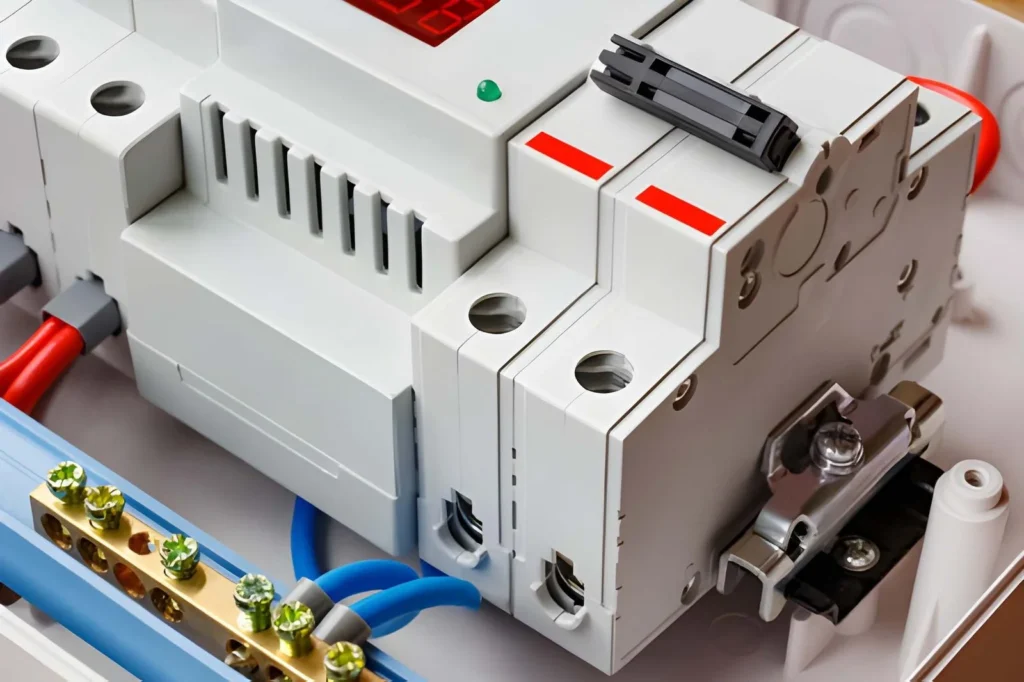
Some projects prefer hard‑wired surge suppressor units that are permanently connected to the panel bus by lugs or terminals. Others choose plug‑in AC surge suppressor module designs that snap onto a DIN rail and allow quick replacement without rewiring. The choice depends on maintenance philosophy, panel layout, and whether you want AC surge suppressor with status indication tied into the automation system.
How to avoid common mistakes when buying AC surge suppressors
Even experienced buyers sometimes slip up. Here are a few pitfalls to watch out for:
Under‑rating the kA value – Picking a 10 kA Type 2 AC surge suppressor for a large industrial panel because it’s cheaper can leave equipment vulnerable to switching and lightning‑induced surges.
Ignoring coordination – A poorly coordinated SPD and breaker can either not trip when needed or trip too often, causing nuisance outages.
Too long wires – Long jumper wires between the panel and the SPD reduce protection performance and increase the voltage seen by downstream equipment, especially for 40 kA surge suppressor installations.
Forgetting regular checks – If the product has a status indicator, use it. Replace failed modules before they become a hidden risk.
Good B2B buyers treat AC surge suppressor selection like any other critical component: spec it, verify it, and service it.
Why you should care about AC surge suppressors in every project
At the end of the day, an AC surge suppressor is not a luxury. It’s a risk‑management tool. Every project that runs on alternating current carries some risk of voltage transients. Whether it’s a small commercial building or a large industrial plant, the cost of a single surge‑related failure can easily wipe out the entire budget you saved by skipping surge protection.
By choosing the right industrial AC surge suppressor, sizing it properly as a Type 2 AC surge suppressor for distribution panels, and installing an AC surge suppressor for industrial control panels, AC surge suppressor for HVAC systems, surge suppressor for solar inverters, and surge suppressor for data centers where needed, you’re not just protecting hardware—you’re protecting uptime and reputation.
If your team is currently designing or upgrading a panel, control cabinet, HVAC, solar, or data‑center project, this is the perfect time to send a short inquiry with your system specs. With the right IEC 61643‑11 compliant surge suppressor, 40 kA AC surge suppressor, or DIN‑rail AC Surge Protection in place, you’ll protect your equipment—and make sure your next project runs smoothly from day one.
FAQ
Do I need an AC surge suppressor if the building already has one?
Yes, in many cases. Whole‑building surge protection often sits at the main panel, but it alone doesn’t guarantee low residual voltage at sensitive equipment. Adding Type 2 AC surge suppressor and Type 3 AC Surge Protection closer to the load is a common B2B strategy for critical systems.
How do I know if the AC surge suppressor is still working?
Good models give you visual or remote status indicators. If the LED changes color or the mechanical flag pops out, it’s time to replace the module. Many Surge Protection with status indication units can also send dry‑contact signals to the PLC for maintenance tracking.
What if the AC surge suppressor fails?
A well‑designed AC surge protective device includes thermal disconnection and short‑circuit protection. If the internal components fail, the device disconnects from the line and the breaker trips. This prevents the SPD from becoming a fire hazard.
Can I use the same AC surge suppressor for industrial and commercial projects?
Yes, as long as the voltage level, current rating, and standards match. Many industrial AC surge suppressor designs are also used in commercial buildings, factories, and data centers. The same hardware often appears in HVAC panels, control rooms, and server rooms.
How do I choose between MOV‑based and hybrid (MOV + GDT) designs?
MOV‑only SPDs are common for Type 2 AC Surge Protection and Type 3 applications. They respond quickly and clamp well. Hybrid (MOV + GDT) SPDs are often used in higher‑energy environments or where long‑life and robustness matter. They combine fast clamping with the ability to handle heavier surges.
Why You Need Whole House Surge Protection Power surges can happen anytime, and their sources are often unexpected. The most common surge sources include: These surges pose serious risks to your valuable electronics and home systems. Without proper protection, you can face costly damage to: At-Risk Devices Potential Issues HVAC systems Expensive repairs, inefficient operation […]
If you’re looking at DC Surge Protection Devices, you’re probably responsible for gear that absolutely cannot go down: solar PV fields, battery energy storage systems, telecom racks, industrial DC panels, or even EV fast chargers. In all those places, a Type 2 DC surge suppressor is the small DIN‑rail box standing between your investment and an expensive […]
GANDIAN Type 2 Surge Protective Device Overview The GANDIAN Type 2 Surge Protective Device (SPD) offers robust, high-performance protection against transient overvoltages, safeguarding your electrical installations from damaging power surges. Designed to prevent costly damage to appliances, sensitive electronics, and wiring systems, this AC surge protector is ideal for residential, commercial, and industrial applications. Its […]
We use cookies to enhance your browsing experience, serve personalised ads or content, and analyse our traffic. By clicking "Accept All", you consent to our use of cookies.