Distribution Box for Industrial and Residential Power Systems
Published: Author: info@cngdfl.com
Are you trying to choose the right distribution box for your project, but unsure which specifications or features really matter? Whether you’re working on a residential installation, a commercial building, or an industrial system, the distribution box is one of the most critical components in your electrical setup.
A distribution box is not just an enclosure—it is the central hub that organizes circuits, protects equipment, and ensures stable power distribution. Choosing the wrong one can lead to overheating, poor circuit management, or even safety risks. Choosing the right one, however, makes your system safer, more efficient, and easier to maintain.
What Is a Distribution Box and How Does It Work?
A distribution box (also known as a DB box or electrical enclosure) is used to distribute electrical power from a main source into multiple circuits while providing protection through breakers or fuses. :contentReference[oaicite:0]{index=0}
In practical terms, it acts like a control center. Electricity enters the distribution box, is divided into different circuits, and is then delivered safely to various loads such as lighting, machines, or appliances.
Inside a typical distribution box, you will find:
MCB (miniature circuit breakers)
Busbars for power distribution
Neutral and grounding terminals
Protective enclosure (plastic or metal)
These components work together to ensure safe operation and prevent overload, short circuit, or fault conditions.
Types of Distribution Box Based on Real Applications
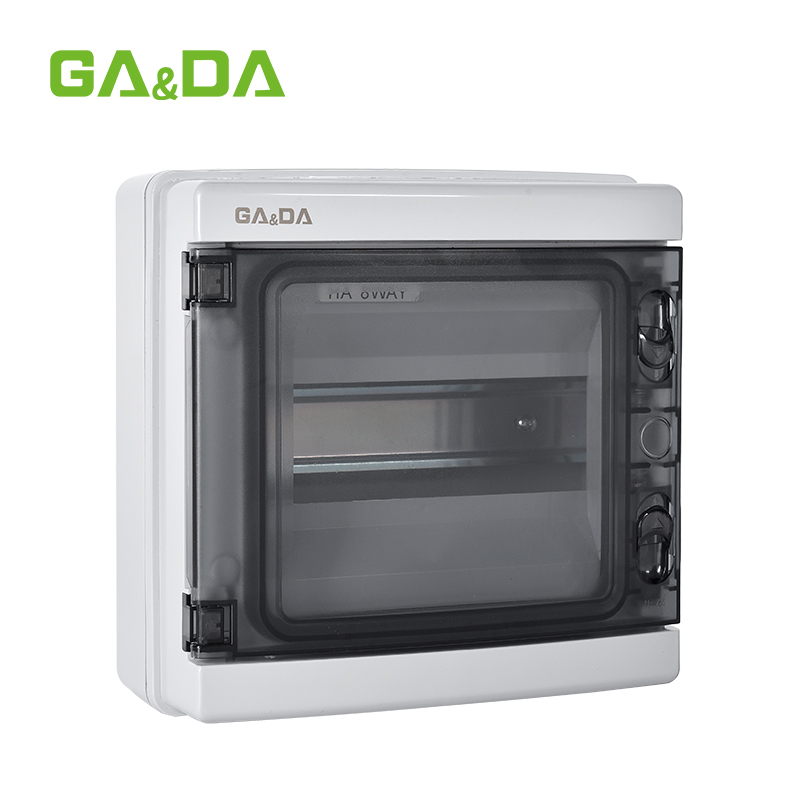
Not all distribution boxes are the same. Based on actual product configurations (like those found on your site), they are typically classified by ways (circuits), material, and application scenario.
1. Plastic Distribution Box (ABS Material)
Common in both residential and light industrial use.
Made from high-strength ABS plastic
Fire-resistant and corrosion-resistant
Lightweight and easy to install
Often used for indoor installations
According to product data, ABS enclosures provide strong insulation and impact resistance, making them suitable for circuit protection systems. :contentReference[oaicite:1]{index=1}
2. Multi-Way MCB Distribution Box
These are categorized by the number of circuits:
4 way distribution box
8 way distribution box
12 way distribution box
18 way / 24 way (for larger systems)
More “ways” means more circuits and better scalability.
3. Waterproof Distribution Box (IP65)
Used in outdoor or harsh environments.
Dustproof and waterproof design
Suitable for solar systems and outdoor installations
Often used in telecom and industrial control systems
When evaluating a distribution box, the features matter more than appearance. Based on real product specifications and industry standards, here are the most important factors.
1. Material Quality
A high-quality distribution box should use:
ABS plastic (lightweight, corrosion-resistant)
Polycarbonate (higher impact resistance)
Metal (industrial durability)
Material choice directly affects lifespan and safety. :contentReference[oaicite:2]{index=2}
2. Protection Level (IP Rating)
IP rating defines resistance to dust and water.
IP Rating
Use Case
IP30–IP40
Indoor use
IP54
Semi-protected environments
IP65
Outdoor / harsh environments
3. Circuit Capacity (Ways)
Choosing the correct number of circuits is critical:
Small home: 4–8 ways
Office/commercial: 8–18 ways
Industrial: 18+ ways
4. Compatibility with MCB / Breakers
A good distribution box must support:
Standard DIN rail installation
Multiple breaker configurations
Easy replacement and expansion
5. Ease of Installation and Maintenance
Modern designs include:
Transparent covers for inspection
Wall-mounted or surface-mounted options
Modular internal layout
These features reduce installation time and simplify maintenance.
Common Applications of Distribution Box
A distribution box is used in almost every electrical system, but the requirements vary depending on the environment.
Residential Systems
Lighting circuits
Air conditioning
Household appliances
Commercial Buildings
Office electrical systems
HVAC systems
Retail power distribution
Industrial Systems
Machine control panels
Automation systems
Production lines
Solar and Renewable Energy Systems
PV combiner systems
Inverter connections
Battery storage distribution
Modern distribution boxes are often integrated into solar and smart energy systems for efficient power management.
How to Choose the Right Distribution Box
Choosing the right distribution box is not just about size—it’s about matching technical requirements with real-world usage.
Step 1: Define the Application
Ask yourself:
Indoor or outdoor?
Residential or industrial?
Standard or harsh environment?
Step 2: Calculate Load and Circuits
Determine:
Total current load
Number of circuits required
Future expansion needs
Step 3: Select Proper Protection Level
Indoor → standard enclosure
Outdoor → IP65 waterproof
Step 4: Consider Long-Term Reliability
Look for:
Flame-retardant materials
Corrosion resistance
Certified components (CE, RoHS)
👉 If you’re comparing multiple configurations or need OEM/ODM customization, it’s often more efficient to request a technical recommendation or quotation rather than guessing specifications.
Modern Trends in Distribution Box Design
Today’s distribution box is evolving beyond basic power distribution.
Some emerging trends include:
Smart monitoring systems
Modular design for scalability
Integration with IoT and energy systems
Improved safety through advanced protection devices
These features are especially important in industrial automation and smart building systems.
Conclusion
A distribution box is a fundamental component in any electrical system, responsible for organizing circuits, protecting equipment, and ensuring safe power distribution. From ABS plastic enclosures for residential use to IP65-rated industrial solutions, the right choice depends on your application, environment, and load requirements.
By focusing on material quality, circuit capacity, protection level, and installation flexibility, you can select a distribution box that not only meets your current needs but also supports future expansion. Making the right decision here will improve system reliability, reduce maintenance complexity, and enhance overall safety.
FAQ
What is a distribution box used for?
A distribution box distributes electrical power safely to multiple circuits and protects systems from overload and faults.
How many ways do I need in a distribution box?
It depends on your circuit requirements. Always choose a box with extra capacity for future expansion.
Can a distribution box be used outdoors?
Yes, but it must have a high IP rating (such as IP65) to resist water and dust.
What material is best for a distribution box?
ABS plastic is suitable for indoor use, while metal or reinforced materials are better for industrial or outdoor environments.
What is the difference between a distribution box and a panel board?
They serve similar functions, but distribution boxes are typically more compact and modular.
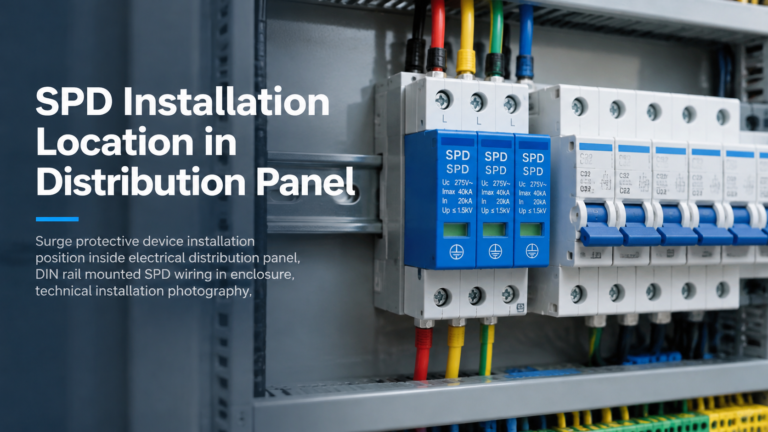
Where a surge protective device is installed determines how much of the surge it actually intercepts. A correctly specified device placed in the wrong position provides far less protection than its datasheet suggests — and because the installation still looks compliant, the shortfall is rarely detected until equipment fails. This guide covers surge protective device […]
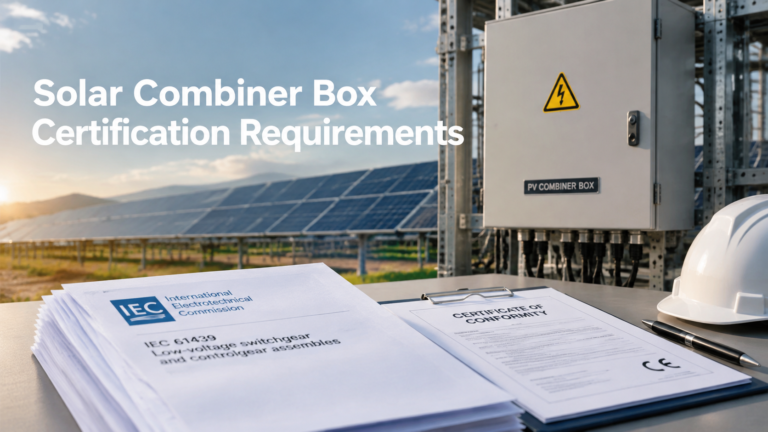
Certification requirements sit between a solar combiner box being technically suitable and being accepted. In practice, a box that meets every functional requirement can still be rejected at tender stage or on site because the documentation supporting its conformity does not match what the market expects. This is a documentation and compliance topic rather than […]
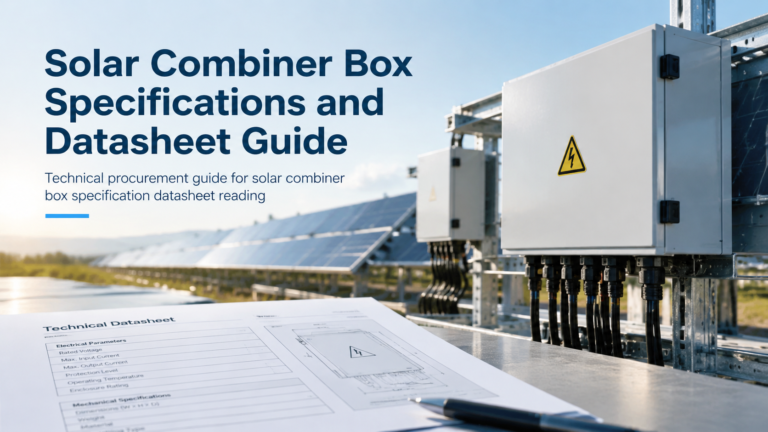
Most solar combiner box datasheets open with a table of ratings, and most buyers skim past it. That table is where the decision actually gets made. A combiner box is a passive enclosure — it does not protect anything by itself — so every number on its datasheet is either a limit you must stay […]