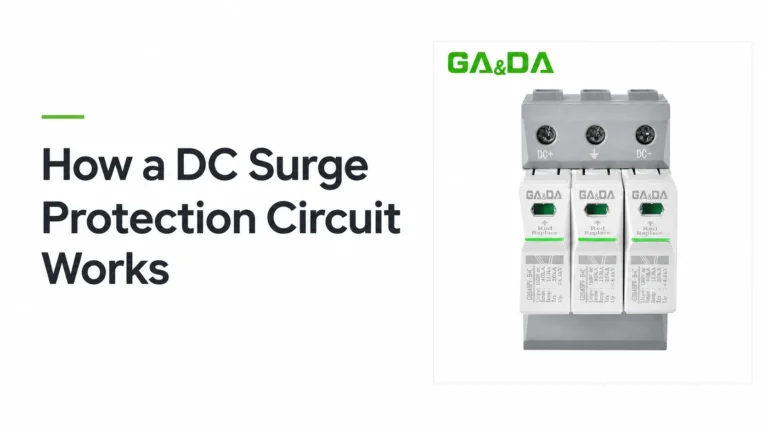





How a DC Surge Protection Circuit Works
Follow a DC surge protection circuit through normal operation, a surge and recovery, and see why protection modes and DC fault disconnection need their own design.
Read More English
An RCCB, or Residual Current Circuit Breaker, is a crucial safety device designed to protect people from electric shock. Its core function is to detect earth leakage current—a small but dangerous flow of electricity leaking from the live conductor to the ground—and to quickly disconnect the power supply to prevent harm. Unlike traditional circuit breakers that protect wiring from overload, the RCCB focuses on protecting human life by sensing any imbalance between phase and neutral currents.
By continuously monitoring electrical circuits, an RCCB detects even the slightest leakage current, typically from 10mA to 30mA sensitivity for personal protection. This quick response significantly reduces the risk of fatal electric shocks and electrical fires caused by current leakage.
At GA&DA, we prioritize electrical safety by adhering to the highest international standards, such as IEC 61008. Our RCCBs are manufactured with precision, featuring durable materials and advanced arc-quenching chambers that guarantee reliable performance and long-term protection in homes, offices, and industrial settings. Choosing a GA&DA RCCB means choosing a trusted partner in your electrical safety journey.
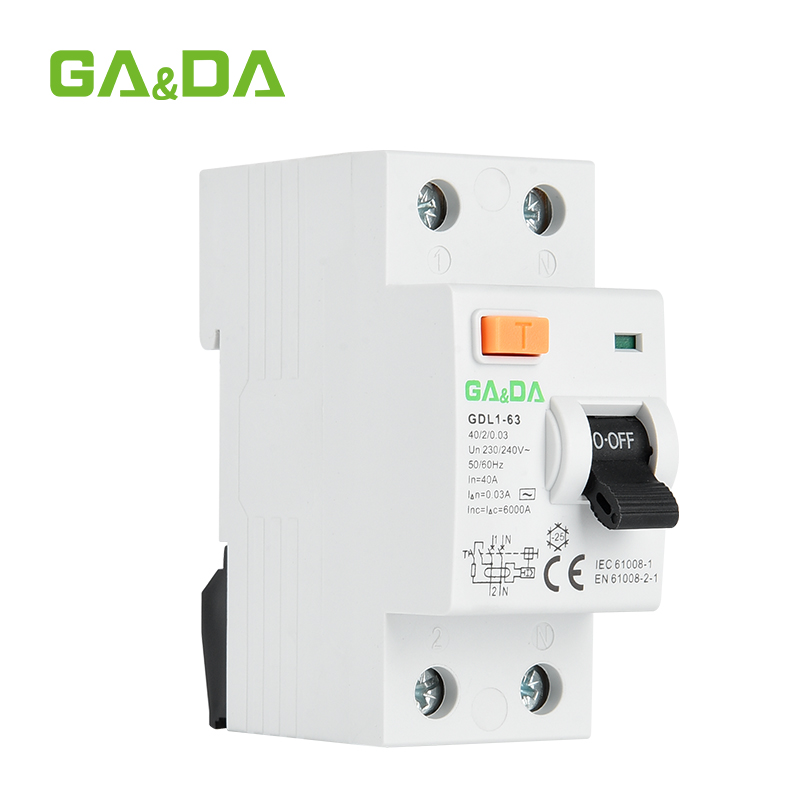
An RCCB, or Residual Current Circuit Breaker, works by constantly comparing the electrical current flowing through the phase (live) wire and the neutral wire. According to Kirchhoff’s Law, under normal conditions, the current going into an appliance via the phase wire should be equal to the current returning through the neutral wire. When these currents match, everything is fine—no leakage exists.
The RCCB monitors this balance using a core sensing coil. If the device detects any difference, known as residual current or earth leakage, it means some current is escaping, possibly through a person or faulty wiring. This difference, even if just a few milliamps (commonly at a sensitive rating of 30mA), is enough for the RCCB to act immediately.
Upon detecting this imbalance, the RCCB trips the circuit within milliseconds. This rapid disconnect interrupts the electric flow, preventing serious electric shocks or potential electrical fires. Essentially, it safeguards people by catching dangerous leakage currents before harm can occur.
By focusing on current imbalance detection rather than overload, RCCBs excel at protecting against ground faults often missed by traditional breakers. This residual current detection and fast trip mechanism make RCCBs an essential part of home electrical safety and industrial settings alike.
For more reliable overall protection, combining RCCBs with miniature circuit breakers (MCBs) in your distribution board is common practice. You can find high-quality options that meet stringent safety standards, like those compliant with the IEC 61008 standard, ensuring both safety and performance.
Explore reliable miniature circuit breakers to pair your RCCB for comprehensive electrical protection.
When it comes to electrical safety, knowing the difference between RCCB, MCB, RCBO, and ELCB is key. Each device plays a distinct role in protecting your home or workplace from electrical hazards.
| Device | Core Function | Protection Focus | Key Feature |
|---|---|---|---|
| RCCB | Detects earth leakage current | Protects people | Trips on current imbalance (earth leakage) to prevent electric shock |
| MCB | Protects against overcurrent | Protects wiring and appliances | Trips on overload or short circuit to prevent wire damage |
| RCBO | Combines RCCB and MCB functions | Protects both people and wiring | Detects leakage + overload/short circuit protection in one device |
| ELCB | Voltage-operated earth leakage detection | Protects people | Older technology, trips on earth voltage, less sensitive than RCCB |
RCCBs focus on electrical shock prevention by detecting current leakage to earth, which often happens when someone touches a faulty appliance. Meanwhile, MCBs protect wiring and devices from overloads and short circuits, avoiding overheating and fires.
ELCBs are older voltage-operated devices that trip when earth voltage rises, but they are less reliable. RCCBs are the modern residual current devices (RCD) used worldwide today because they detect imbalance in current between phase and neutral—making them more accurate and safer.
If you want the best of both worlds—earth leakage detection and overload protection—in one device, an RCBO is the choice. Widely used in homes and industries, RCBOs simplify wiring by combining RCCB and MCB functions, enhancing overall electrical safety.
For reliable protection that meets global electrical safety standards, consider devices that comply with IEC 61008 and select the right type based on your system needs such as single phase or three phase distribution. In addition, pairing RCCBs with high-quality surge protection devices can further safeguard your electrical installation, like the options available in GA&DA’s product line, known for their stringent quality and safety standards.
Learn more about GA&DA’s commitment to safety with their robust Type 2 Surge Protective Devices that complement RCCBs for enhanced electrical fire protection.
This clear comparison helps you choose between RCCB, MCB, RCBO, and ELCB — ensuring the right fit for your home or industrial setup’s earth leakage protection and wiring safety needs.
Selecting the right RCCB depends mainly on three key factors: number of poles, sensitivity rating, and waveform type. Here’s a quick guide to help you pick the perfect residual current device (RCD) for your needs.
| Classification | Options | Usage |
|---|---|---|
| Number of Poles | 2-Pole (single-phase), 4-Pole (three-phase) | 2-Pole for typical home and small business; 4-Pole for industrial or large three-phase setups |
| Sensitivity Rating | High: 10mA – 30mA Medium: 100mA Low: 300mA – 500mA | High sensitivity prevents electric shock (personal protection) Medium reduces fire risks Low used mainly in industrial environments for equipment protection |
| Waveform Type | Type AC Type A Type B | Type AC for standard alternating current loads Type A for electronic devices with pulsating currents Type B designed for EV chargers, solar inverters, and DC components |
Choosing the right RCCB that fits your electrical setup ensures both effective earth leakage protection and compliance with safety standards like IEC 61008. For enhanced system safety, consider pairing your RCCB with suitable accessories such as miniature circuit breakers detailed in our GDDC1 series of Miniature Circuit Breakers for fault isolation.
If your RCCB keeps tripping, it’s usually a sign that it’s doing its job—protecting you from electrical shocks or fire risks. But sometimes, it can be a nuisance. Here are common reasons why your residual current device (RCD) might trip unexpectedly:
Testing your RCCB regularly is simple but important:
Always make sure this test is done under safe conditions to avoid unnecessary power interruptions.
For safe and reliable installation, always follow electrical standards and use quality components. Check out our range of distribution boxes for proper RCCB placement and wiring setups that meet IEC 61008 standards.
By understanding these causes and testing regularly, you can reduce nuisance tripping and maintain your home electrical safety effectively.
Proper installation of an RCCB is crucial for effective earth leakage protection and overall home electrical safety. When placing an RCCB, it should be installed in the main distribution board, ideally right after the main circuit breaker. This ensures that the RCCB monitors all downstream circuits for residual current detection, providing the first line of defense against electric shock.
Correct wiring is just as important. Always ensure the phase and neutral wires are connected to the designated terminals on the RCCB. Reversing these connections can prevent the device from detecting imbalances and cause malfunction or nuisance tripping. Following standard wiring practices based on the IEC 61008 standard helps maintain system integrity and safety.
At GA&DA, we prioritize quality by using high-grade materials and incorporating advanced arc-quenching chambers in our RCCBs. These design features improve device durability and the speed of disconnection during fault conditions, reducing the risk of electrical fires and equipment damage. For robust and reliable installations, pairing your RCCB with a well-designed plastic distribution box ensures proper housing and organization of electrical components.
By following these installation and safety guidelines, you can maximize your RCCB’s effectiveness in protecting your home and family from electric shock and electrical hazards.
Yes, an RCCB (Residual Current Device) can still operate without a grounding system because it works by detecting imbalance between the phase and neutral currents rather than relying on the earth connection. However, proper grounding improves overall electrical safety, helping to safely divert leakage currents and reduce the risk of electric shock.
No, RCCBs are designed primarily for earth leakage protection and electrical shock prevention by detecting current imbalances. For overload and short-circuit protection, a Miniature Circuit Breaker (MCB) or a combined device like an RCBO (Residual Current Breaker with Overcurrent) is necessary.
It is recommended to test your RCCB monthly using the built-in test button. This helps ensure the residual current detection and trip mechanism work correctly, maintaining home electrical safety. If your RCCB trips frequently or unexpectedly, it’s vital to inspect for possible wiring faults or electrical surges.
For additional safety, ensure your installation follows IEC 61008 standards and uses reliable materials, such as those found in quality distribution board devices. This ensures your RCCB and other protective devices are dependable under real-world conditions.
For more details on protective devices compatible with RCCBs, check out G20 BC 6.5 Type12 surge protective devices that help guard against lightning surges and voltage spikes common in many regions.