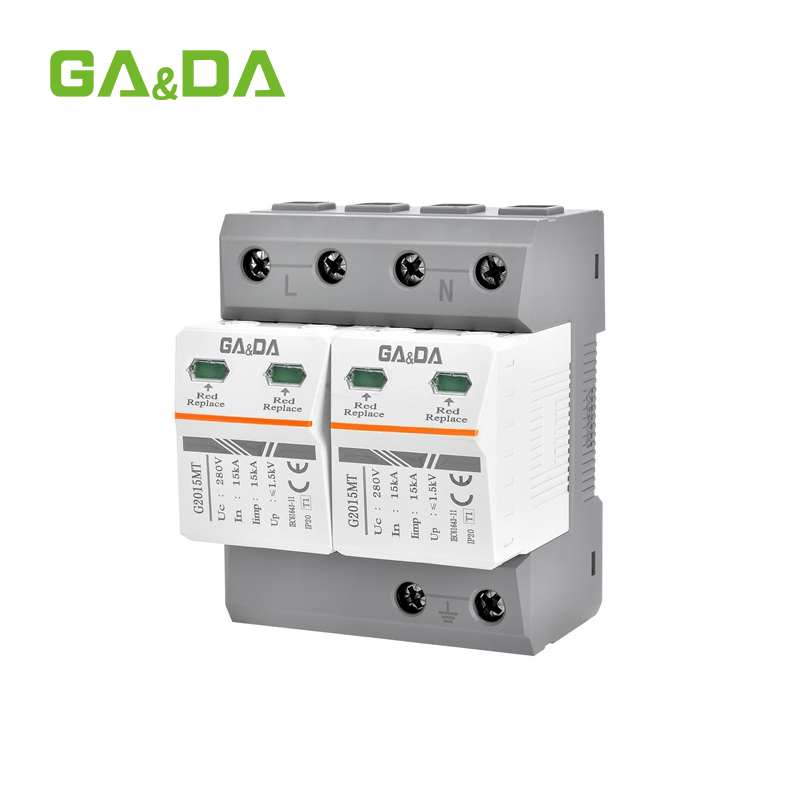
Choosing correctly between type 1 vs type 2 surge protective devices is one of the most important decisions when designing a robust low-voltage power distribution system. In practice, the right combination of type 1 vs type 2 surge protective devices determines whether lightning currents and switching surges are safely diverted to earth or end up damaging cables, breakers and sensitive loads. For example, a building might use a Type 1 SPD at the service entrance and a Type 2 SPD such as G2040DZ in downstream distribution boards, while a Type 1 SPD such as G2015MT protects the main incoming panel.
This article explains how type 1 vs type 2 surge protective devices are defined in modern standards, how they work, which parameters matter for selection, and where each type should be applied. By the end, it becomes much easier to specify the right surge protection strategy for residential, commercial and industrial installations without over‑ or under‑engineering the system.
Overview of type 1 vs type 2 surge protective devices
From a system designer’s point of view, type 1 vs type 2 surge protective devices are two complementary layers of protection rather than competing products. Type 1 surge protective devices are installed at the service entrance or main distribution board and are intended to handle high‑energy impulses, including partial lightning currents. Type 2 surge protective devices are usually installed in main or sub‑distribution boards downstream of the main breaker and are intended to deal with residual surges and switching transients inside the installation.
Standards such as IEC/EN 61643 define test classes and current waveforms for type 1 vs type 2 surge protective devices, which explains why their ratings look different in catalogs. Type 1 devices are characterized by their ability to discharge a 10/350 µs lightning current waveform, while Type 2 devices are tested with an 8/20 µs waveform representative of common switching and induced surges. Understanding this difference makes it clear why type 1 vs type 2 surge protective devices cannot simply be swapped; each is optimized for a particular energy profile and installation location.
How type 1 vs type 2 surge protective devices work
Although both types are based on similar non‑linear components, the way type 1 vs type 2 surge protective devices handle energy and where they are placed in the system lead to different design priorities. Type 1 SPDs must survive very high peak currents and are often coordinated with lightning protection systems and main bonding conductors. Type 2 SPDs focus more on limiting residual overvoltages to levels that equipment can withstand during normal operation.
At a basic level, both types of surge protective devices remain in a high‑impedance state during normal conditions and switch to a low‑impedance path when the voltage exceeds their clamping threshold. This rapid change in impedance allows them to divert surge current to earth and limit the voltage that appears at the terminals of connected equipment. The main distinction between type 1 vs type 2 surge protective devices is therefore not their fundamental operation, but the magnitude and shape of the surge they are designed to withstand and the role they play in the overall protection concept.
Type 1 surge protective devices operating principle
Type 1 surge protective devices are designed to be installed at the interface between the external power supply network and the building’s internal installation. Their job is to discharge large fractions of lightning current that may come from direct strikes to overhead lines or structures fitted with external lightning protection. Because of this role, type 1 SPDs have high impulse current ratings, and their internal components and housings are built to withstand intense thermal and electrodynamic stress.
In many designs, Type 1 devices use spark gaps, heavy‑duty varistors, or hybrid combinations that can safely conduct high currents without letting the arc persist after the surge has passed. This ensures that type 1 surge protective devices do not create unacceptable follow currents that would trip upstream breakers unnecessarily. When comparing type 1 vs type 2 surge protective devices, it is important to remember that Type 1 units focus on current‑handling capability first and clamping performance second.
Type 2 surge protective devices operating principle
Type 2 surge protective devices are installed on the load side of the main protective devices and are the workhorses of day‑to‑day surge protection. They typically use metal oxide varistors or hybrid circuits optimized for fast response and repeatable clamping of switching surges and induced lightning voltages. While they do not usually handle the full lightning current, they are responsible for ensuring that the residual overvoltage seen by equipment stays below its insulation and impulse withstand levels.
The protection levels (Up) of Type 2 SPDs are therefore a key performance indicator: for sensitive electronics, lower Up values are preferable, provided coordination with upstream protective devices is maintained. In a properly coordinated system that uses both type 1 vs type 2 surge protective devices, the Type 1 unit absorbs the bulk of the energy, and the Type 2 device trims the remaining overvoltage to safe limits for the installation.
Product example – working principles section A good illustration of a modern Type 2 design is the G2040MT modular Type 2 surge protective device 40kA, which uses plug‑in modules for easy replacement after heavy surge events. (Insert product image for G2040MT here and link it to its URL.)
Key selection criteria for type 1 vs type 2 surge protective devices
When specifying type 1 vs type 2 surge protective devices, designers need to consider both system‑level and device‑level parameters. At system level, the nominal system voltage, earthing arrangement (TN, TT, IT), and location within the installation all influence whether a Type 1, Type 2, or a combination is required. At device level, parameters such as maximum continuous operating voltage (Uc), nominal discharge current, impulse current, and protection level (Up) must be matched to the expected surge environment and equipment insulation ratings.
For Type 1 SPDs, the key rating is often the impulse current (Iimp), which represents the peak value of a 10/350 µs waveform the device can withstand. Higher Iimp values indicate a greater ability to handle lightning‑related surges at the service entrance. For Type 2 SPDs, the nominal discharge current (In) and maximum discharge current (Imax) are expressed with an 8/20 µs waveform and help indicate how robust the device is against repeated switching surges. Comparing these parameters side by side for type 1 vs type 2 surge protective devices clarifies why each type is suited to a particular position in the protection hierarchy.
Another crucial selection factor is the voltage protection level Up, which should be lower than the impulse withstand voltage of the equipment being protected. In practice, this often means choosing a Type 2 SPD with a lower Up for sensitive electronics, while allowing a slightly higher Up for upstream Type 1 SPDs that prioritize energy handling. Coordinating Up values across type 1 vs type 2 surge protective devices ensures that the downstream device always clamps at or below the level of the upstream one, preserving proper energy grading and avoiding unnecessary stress on equipment.
Product example – selection criteria section For different feeder and exposure levels, designers can select from modular Type 2 series such as G20XXMT-S/SN Type 2 modular surge protective devices, which offer multiple kA ratings and configurations to match the intended application. (Insert product image for G20XXMT-S/SN here and link it to its URL.)
Applications of type 1 vs type 2 surge protective devices in low-voltage systems
In real projects, the most effective way to apply type 1 vs type 2 surge protective devices is to think in terms of zones of protection rather than single devices. At the boundary where a building connects to the utility network, a Type 1 SPD protects against high‑energy surges associated with nearby or direct lightning strikes on overhead lines or external lightning protection systems. This is especially important for industrial plants, tall structures and facilities in lightning‑prone regions.
Further downstream, Type 2 SPDs are placed in main and sub‑distribution boards supplying critical loads, such as data centers, HVAC equipment, industrial controllers, elevators and building management systems. In this context, type 1 vs type 2 surge protective devices form a coordinated pair: the Type 1 unit protects the overall installation and bonding system, while the Type 2 units safeguard sensitive equipment at the distribution level. For highly sensitive or mission‑critical loads, designers often add Type 3 or point‑of‑use SPDs to create a multi‑stage defense.
Applications in photovoltaic (PV) and renewable energy systems also benefit from a clear understanding of type 1 vs type 2 surge protective devices. Rooftop arrays and exposed structures frequently require Type 1 or Type 1+2 SPDs on the DC side and Type 2 SPDs on the AC side to ensure that both inverter electronics and AC distribution gear are protected. Coordinating these devices across the DC combiner boxes, inverters, and AC panels maintains insulation integrity and reduces the risk of downtime due to surge‑related failures.
Installation best practices for type 1 vs type 2 surge protective devices
Even the best‑specified type 1 vs type 2 surge protective devices can underperform if installed poorly. One of the most important rules is to minimize the length and inductance of the connection leads between the SPD, the busbars, and the earth bar. Long, looped or twisted conductors add significant inductive voltage drop during surge events, which effectively increases the protection level seen by equipment. Short, straight runs and compact “V‑shaped” connections help keep the overall let‑through voltage as low as the datasheet suggests.
Another best practice is to coordinate SPDs with upstream overcurrent protective devices such as fuses or circuit breakers. Type 1 and Type 2 SPDs must have a short‑circuit withstand rating compatible with the prospective fault current at their installation point. If external backup protection is required, the maximum permissible fuse rating or breaker curve specified by the SPD manufacturer should be respected to ensure safe clearing of internal faults. Considering these issues for type 1 vs type 2 surge protective devices during panel design helps avoid nuisance trips and safety hazards later.
Finally, ongoing maintenance and inspection routines are essential to keep type 1 vs type 2 surge protective devices fully functional over their service life. Many modern SPDs provide visual indicators or remote contacts to show their operational status. Including these checks in periodic maintenance schedules ensures that cartridges that have reached end‑of‑life after heavy surges are replaced promptly and that the overall protection scheme remains effective.
FAQ – type 1 vs type 2 surge protective devices
Q1. Do I always need both type 1 and type 2 surge protective devices? Not every installation requires both, but many do. Where there is significant lightning exposure or overhead line supply, a Type 1 SPD at the service entrance is usually recommended, while Type 2 SPDs are almost always recommended in key distribution boards to protect sensitive downstream loads.
Q2. Can a type 2 surge protective device replace a type 1 device at the service entrance? Generally no. A Type 2 SPD is not designed to handle the same level of lightning impulse current as a Type 1 SPD. Using only a Type 2 device at a location that requires a Type 1 could result in SPD failure during a severe surge event.
Q3. How do I know whether to prioritize kA rating or low protection level (Up)? At the service entrance, energy handling and kA rating tend to be more important, which favors Type 1 SPDs with high impulse current capability. Deeper in the installation, particularly near sensitive equipment, a lower Up is often the priority, which is where well‑chosen Type 2 SPDs come in.
Q4. How often should type 1 vs type 2 surge protective devices be replaced? There is no universal schedule, because it depends on how many and how severe the surge events have been. Instead, use the status indicators on modular SPDs, keep records of known surge incidents, and replace devices or modules that show end‑of‑life status or have experienced severe stress events.
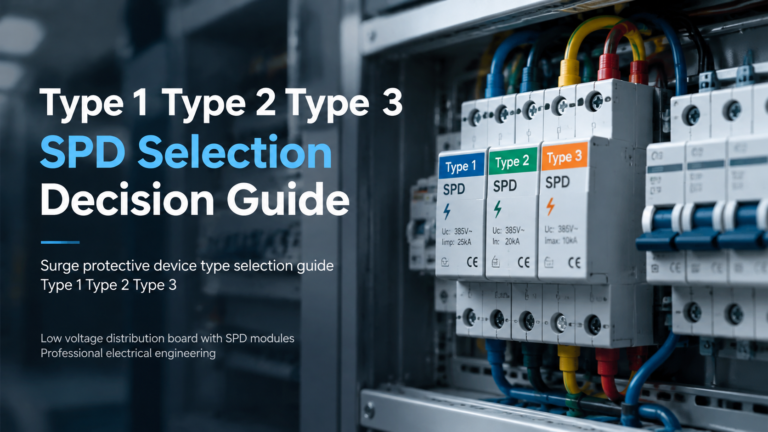
Selecting the wrong surge protective device type is one of the more common and more expensive specification errors in low-voltage installations. The device may work, the installation may pass inspection, and the system will still be under-protected for the actual risk it faces — because Type 1, Type 2, and Type 3 devices are not […]
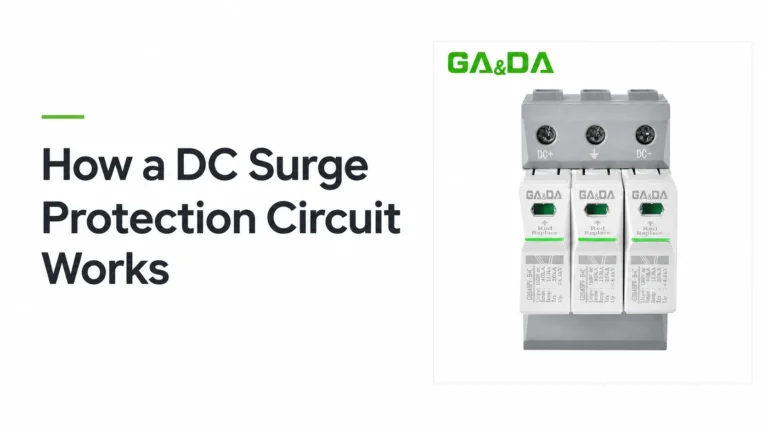
Follow a DC surge protection circuit through normal operation, a surge and recovery, and see why protection modes and DC fault disconnection need their own design.
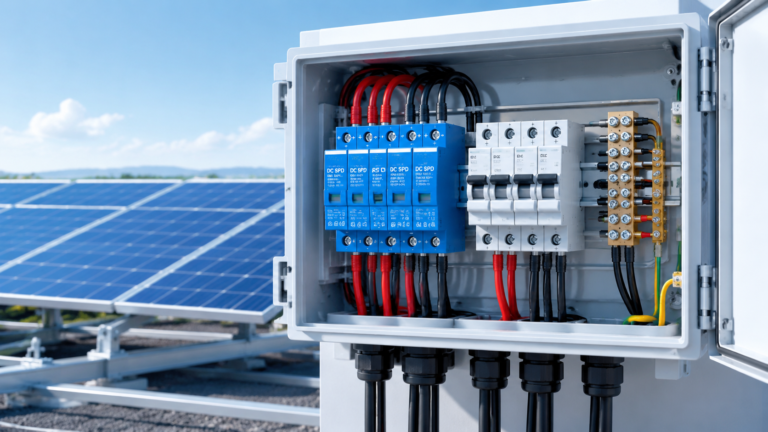
Most solar DC distribution boxes (DCDBs) are fitted with a Type 2 DC surge protection device (SPD), rated for 8/20 µs surge currents; a Type 1+2 DC SPD is required when the DC circuit is exposed to direct lightning strikes or the site has no external lightning protection system. This guide explains how to decide […]